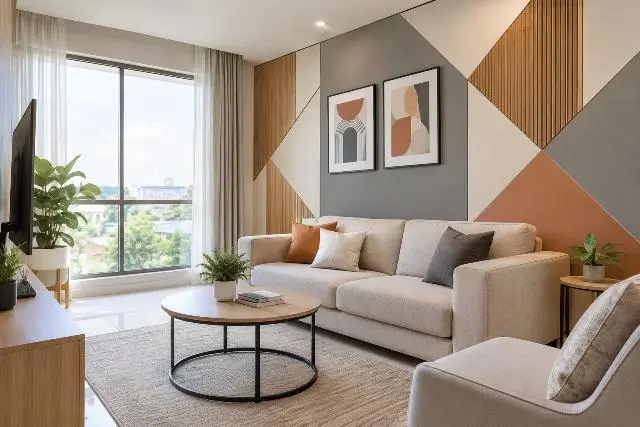
A beautifully designed wall can completely change the appearance of a room.
You do not always need to repaint every wall or invest in extensive interior decoration to make your home look different. Sometimes, a single carefully designed wall can become the most noticeable feature of the entire space.
This is the idea behind accent wall painting.
An accent wall, also called a feature wall, uses a different colour, pattern or decorative finish to create visual interest within a room.
It can be used in living rooms, bedrooms, dining areas and selected other interior spaces.
From bold colour contrasts to minimalist geometric patterns, there are many ways to create an attractive feature wall.
However, the best accent wall design depends on the room's size, lighting, furniture and overall interior style.
This guide explores modern accent wall painting ideas, colour combinations, decorative patterns and practical design tips for residential interiors.
WHAT IS AN ACCENT WALL?
An accent wall is a wall designed to stand out from the surrounding walls.
It may feature:
- A contrasting paint colour.
- Geometric patterns.
- Decorative paint effects.
- Textured finishes.
- Two-colour combinations.
- Hand-painted designs.
- A distinctive colour palette.
The purpose is to create a focal point without making the entire room visually busy.
For example, a living room with three light beige walls may have one terracotta feature wall behind the sofa.
This creates contrast while maintaining a balanced interior.
WHY SHOULD YOU CONSIDER ACCENT WALL PAINTING?
Accent wall painting provides an opportunity to introduce creativity into a home.
Some benefits include:
Creating a focal point
A feature wall can draw attention to a selected area of the room.
Adding colour
It allows homeowners to introduce a bold shade without using it throughout the entire interior.
Highlighting furniture
A suitable accent wall can complement a sofa, bed or decorative furniture.
Refreshing an interior
A feature wall can change the appearance of a room without requiring every wall to be repainted.
Supporting interior themes
Accent walls can coordinate with minimalist, contemporary, traditional and other design styles.
- MODERN LIVING ROOM ACCENT WALL IDEAS
The living room is one of the most suitable places for a decorative feature wall.
It often contains the main seating arrangement and provides an opportunity to highlight a selected area.
Terracotta Accent Wall
Terracotta introduces warmth and works with beige, cream and natural wood finishes.
Dark Grey Accent Wall
Dark grey can create a contemporary appearance behind a light-coloured sofa.
Muted Green Feature Wall
Muted green provides a natural-looking alternative to traditional neutral colours.
Navy Blue Accent Wall
Navy blue can create a bold feature when combined with lighter walls.
Beige and Brown Accent Wall
These shades can create a warm and coordinated interior.
Before selecting a colour, consider the amount of natural light available in the living room.
- BEDROOM ACCENT WALL PAINTING IDEAS
The bedroom is another popular location for feature walls.
The wall behind the bed is often selected because it provides a natural focal point.
Soft Sage Green
A subtle green shade can create a calm visual appearance.
Muted Blue
Blue can complement white and neutral bedroom furniture.
Warm Beige
Beige works well with wooden furniture and warm lighting.
Dusty Pink
A muted pink can create a softer decorative appearance.
Charcoal Grey
A darker feature wall can create contrast in a bedroom with lighter surrounding walls.
Avoid choosing a colour only because it looks attractive in an online photograph. Test it under the actual bedroom lighting.
- GEOMETRIC ACCENT WALL PAINTING DESIGNS
Geometric designs are suitable for modern interiors.
They can be created using paint and carefully planned masking techniques.
Popular ideas include:
Triangle patterns
Different-sized triangles can create a decorative composition.
Diagonal colour blocks
Two or more colours can be separated using diagonal lines.
Rectangular patterns
Geometric rectangles can create a structured design.
Circle patterns
Large painted circles can introduce a playful decorative element.
Abstract shapes
Irregular shapes can create a more artistic appearance.
Horizontal bands
Horizontal colour sections can introduce variation without complicated detailing.
Before painting, prepare a layout with measurements and colour positions.
- TWO-COLOUR ACCENT WALL IDEAS
Two-colour combinations are a practical way to create a feature wall.
Consider these combinations:
White and charcoal grey
A modern high-contrast palette.
Beige and terracotta
A warm and earthy combination.
Cream and olive green
A subtle natural-inspired design.
Light grey and navy blue
A contemporary combination.
Dusty pink and white
A softer decorative approach.
Brown and off-white
A warm interior palette.
Choose shades that complement the remaining walls rather than competing with them.
- MINIMALIST ACCENT WALL DESIGNS
A feature wall does not always need complicated artwork.
Minimalist designs can look attractive through simple colour placement.
Some ideas include:
- A single solid-colour wall.
- A painted half-wall.
- A narrow vertical accent section.
- A large rectangular colour block.
- A simple border design.
- A subtle two-tone effect.
These designs can be useful when homeowners prefer understated interiors.
- TEXTURED ACCENT WALLS VS PAINTED ACCENT WALLS
Both approaches can create distinctive interiors, but they provide different visual effects.
Painted accent walls
These use colour and painted patterns to create visual contrast.
Potential advantages include:
- Flexible colour choices.
- Simple decorative possibilities.
- Compatibility with different interiors.
- Easier design changes compared with some permanent finishes.
Textured accent walls
These use specialised decorative materials or techniques to create surface variation.
Potential advantages include:
- Greater surface depth.
- Distinctive decorative effects.
- Opportunities for specialised interior designs.
The choice depends on the desired appearance, budget and maintenance requirements.
PaintGen homeowners should select the appropriate service according to the actual wall condition and available finishing options.
- HOW TO CHOOSE THE RIGHT WALL FOR AN ACCENT DESIGN
Not every wall is equally suitable for an accent treatment.
Consider the following factors:
Natural focal point
Select a wall that naturally attracts attention.
Furniture placement
Consider the position of the sofa, bed or dining furniture.
Lighting
Observe how daylight and artificial lighting affect the wall.
Room dimensions
Avoid designs that make a small room feel excessively crowded.
Existing decoration
Coordinate the accent wall with flooring, curtains and furniture.
Wall condition
Inspect the surface before planning decorative painting.
- HOW TO SELECT ACCENT WALL COLOURS
Colour selection is one of the most important parts of the design process.
Start by identifying the room's main colour palette.
Then consider whether you want:
A subtle accent
Choose a shade slightly darker or lighter than the surrounding walls.
A contrasting accent
Select a complementary or contrasting colour.
A bold feature
Use a stronger shade on one carefully selected wall.
A natural theme
Consider muted greens, earthy browns and warm beige.
A contemporary theme
Consider charcoal, navy, grey and off-white.
Always test paint samples before committing to a full wall.
- HOW TO PREPARE A WALL FOR ACCENT PAINTING
Decorative designs require a properly prepared surface.
Follow these general steps:
Step 1: Inspect the wall
Check for cracks, peeling paint and uneven surfaces.
Step 2: Clean the surface
Remove dust and dirt.
Step 3: Repair suitable defects
Complete necessary surface repairs.
Step 4: Smooth the surface
Sand repaired areas where appropriate.
Step 5: Apply compatible primer
Use primer according to the selected paint system.
Step 6: Finalise the design layout
Mark the geometric shapes and colour sections.
Step 7: Protect surrounding areas
Use appropriate masking materials.
Step 8: Apply the paint
Follow the recommended application process.
Step 9: Remove masking carefully
Follow the product and masking material instructions.
Step 10: Inspect the final appearance
Check the edges, patterns and overall coverage.
- COMMON ACCENT WALL PAINTING MISTAKES
Choosing the wrong wall
A poorly selected wall may not create the intended focal point.
Using too many colours
Excessive colour combinations can make a room look crowded.
Ignoring furniture
The feature wall should complement the room's furnishings.
Skipping measurements
Geometric patterns require careful planning.
Ignoring wall damage
Surface imperfections may remain visible after decorative painting.
Choosing colours without testing
A colour may look different under different lighting conditions.
Making the design too complicated
A simpler design may create a more balanced appearance.
- ACCENT WALL IDEAS FOR SMALL ROOMS
Small rooms can also benefit from feature walls.
The key is to avoid unnecessary visual complexity.
Consider:
- Light-coloured accent walls.
- Simple geometric patterns.
- Limited colour combinations.
- Vertical decorative sections.
- Subtle tonal contrasts.
- A single focal wall.
Avoid covering every wall with a different decorative treatment.
A simple design can provide enough visual interest.
- ACCENT WALL PAINTING COST FACTORS
The cost of an accent wall project depends on several factors.
These include:
Wall dimensions
Larger walls generally require more material and labour.
Design complexity
Geometric patterns and detailed artwork may require additional time.
Paint selection
Different paint categories and finishes have different material requirements.
Surface preparation
Damaged or uneven walls may require additional preparation.
Decorative techniques
Specialised finishes may involve additional materials and skills.
Application method
The tools and techniques used can influence the project requirements.
Request a quotation based on the actual wall dimensions and selected design.
- ACCENT WALL PAINTING FOR HOMES IN PATNA
Homeowners in Patna planning to refresh their interiors can consider accent wall painting as part of their renovation plans.
A simple feature wall behind the living room sofa or bedroom bed can introduce a different appearance without changing the entire colour scheme.
Consider the room's natural lighting, furniture and existing wall colours before selecting the design.
Choose a decorative treatment that suits the property's interior style and can be maintained easily.
PaintGen offers painting and home improvement solutions for residential properties.
Visit https://www.paintgen.in/ to explore available painting services and discuss your interior painting requirements.
FINAL THOUGHTS
Accent wall painting is a creative way to refresh a residential interior.
Whether you prefer a bold terracotta feature, a minimalist geometric design or a subtle pastel combination, the right accent wall can become an attractive part of your home.
Start by choosing a suitable wall, selecting complementary colours and preparing the surface properly.
A carefully planned feature wall can add personality and visual interest without making the entire room look overcrowded.
Questions people ask
What is the best wall for an accent wall?
The best accent wall is usually a natural focal point, such as the wall behind a living room sofa or bedroom bed. Consider furniture placement, lighting and room dimensions before selecting it.
Which colour is best for an accent wall?
Terracotta, sage green, navy blue, charcoal grey and muted beige are popular choices. The best colour depends on the surrounding walls, furniture and interior lighting.
Can I create an accent wall using only paint?
Yes. Solid contrasting colours, geometric patterns, diagonal sections and two-tone designs can all be created using suitable wall paint.
Are accent walls suitable for small rooms?
Yes. Simple geometric designs, light colours and subtle contrasts can work well in smaller rooms. Avoid excessively complicated patterns and too many contrasting shades.
Last updated 18 November 2026.