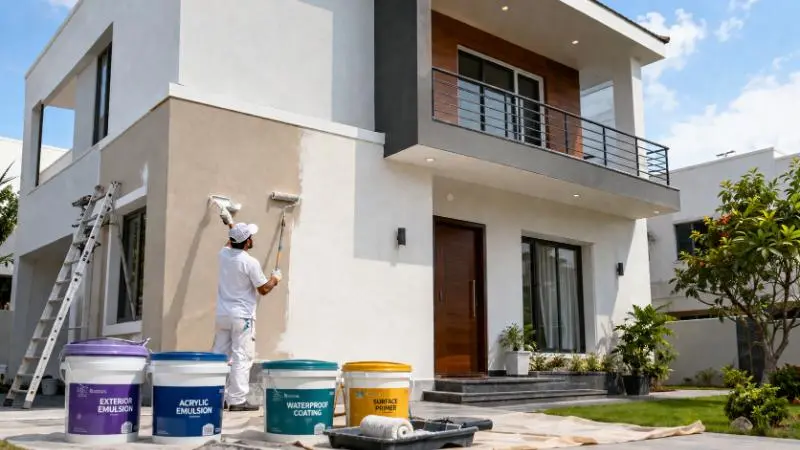
Exterior walls are continuously exposed to changing weather conditions.
Rainwater, sunlight, dust and seasonal humidity can gradually affect building surfaces. When water enters through cracks, joints or damaged exterior coatings, it may eventually appear as damp patches inside the home.
Many homeowners repaint their interiors without realising that moisture is entering from the outside.
Exterior wall waterproofing helps protect suitable building surfaces from unwanted water penetration and can reduce the risk of recurring dampness when the actual source is correctly identified and treated.
For homeowners in Patna, where seasonal rainfall can put pressure on exposed walls, understanding exterior wall protection is an important part of home maintenance.
What Is Exterior Wall Waterproofing?
Exterior wall waterproofing involves using suitable materials and treatments to reduce water penetration through external building surfaces.
The system may involve:
- Crack repairs
- Joint sealing
- Surface preparation
- Waterproofing coatings
- Exterior primers
- Protective paint systems
- Repairing damaged plaster
- Improving water drainage
The correct treatment depends on the wall construction and the source of moisture.
Why Do Exterior Walls Absorb Rainwater?
1. Cracked plaster
Cracks can create pathways for water to enter the wall.
2. Damaged exterior coating
Older paint systems may lose their protective properties over time.
3. Poor window sealing
Water may enter through gaps around window frames.
4. Roof and parapet junctions
Improperly treated roof-to-wall connections may allow rainwater to penetrate.
5. Poor drainage
Water flowing directly against a wall or collecting near its base can increase moisture exposure.
Signs That Exterior Walls Need Attention
Inspect the outside of your home for:
- Cracked exterior plaster
- Peeling paint
- White powdery deposits
- Dark water stains
- Damp patches inside adjoining rooms
- Damaged window sealant
- Algae or biological growth
- Deteriorating wall coatings
These symptoms should be investigated before repainting.
1. Repair Exterior Wall Cracks
Cracks should be inspected before applying waterproofing material.
The repair method depends on:
- Crack width
- Crack depth
- Location
- Whether the crack is active
- Wall construction
- Possible structural movement
Minor surface cracks may be treated with suitable repair products.
Larger or recurring cracks require professional assessment.
2. Apply Suitable Exterior Waterproofing Products
Different products are designed for different applications.
Some specialised exterior wall coatings provide water-repellent properties while allowing suitable vapour movement.
Others form more protective coating systems.
The selected material should be compatible with:
- Existing paint
- Plaster
- Masonry
- Exposure conditions
- Expected movement
- Manufacturer recommendations
A product should not be selected only because its packaging uses the word waterproof.
3. Protect Window and Door Joints
Water can enter through gaps around external openings.
Inspect:
- Window frame joints
- Door frame connections
- External sill edges
- Sealant condition
- Nearby plaster
Use suitable weather-resistant sealants where required.
4. Inspect Roof and Parapet Connections
Exterior wall dampness can sometimes originate from water entering at the roof.
Check:
- Parapet wall tops
- Terrace edges
- Roof drainage
- Pipe outlets
- Balcony connections
- Roof-wall junctions
These areas may require specialised waterproofing rather than ordinary wall paint.
5. Improve Rainwater Drainage
Good drainage helps reduce prolonged water exposure.
Ensure that:
- Rainwater outlets are not blocked.
- Drainage pipes are connected properly.
- Water does not continuously flow against walls.
- Terrace outlets remain clear.
- Water does not collect around the building foundation.
6. Choose Suitable Exterior Paint
Exterior paint should be designed for outdoor conditions.
Consider:
- Weather exposure
- Water resistance
- Colour retention
- Surface compatibility
- Maintenance
- Application requirements
The selected exterior coating should be part of an appropriate surface preparation and protection system.
7. Allow Proper Drying Before Painting
If the exterior wall is wet, applying a new coating may create adhesion and finish problems.
The source of moisture should first be corrected.
The wall should then be allowed to dry to the level required by the product manufacturer.
Moisture measurement may be helpful where necessary.
Exterior Wall Waterproofing in Patna
Homes in Patna may experience different levels of rainwater exposure depending on building orientation, surrounding structures and drainage arrangements.
An exposed exterior wall may require a different treatment from a covered balcony wall.
Before beginning work, assess:
- Which wall is affected
- Whether water enters after rainfall
- Whether the problem occurs throughout the year
- Whether cracks are present
- Whether nearby plumbing is leaking
- Whether the roof or parapet is damaged
A site inspection can help identify the most appropriate treatment.
Common Mistakes in Exterior Waterproofing
Painting over wet surfaces
The moisture source should be corrected before applying a new coating.
Ignoring window joints
Small openings may allow significant water entry during heavy rainfall.
Using interior paint outdoors
Interior wall paint is not designed for all exterior exposure conditions.
Applying waterproofing without surface preparation
Loose paint and damaged plaster can affect adhesion.
Ignoring drainage
Poor drainage can cause repeated water exposure even after wall treatment.
How Exterior Waterproofing Helps Interior Painting
When rainwater enters an exterior wall, it may eventually affect the interior surface.
This can lead to:
- Damp patches
- Paint bubbling
- Peeling
- Discolouration
- Damaged plaster
Correcting the external water entry point before repainting the inside wall can help prevent repeated repairs.
Exterior Waterproofing and Painting Services in Patna
PaintGen provides exterior painting, waterproofing and related home repair services in Patna.
If your exterior walls show recurring dampness or rain-related stains, arrange an inspection before applying fresh paint.
A suitable solution should address the source of water entry and include compatible surface preparation and protective materials.
Protecting exterior walls is an important step towards maintaining a comfortable and well-maintained home.
Questions people ask
Can exterior waterproofing prevent interior wall dampness?
It can help when rainwater entering through the exterior wall is the actual cause. Other moisture sources, such as plumbing leakage and rising damp, require separate treatment.
Which waterproofing paint is best for exterior walls?
The right product depends on the wall material, exposure and source of water entry. Select a coating specifically designed for the intended exterior application.
Should exterior walls be waterproofed before painting?
If the wall has water penetration problems, the source should be addressed before applying the finishing paint. Suitable waterproofing and surface preparation may be necessary.
Why does rainwater cause damp patches inside the house?
Rainwater may enter through cracks, damaged exterior coatings, window joints, roof connections or other weak points. It can then travel through building materials and appear on interior surfaces.
Last updated 25 November 2026.