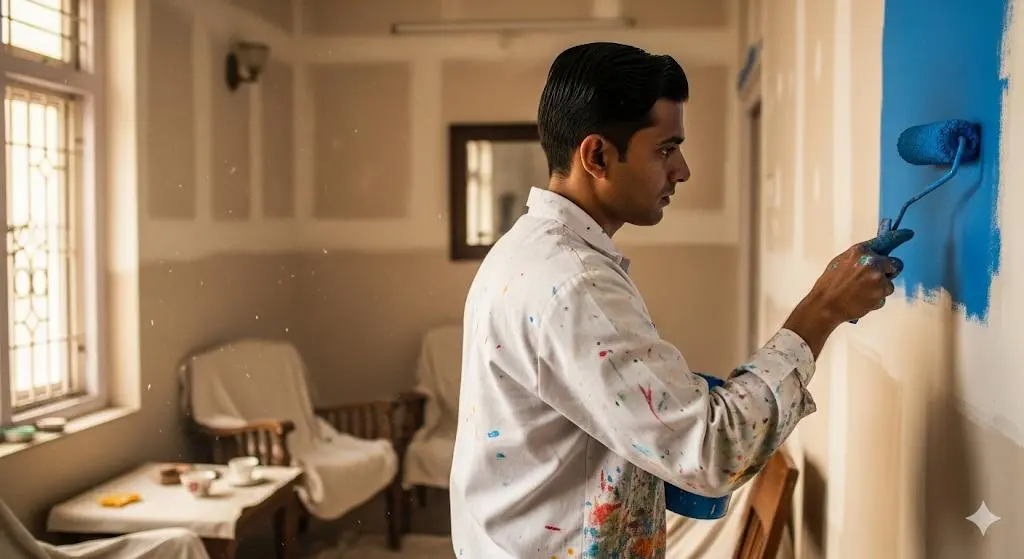
After completing a home painting project, most homeowners want to move their furniture back, decorate the rooms and start using the freshly painted space as soon as possible.
However, fresh paint does not become fully ready immediately after application.
There is an important difference between paint drying time and paint curing time. Understanding this difference can help homeowners avoid damaging new paintwork.
For anyone planning interior painting in Patna, knowing when to touch, clean or place furniture against freshly painted walls can make a significant difference.
This guide explains how paint dries, what curing means, which factors affect the process and how to care for freshly painted surfaces.
What Is Paint Drying Time?
Paint drying time refers to the period required for a newly applied paint layer to become dry enough for a particular next step.
Depending on the product, this may include:
- Touch-dry time
- Recoat time
- Time before handling
- Time before light use
Different paints have different drying characteristics.
A water-based emulsion may become touch-dry relatively quickly under suitable conditions, while some oil-based coatings may require considerably longer.
Always follow the manufacturer's product instructions.
What Is Paint Curing Time?
Curing refers to the process through which paint develops its intended final properties after application.
Depending on the paint chemistry, this may involve continued film formation, coalescence or chemical reactions.
During curing, the coating develops characteristics such as:
- Final hardness
- Adhesion
- Resistance to handling
- Cleaning performance
- Durability
A surface may feel dry to the touch while still requiring additional time to reach its intended performance.
Difference Between Drying and Curing
| Feature | Drying | Curing |
|---|---|---|
| Meaning | Initial drying of the paint film | Development of final coating properties |
| Time | Often shorter | Usually longer |
| Surface feel | May become touch-dry | Continues developing hardness |
| Recoating | May become possible | Not always required before next coat |
| Cleaning | Depends on product guidance | Final cleaning performance develops |
| Furniture contact | Requires caution | Better resistance may develop over time |
1. How Long Does Interior Emulsion Paint Take to Dry?
Interior water-based emulsion paints often become touch-dry within a few hours under suitable conditions.
However, the exact time depends on:
- Paint formulation
- Temperature
- Humidity
- Ventilation
- Application thickness
- Surface absorption
- Number of coats
The recoat time may be different from the touch-dry time.
Check the technical data sheet for the exact product.
2. How Long Does Oil-Based Paint Take to Dry?
Oil-based paints and enamel coatings may take longer to dry than many water-based emulsions.
Their drying process depends on the formulation and environmental conditions.
Avoid touching or handling freshly painted doors, grills and wooden surfaces until the recommended time has passed.
3. Factors That Affect Paint Drying Time
Temperature
Temperature influences the drying behaviour of many coatings.
Conditions outside the manufacturer's recommended application range may affect the finish.
Humidity
High humidity can slow the drying of certain water-based paints.
This is particularly important during humid weather.
Ventilation
Suitable airflow can help moisture evaporate from water-based coatings.
However, strong airflow that carries dust onto wet paint should be avoided.
Paint thickness
Applying paint too thickly may extend drying time and affect the finish.
Surface condition
A highly absorbent or improperly prepared surface can affect paint application and drying behaviour.
Paint formulation
Different products have different drying characteristics.
Always use the product-specific instructions rather than assuming that all paints behave identically.
4. Can You Apply a Second Coat Before the First Coat Dries?
No. The first coat should reach the manufacturer's specified recoat condition before the next coat is applied.
Applying another coat too early may cause:
- Uneven finish
- Poor film formation
- Surface defects
- Application marks
- Extended overall drying time
The recommended recoat interval is usually provided on the product packaging or technical data sheet.
5. When Can You Move Furniture Back?
Moving furniture back too early can affect fresh paint.
Furniture may rub against walls and leave marks.
Consider these precautions:
- Wait until the paint is sufficiently dry.
- Move furniture carefully.
- Avoid dragging objects against walls.
- Leave a small gap between furniture and painted surfaces.
- Avoid placing heavy objects directly against freshly painted walls.
The waiting period should follow the coating manufacturer's guidance.
6. When Can You Clean Freshly Painted Walls?
Cleaning a newly painted wall too early may damage the paint film.
Even if the surface feels dry, its resistance to water and cleaning products may still be developing.
Before cleaning:
- Check the manufacturer's curing guidance.
- Confirm the recommended waiting period.
- Use a soft cloth.
- Avoid abrasive cleaning materials.
- Test a small hidden area first.
Different paint products have different cleaning resistance.
7. Does Patna's Weather Affect Paint Drying?
Yes. Weather conditions can affect paint application and drying.
During humid periods, drying may take longer for certain products.
During very hot and dry conditions, paint may dry too quickly at the surface, which can sometimes affect application quality.
Before painting, consider:
- Temperature
- Relative humidity
- Surface temperature
- Ventilation
- Rain exposure for exterior work
- Manufacturer application limits
Professional painters should adjust the application schedule according to the actual conditions.
8. Common Mistakes After Painting
Touching the walls repeatedly
Fresh paint can still be vulnerable even when it feels dry.
Washing walls too early
Early cleaning may damage the developing paint film.
Placing furniture against walls immediately
This can leave marks and affect the coating.
Applying another coat too soon
Always follow the specified recoat interval.
Ignoring ventilation
Insufficient ventilation may slow drying and allow odours to linger.
Assuming all paints dry equally
Different formulations have different drying and curing requirements.
9. How to Care for Freshly Painted Walls
After completing your painting project:
- Maintain suitable ventilation.
- Avoid unnecessary touching.
- Keep furniture away from the walls initially.
- Prevent water splashes.
- Avoid aggressive cleaning.
- Follow the manufacturer's maintenance guidance.
These simple precautions can help protect the new finish.
10. Why Professional Application Matters
Correct application is important for achieving the intended paint performance.
Professional painters consider product specifications, surface condition, application thickness, weather and recoat intervals.
This helps reduce common problems caused by rushed painting work.
House Painting Services in Patna by PaintGen
PaintGen provides residential painting services in Patna.
Whether you are repainting one bedroom or your complete home, the selected paint product and application process should follow the manufacturer's technical recommendations.
Understanding drying and curing helps you plan furniture movement, room usage and final cleaning more effectively.
A little patience after painting can help preserve the appearance of your freshly painted home.
Questions people ask
What is the difference between paint drying and curing?
Drying is the initial process through which paint becomes sufficiently dry for handling or recoating. Curing is the continued development of the coating's final properties, such as hardness and resistance.
How long should I wait before touching freshly painted walls?
Follow the manufacturer's touch-dry instructions. Even after the surface becomes touch-dry, avoid unnecessary contact until the coating has developed sufficient strength.
Can I sleep in a freshly painted room?
Follow the paint manufacturer's ventilation and re-entry instructions. Consider the product's VOC information, odour, room ventilation and the needs of children, pets and people sensitive to paint emissions.
Does humidity affect paint drying?
Yes. High humidity can slow the drying of some water-based paints. Temperature, ventilation, application thickness and paint formulation also affect drying time.
Last updated 26 November 2026.