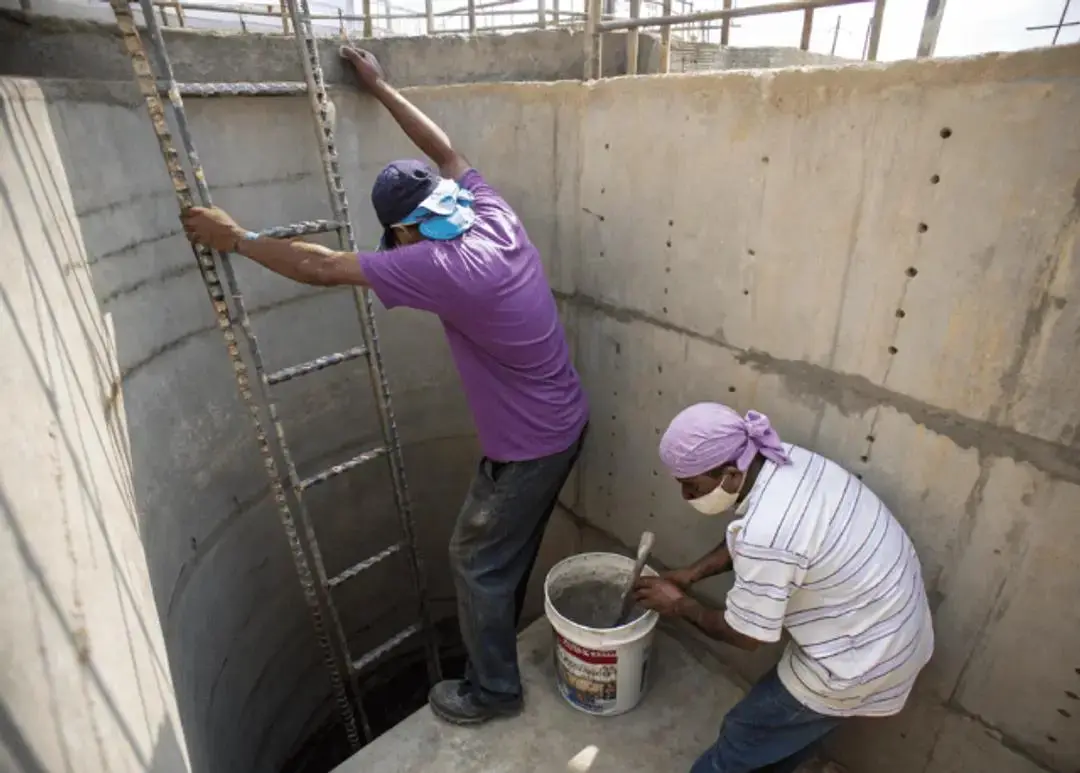
Water storage tanks are an important part of many residential properties. They help households maintain a regular water supply, especially when municipal water availability is inconsistent.
However, underground concrete water tanks can develop leakage over time due to cracks, construction defects, joint failures and deterioration of the waterproofing system.
A leaking water tank can waste water, affect surrounding structures and create moisture-related problems around the property.
For homeowners planning water tank waterproofing in Patna, understanding the causes of leakage and the importance of suitable repair materials can help protect the tank and its surrounding structure.
What Is Underground Water Tank Waterproofing?
Underground water tank waterproofing is the process of protecting the concrete structure against unwanted water movement.
The waterproofing system must be appropriate for the tank's construction and intended use.
For drinking-water storage, materials must also be suitable for potable-water contact where applicable.
A typical waterproofing project may involve:
- Emptying the tank
- Cleaning internal surfaces
- Inspecting cracks
- Repairing damaged concrete
- Treating construction joints
- Applying a compatible waterproofing system
- Allowing suitable curing
- Testing the completed tank
- Cleaning and disinfecting before use where required
Why Do Underground Water Tanks Develop Leakage?
1. Concrete cracks
Concrete may develop cracks because of shrinkage, movement, settlement or construction-related issues.
Some cracks may allow water to escape.
2. Construction joint failure
Joints between different concrete sections may become vulnerable if they are not properly designed or treated.
3. Poor concrete quality
Improper concrete mixing, placement or curing may affect the quality of the structure.
4. Damaged waterproofing layer
Older waterproofing systems may deteriorate or become damaged.
5. Pipe connection leakage
Inlet, outlet and overflow connections may develop leakage around their surrounding surfaces.
Signs of Underground Water Tank Leakage
Look for:
- Unexpected reduction in stored water
- Persistently wet soil near the tank
- Damp patches around the tank structure
- Water appearing near access covers
- Visible cracks inside the tank
- Water leakage around pipe connections
These signs may have other explanations, so a proper inspection is important.
Types of Waterproofing Materials for Water Tanks
The material must be selected carefully because water storage tanks have specific requirements.
Cementitious waterproofing
Certain cementitious systems are designed for concrete water-retaining structures.
Check the product's suitability for permanent water immersion and potable-water contact where relevant.
Crystalline waterproofing
Some crystalline systems are designed to reduce water penetration through concrete.
Their suitability depends on the concrete condition, application method and product specifications.
Flexible waterproofing systems
Certain specialised flexible systems may be suitable for selected water-retaining structures.
They should only be used when the manufacturer confirms compatibility with the intended application.
Repair mortars and joint treatments
Cracks, joints and damaged areas may require specialised repair products before the main waterproofing system is installed.
Ordinary wall paint or decorative coatings should never be treated as substitutes for a water-tank waterproofing system.
Step-by-Step Water Tank Waterproofing Process
Step 1: Empty the tank
The tank should be emptied safely before internal inspection and repair.
Step 2: Clean the surface
Remove loose material, deposits and unsuitable contaminants.
Step 3: Inspect the structure
Check walls, floors, corners, joints and pipe connections.
Step 4: Repair cracks
Cracks should be assessed to determine the correct repair approach.
Active leakage and structural cracks may require specialised treatment.
Step 5: Treat construction joints
Joints should be treated using compatible materials and methods.
Step 6: Apply the waterproofing system
Apply the selected material according to its technical instructions.
Step 7: Allow proper curing
The material should cure for the specified duration.
Step 8: Conduct a leakage test
A suitable controlled filling test may be carried out to assess the completed work.
Step 9: Prepare the tank for water storage
Before returning the tank to normal service, follow the material manufacturer's requirements and applicable hygiene and disinfection procedures.
Important Safety Precautions
Underground water tanks are confined spaces and can present serious safety hazards.
Potential risks include:
- Oxygen deficiency
- Harmful gases
- Restricted entry and exit
- Slippery surfaces
- Electrical hazards
- Chemical exposure
Tank entry should not be treated as an ordinary maintenance activity.
Appropriate confined-space procedures, trained personnel, atmospheric testing and suitable safety equipment may be necessary.
Homeowners should never enter an underground tank alone.
How to Maintain an Underground Water Tank
Regular inspection can help identify developing problems.
Consider:
- Checking for visible cracks
- Inspecting pipe connections
- Keeping access covers secure
- Monitoring unusual water loss
- Maintaining the surrounding drainage
- Scheduling cleaning and inspection
- Following appropriate water hygiene practices
The inspection schedule should depend on the tank's usage and condition.
Why Water Tank Waterproofing Should Be Done Professionally
Water tanks require materials designed for the intended water exposure.
Incorrect materials may affect coating performance or water quality.
Professional assessment helps determine the appropriate repair method, material compatibility and testing requirements.
Water Tank and Waterproofing Guidance from PaintGen
PaintGen provides waterproofing and home repair services in Patna.
If your property has a leaking water storage structure, arrange an inspection before selecting a treatment.
The repair should be based on the actual leakage source, concrete condition and intended water use.
Proper material selection, repair and curing are important for protecting water storage structures over time.
Questions people ask
Why does an underground water tank leak?
Underground tanks may leak because of concrete cracks, damaged joints, poor construction, ageing waterproofing systems or leakage around pipe connections.
Can ordinary waterproof paint be used inside a drinking-water tank?
No. Only use products specifically approved or documented as suitable for the intended water-storage application and potable-water contact where required.
How can I check whether my underground tank is leaking?
Unexpected water loss, wet soil around the tank and visible moisture may indicate leakage. A controlled inspection and suitable water-retention test can help confirm the problem.
Can a cracked underground water tank be repaired?
Many tank defects can be repaired, but the method depends on crack type, structural condition and leakage severity. Structural problems require appropriate professional assessment.
Last updated 25 November 2026.