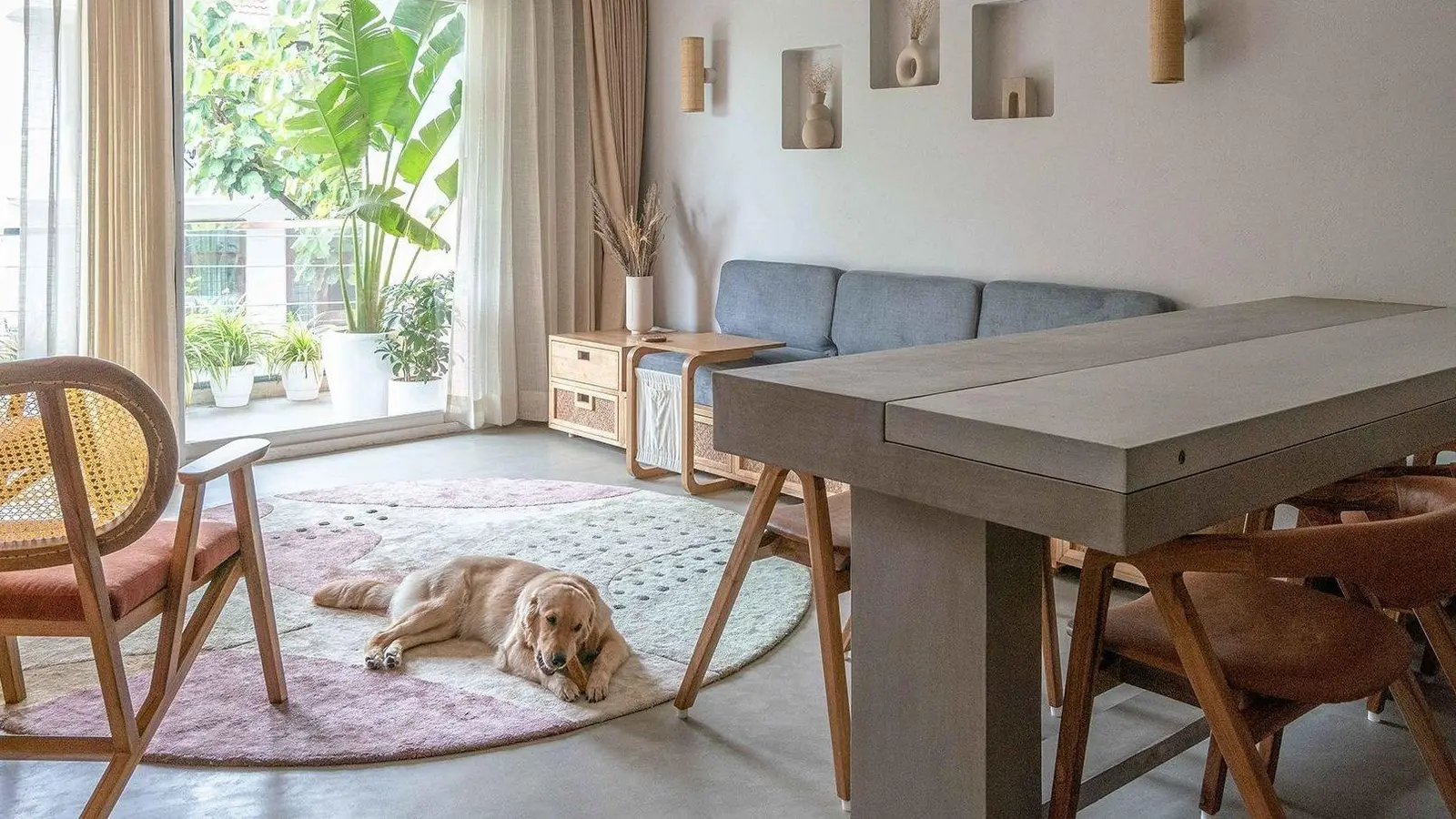
Living with pets brings happiness, companionship and plenty of memorable moments. However, pets can also create additional maintenance challenges inside the home.
Dogs may leave marks on walls, cats may scratch selected surfaces and everyday movement can result in dirt, stains and accidental splashes.
For pet owners, selecting the right wall paint can make routine home maintenance easier.
The best wall paint for homes with pets should be selected according to cleaning requirements, surface durability, product safety information and the way each room is used.
If you are planning to repaint your home in Patna, this guide explains what to consider before selecting paint for a pet-friendly interior.
Why Does Paint Selection Matter in Homes with Pets?
Pets interact with the home differently from people.
They may rub against walls, rest near corners, move through corridors and leave marks on frequently used surfaces.
Some homes may experience:
- Paw marks
- Dirt near floor-level walls
- Scratches
- Accidental stains
- Food splashes
- Hair and dust accumulation
- Frequent cleaning requirements
Choosing a suitable paint can help homeowners maintain the appearance of interior walls.
1. Choose a Washable Interior Paint
Washability is an important factor for pet-owning households.
Walls near pet feeding areas, corridors and frequently used spaces may need occasional cleaning.
Look for paint products that clearly specify their cleaning performance.
Check:
- Washability rating
- Scrub resistance
- Recommended cleaning method
- Suitable cleaning agents
- Manufacturer's maintenance instructions
Do not assume that every paint labelled washable can tolerate aggressive scrubbing.
2. Consider Durable Paint Formulations
Durability matters in areas where pets regularly move around.
A suitable interior coating may help the wall withstand ordinary contact and routine cleaning.
Consider more durable products for:
- Entryways
- Corridors
- Living rooms
- Pet feeding areas
- Utility spaces
The correct paint depends on the surface and intended use.
3. Select the Right Paint Finish
The finish can influence how a wall looks and how it is maintained.
Matte finish
Matte finishes offer a soft appearance and may help reduce the visibility of minor surface imperfections.
However, cleaning performance varies by product.
Low-sheen finish
Low-sheen paints provide a subtle appearance and may offer a practical balance between visual appeal and maintenance.
Satin finish
Certain satin finishes are suitable for frequently used areas because they may offer better cleaning convenience.
Always check the product's technical information before selecting a finish.
4. Choose Low-Odour or Low-VOC Paint Carefully
Indoor paint selection should also consider product emissions.
Some manufacturers offer low-VOC and low-odour interior paints.
These products may be worth considering in homes with pets, especially when painting bedrooms or shared living spaces.
Before purchasing, check:
- VOC information
- Product safety instructions
- Recommended ventilation
- Drying time
- Re-entry guidance
- Suitability for the intended surface
Low-VOC does not automatically mean completely emission-free or safe for immediate exposure.
5. Keep Pets Away During Painting
Fresh paint can create exposure risks for pets.
Dogs and cats may accidentally touch wet surfaces, lick paint or come into contact with painting materials.
During painting:
- Keep pets away from the work area.
- Store paint containers securely.
- Remove brushes and rollers after use.
- Prevent access to wet walls.
- Maintain suitable ventilation.
- Follow the manufacturer's re-entry instructions.
If a pet comes into contact with wet paint or cleaning chemicals, consult a veterinarian or appropriate poison-control resource.
6. Choose Practical Colours for Pet-Friendly Homes
Wall colours can influence how visible everyday marks become.
For example, very dark colours may show dust or light-coloured hair more clearly, while extremely light surfaces may show certain dirt marks more easily.
Consider colours that complement the household environment.
Warm beige
Beige creates a warm and versatile interior appearance.
Soft grey
Grey can work well with modern furniture and neutral décor.
Greige
A combination of grey and beige can create a balanced and contemporary appearance.
Muted green
Soft green shades may complement homes with natural décor and indoor plants.
Warm white
Warm white can make a room feel brighter while remaining softer than stark white.
The best colour also depends on natural light and furniture.
7. Pay Attention to High-Contact Areas
Some areas of the home require more attention than others.
These include:
- Corners near pet beds
- Walls beside feeding stations
- Entryways
- Corridors
- Areas near doors
- Walls beside furniture
- Spaces around pet play areas
These locations may benefit from suitable washable paint and additional protective design considerations.
8. Protect Walls from Scratches
Paint alone cannot prevent every type of scratch.
If pets regularly scratch a particular area, consider physical protection.
Possible options include:
- Furniture placement
- Protective wall panels
- Suitable washable wall coverings
- Pet scratching posts
- Designated pet activity areas
For cats, providing appropriate scratching surfaces may help redirect scratching behaviour away from walls and furniture.
9. Clean Painted Walls Carefully
Regular cleaning can help maintain a pet-friendly home.
Before cleaning a painted surface:
- Check the paint manufacturer's cleaning recommendations.
- Remove loose dust using a soft cloth.
- Test the cleaning method on a small hidden area.
- Use a suitable cleaning solution.
- Avoid aggressive scrubbing.
- Allow the surface to dry.
Some stains may require specialised cleaning, and not every mark can be removed without affecting the finish.
10. Do Not Ignore Damaged Wall Areas
If pets repeatedly rub or scratch a particular wall, inspect the surface periodically.
Look for:
- Peeling paint
- Scratches
- Damaged plaster
- Loose coating
- Surface stains
Repairing damaged areas early can help maintain a cleaner appearance.
If the wall is damaged beyond the paint layer, appropriate repair may be necessary before repainting.
11. Plan Painting Around Your Pet's Routine
A painting project can temporarily affect your pet's normal routine.
Before starting:
- Arrange a separate room for pets.
- Keep food and water away from painting materials.
- Identify a safe resting area.
- Plan access to outdoor spaces where appropriate.
- Avoid unnecessary movement through freshly painted rooms.
For larger projects, consider temporary alternative accommodation if the work affects essential living areas.
12. Professional Painting for Pet-Friendly Homes in Patna
Choosing paint for a pet-friendly home requires attention to product specifications, room usage and maintenance needs.
PaintGen helps homeowners in Patna with interior painting, colour consultation and residential painting requirements.
You can discuss washable paint options, suitable finishes, surface preparation and room-wise colour combinations before starting your project.
A well-planned painting project can help create a home that looks attractive while remaining practical for everyday family life, including life with pets.
Questions people ask
Which paint is best for homes with dogs and cats?
Choose an interior paint with suitable washability and durability for the room's use. Check the manufacturer's cleaning, VOC and application specifications before purchasing.
Is washable paint good for pet owners?
Washable paint can be useful in pet-friendly homes because it may make routine cleaning easier. Its actual cleaning performance depends on the product formulation.
Can pets stay inside while the house is being painted?
Pets should be kept away from active painting areas, wet paint, solvents and painting equipment. Follow product ventilation and re-entry guidance before allowing them back.
Which wall colours are practical for homes with pets?
Warm beige, soft grey, greige and muted green are practical colour options to consider. The best shade depends on furniture, lighting and the colour of your pet's hair.
Last updated 24 November 2026.