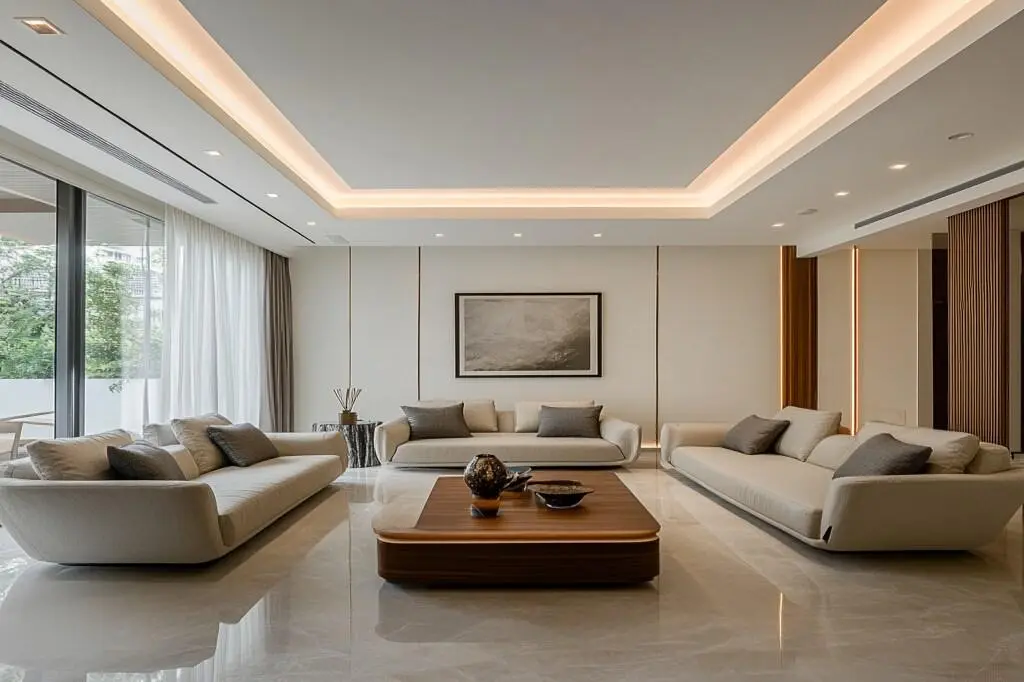
When planning a home painting project, most homeowners spend considerable time choosing colours for their walls. However, one important surface often receives less attention: the ceiling.
The ceiling plays a major role in the overall appearance of an interior. Its colour, finish and lighting arrangement can influence how spacious, bright and coordinated a room feels.
A simple white ceiling can create a clean and timeless appearance, while a carefully selected colour can introduce warmth, contrast or a distinctive design element.
Whether you are painting a newly constructed house, renovating an apartment or refreshing an existing room, choosing the right ceiling paint can improve the overall look of your interiors.
This guide explores modern ceiling painting ideas, suitable colours, finishes, preparation requirements and common mistakes to avoid.
WHY CEILING PAINTING MATTERS
Ceilings are an important part of interior design because they connect the walls, lighting and architectural elements of a room.
A suitable ceiling colour can:
- Improve the visual balance of a room.
- Create a brighter appearance.
- Complement wall colours.
- Highlight architectural features.
- Coordinate with false ceiling designs.
- Give an older interior a refreshed look.
Ceiling painting is also an important maintenance activity. Dust, stains, old coatings and minor surface defects can affect the appearance of overhead surfaces.
- WHITE CEILING PAINT: A TIMELESS CHOICE
White remains one of the most commonly selected ceiling colours.
It offers several advantages:
- Creates a clean appearance.
- Complements many wall colours.
- Works with different interior design styles.
- Can help reflect available light.
- Provides a simple and coordinated finish.
White ceilings are particularly suitable when the walls already contain strong colours or decorative patterns.
Different variations of white include:
- Pure white.
- Warm white.
- Ivory white.
- Off-white.
- Soft cream.
The best shade depends on the wall colour, flooring, lighting and furniture.
- POPULAR CEILING COLOUR IDEAS FOR MODERN HOMES
Although white is versatile, homeowners can explore other colours.
Soft Beige
Beige can create a warm and coordinated appearance when combined with cream, ivory or earthy wall shades.
Light Grey
Light grey can complement modern interiors and provide a subtle contrast with white walls.
Pastel Blue
A pale blue ceiling can introduce a gentle, refreshing appearance in selected rooms.
Soft Sage Green
Sage green can work as a decorative choice in interiors that use natural colours and wooden elements.
Cream
Cream ceilings can complement warm lighting and traditional interior designs.
Dark Charcoal
Dark ceiling shades may work in selected large rooms, entertainment spaces or modern interiors where the lighting and proportions support the design.
Dark colours should be considered carefully in rooms with limited natural light or low ceilings.
- CEILING COLOUR IDEAS FOR DIFFERENT ROOMS
Living Room Ceiling
The living room ceiling should complement the overall interior.
Consider:
- White for a clean appearance.
- Warm ivory for a softer look.
- Light grey for contemporary interiors.
- Subtle beige for warm colour schemes.
If the living room includes a false ceiling, different sections can be coordinated with lighting and decorative details.
Bedroom Ceiling
Bedrooms generally benefit from a comfortable and visually balanced atmosphere.
Popular options include white, ivory, pale blue and soft pastel shades.
A ceiling colour that coordinates with the bedroom walls can create a cohesive appearance.
Kitchen Ceiling
Kitchen ceilings should be easy to maintain.
Light shades can help create a brighter appearance.
Also consider ventilation, cooking-related residue and the suitability of the selected coating.
Bathroom Ceiling
Bathrooms are exposed to moisture and humidity.
Use a coating suitable for bathroom conditions and ensure adequate ventilation.
If the ceiling shows water stains or damp patches, identify the moisture source before painting.
Children's Room Ceiling
Children's rooms can accommodate more playful design choices.
Consider pastel colours, subtle patterns or carefully selected decorative elements.
The final design should remain comfortable and visually balanced.
- FALSE CEILING PAINTING IDEAS
False ceilings provide additional opportunities for decorative ceiling painting.
Some popular approaches include:
Simple white false ceilings
A white finish can create a clean appearance and complement most wall colour schemes.
Two-tone ceiling designs
Two complementary shades can introduce visual separation between ceiling sections.
Cove lighting combinations
Lighting can highlight ceiling shapes and create a softer interior atmosphere.
Wood-inspired ceiling accents
Selected decorative areas can use wood-inspired finishes to complement furniture and flooring.
Minimalist ceiling designs
A simple, uniform finish may work better than an overly complicated design in compact rooms.
The choice should depend on ceiling height, lighting placement and the overall interior style.
- HOW TO CHOOSE THE RIGHT CEILING PAINT FINISH
Ceiling paint should be selected according to the surface and room conditions.
Matte finish
A matte ceiling finish offers low light reflection and can help create a uniform visual appearance.
It is often selected for conventional residential ceilings.
Low-sheen finish
Some low-sheen products offer a slight degree of reflectivity and may be suitable for selected applications.
Specialised moisture-resistant coatings
Bathrooms and other moisture-prone areas may require coatings specifically recommended for those conditions.
Always check the manufacturer's technical specifications before choosing a product.
- HOW CEILING COLOURS AFFECT ROOM SIZE
Ceiling colours can influence the perceived proportions of a room.
Low ceilings
Lighter ceiling colours can help create a sense of openness.
High ceilings
Rooms with higher ceilings may accommodate stronger colour contrasts or decorative details.
Small rooms
A simple, light-coloured ceiling can help maintain visual continuity.
Large rooms
Larger rooms provide more flexibility for decorative ceiling designs.
Remember that lighting, furniture and wall colours also influence how spacious a room feels.
- WALL AND CEILING COLOUR COMBINATIONS
A coordinated wall and ceiling palette can improve the overall interior appearance.
White walls with a white ceiling
A classic combination for a simple and bright interior.
Beige walls with an ivory ceiling
A warm combination for living rooms and bedrooms.
Grey walls with a white ceiling
A contemporary palette that offers subtle contrast.
Sage green walls with a cream ceiling
A natural colour scheme for relaxing interiors.
Blue walls with a soft white ceiling
A refreshing combination that can work in selected bedrooms and living spaces.
- CEILING PREPARATION BEFORE PAINTING
Ceiling preparation is important because overhead surfaces may contain dust, cracks, stains and old coatings.
A typical process includes:
Step 1: Inspect the ceiling
Look for cracks, peeling paint, stains and damaged plaster.
Step 2: Identify moisture problems
Investigate water stains and leakage before repainting.
Step 3: Remove loose paint
Remove flaking or unstable coating material.
Step 4: Repair surface defects
Repair suitable cracks and damaged areas using compatible materials.
Step 5: Sand and clean
Prepare the ceiling for a uniform finish.
Step 6: Apply suitable primer
Select a primer recommended for the surface and paint system.
Step 7: Apply ceiling paint
Follow the recommended application method and drying instructions.
- COMMON CEILING PAINTING MISTAKES
Ignoring water stains
Water stains may indicate an underlying leakage problem.
Using an unsuitable paint product
Select a coating designed for the ceiling's material and environment.
Skipping preparation
Dust, loose paint and damaged plaster can affect the final finish.
Choosing dark colours without considering lighting
Dark ceilings may visually reduce the perceived height of some rooms.
Neglecting furniture and floor protection
Ceiling painting requires suitable protection against paint splashes.
Ignoring lighting fixtures
Light fittings should be protected and handled safely during the painting process.
- PROFESSIONAL CEILING PAINTING SERVICES IN PATNA
Ceiling painting requires careful preparation and application, especially in rooms with decorative false ceilings, high ceilings or complex lighting arrangements.
Homeowners in Patna should consider the ceiling condition, room dimensions, existing wall colours and product suitability before beginning work.
PaintGen offers painting and home improvement services, including interior painting and related surface-finishing solutions.
Whether you want a simple white ceiling, a coordinated colour scheme or a refreshed false ceiling, proper planning can help achieve the desired result.
Visit https://www.paintgen.in/ to explore painting services and discuss your ceiling painting requirements.
FINAL THOUGHTS
Ceiling painting is an important part of creating a complete and coordinated interior.
From timeless white ceilings to soft beige, grey and pastel shades, the right colour can complement the walls and improve the overall visual appearance of your home.
Before painting, inspect the ceiling, address moisture-related problems, prepare the surface and select a suitable finish.
If you are planning a home makeover in Patna, explore PaintGen's painting services and plan your ceiling design along with the rest of your interior.
Questions people ask
Which colour is best for a house ceiling?
White, warm white and ivory are versatile ceiling colours that complement many interior styles. Soft beige, light grey and pastel shades can also work depending on the room design and lighting.
Should the ceiling be lighter than the walls?
Not necessarily, but lighter ceilings are commonly selected to create a brighter and more open visual appearance. Darker ceiling colours can also work in carefully designed interiors.
Which paint finish is best for ceilings?
Matte finishes are commonly preferred because they provide low reflection and a uniform appearance. The final selection should depend on the ceiling material and manufacturer's recommendations.
Can I paint a ceiling with damp patches?
First identify and resolve the moisture source. Allow the ceiling to dry and repair damaged material before applying a suitable primer and paint system.
Last updated 9 November 2026.