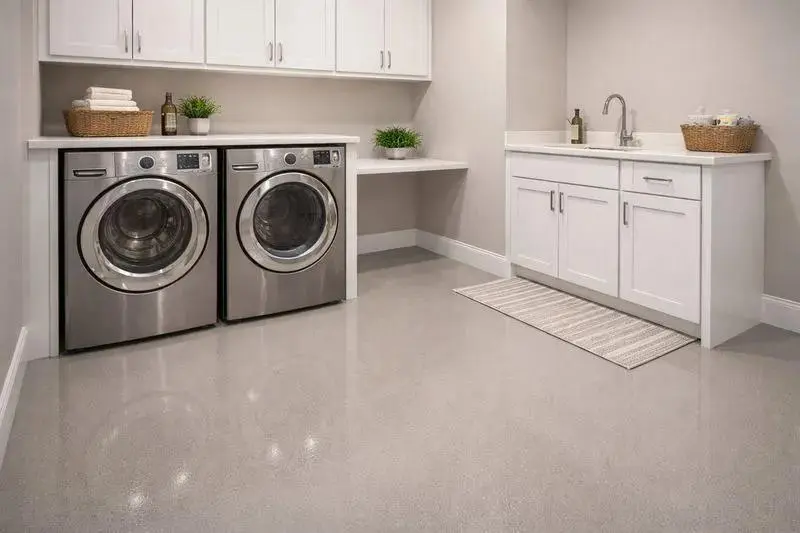
Concrete floors are commonly found in garages, utility spaces, storage rooms, balconies and other areas of residential properties.
Although concrete is known for its strength, untreated concrete surfaces can look dull, collect dust and develop visible stains over time.
Painting or coating a suitable concrete floor can improve its appearance and make the surface easier to maintain.
However, floor painting is different from ordinary wall painting. Concrete floors experience foot traffic, furniture movement, abrasion and sometimes moisture exposure.
Choosing the correct coating and preparing the surface properly are essential for a satisfactory result.
This guide explains the basics of concrete floor painting, suitable applications, surface preparation and maintenance.
What Is Concrete Floor Painting?
Concrete floor painting involves applying a suitable coating to a prepared concrete surface.
Depending on the product, the coating may provide:
- A more attractive appearance
- A coloured floor surface
- Improved resistance to everyday wear
- Easier routine cleaning
- Reduced surface dusting
- A more uniform finish
The performance depends on the coating formulation and the condition of the concrete.
Ordinary wall emulsion should not be used as a substitute for a product specifically designed for floors.
1. Identify Where the Floor Coating Will Be Used
The first step is understanding the purpose of the space.
Different areas experience different levels of use.
Garage floors
Garage floors may experience vehicle movement, oil stains, dust and abrasion.
A suitable floor coating should be selected according to the expected traffic and exposure.
Utility rooms
Utility rooms may benefit from a practical, easy-to-clean surface.
The coating should be compatible with the concrete and the room's conditions.
Balconies
Balconies experience outdoor weather conditions, sunlight and moisture.
The selected product must be suitable for exterior exposure and the existing waterproofing arrangement.
Storage areas
Storage spaces may require a simple, practical finish that can tolerate occasional movement of stored items.
2. Choose the Correct Concrete Floor Coating
Different floor coating systems offer different properties.
Acrylic floor coatings
Certain acrylic coatings are designed for concrete floors.
Their suitability depends on the specific product, intended use and exposure.
Epoxy coatings
Epoxy floor systems can create a hard, continuous coating when properly specified and applied.
They are often considered for garages, workshops and utility spaces.
However, the concrete must be appropriately prepared, and moisture conditions should be checked.
Polyurethane coatings
Some polyurethane products are used as protective floor coatings or as part of a coating system.
Their performance depends on the specific formulation and compatibility with the underlying coating.
Concrete sealers
Concrete sealers are used to protect suitable concrete surfaces and may provide different levels of sheen and protection.
They are not necessarily equivalent to coloured floor paint.
3. Inspect the Concrete Surface
Before applying any coating, inspect the concrete.
Look for:
- Cracks
- Surface dust
- Oil stains
- Grease
- Loose concrete
- Moisture
- Uneven areas
- Previous coatings
- Surface contamination
The inspection helps determine whether cleaning, repair or specialised preparation is required.
4. Check for Moisture Problems
Moisture is one of the important factors in concrete floor coating.
Water vapour or moisture moving through the concrete can affect coating adhesion.
Possible warning signs include:
- Dark damp patches
- White powdery deposits
- Peeling previous coatings
- Persistent wet areas
- Water entering from nearby walls
A moisture assessment may be necessary before choosing a coating system.
Do not cover a moisture problem with floor paint.
5. Clean the Floor Thoroughly
A concrete surface should be free from dust, dirt, oil and unsuitable contaminants.
Depending on the floor condition, cleaning may require suitable detergents, mechanical preparation or specialised treatment.
The surface must be allowed to dry as required by the coating manufacturer.
6. Repair Cracks and Surface Damage
Cracks and damaged areas should be assessed before coating.
Small surface imperfections may be repairable with compatible concrete repair materials.
Larger cracks or areas showing movement may require further inspection.
The repair material must be compatible with the selected coating system.
7. Prepare the Surface for Coating
Surface preparation may involve:
- Mechanical grinding
- Removing old coatings
- Removing loose concrete
- Cleaning dust
- Repairing defects
- Applying a suitable primer
The exact preparation method depends on the coating system.
A smooth-looking floor is not automatically ready for coating. The surface profile and cleanliness must meet the product requirements.
8. Apply the Coating According to Instructions
Once preparation is complete, the selected floor coating can be applied.
Important considerations include:
- Mixing proportions
- Pot life where applicable
- Application thickness
- Number of coats
- Drying time
- Temperature
- Humidity
- Recoating interval
Some coating systems require specialised application tools or trained applicators.
9. Choose a Suitable Floor Colour
Floor colours can influence how a space looks.
Common options include:
Light grey
Light grey can create a clean and contemporary appearance.
Medium grey
Medium grey is a practical-looking choice for many utility spaces.
Dark grey
Dark grey can create a bold appearance but may make dust more noticeable under certain lighting conditions.
Earthy tones
Earthy colours can complement outdoor and semi-outdoor areas.
Neutral beige
Beige can create a warmer appearance in suitable residential spaces.
The colour should be considered alongside wall colours, furniture and lighting.
10. Allow the Floor to Cure Properly
A coated floor should not be used before the manufacturer recommends it.
There may be different waiting periods for:
- Light foot traffic
- Furniture placement
- Heavy use
- Vehicle movement
Do not assume that a surface is ready for full use simply because it feels dry.
11. Maintain the Painted Concrete Floor
Routine maintenance can help preserve the appearance of the coating.
- Remove dust regularly.
- Clean spills promptly.
- Use suitable cleaning products.
- Avoid dragging heavy furniture.
- Follow the coating manufacturer's maintenance instructions.
- Inspect damaged areas periodically.
If the coating becomes chipped or starts peeling, identify the cause before applying another layer.
Is Concrete Floor Painting Suitable for Every Home?
Not every concrete floor should be painted.
The suitability depends on:
- Concrete condition
- Moisture levels
- Surface strength
- Existing coatings
- Expected traffic
- Indoor or outdoor location
- Coating compatibility
A professional assessment can help determine the appropriate approach.
Get Professional Painting Guidance from PaintGen
Concrete floor coating requires different materials and preparation methods from ordinary wall painting.
PaintGen helps homeowners in Patna with residential painting and home improvement requirements.
Before planning a floor coating project, discuss the surface condition, moisture exposure, intended use and suitable product specifications.
A well-prepared concrete surface and a compatible coating system are essential for a better-looking and more practical floor.
Questions people ask
Can ordinary wall paint be used on concrete floors?
Ordinary wall paint is generally not designed to withstand floor traffic and abrasion. Use a coating specifically designed for concrete floors.
Is epoxy suitable for concrete floors?
Epoxy can be suitable for certain concrete floor applications, including garages and utility spaces, provided the concrete is properly prepared and the coating is correctly specified.
Can damp concrete be painted?
No coating should be applied without checking the moisture condition and product requirements. Excess moisture can cause adhesion problems and coating failure.
How long does concrete floor paint take to dry?
Drying and curing times depend on the coating product, temperature, humidity and application thickness. Follow the manufacturer's instructions before allowing foot or vehicle traffic.
Last updated 24 November 2026.