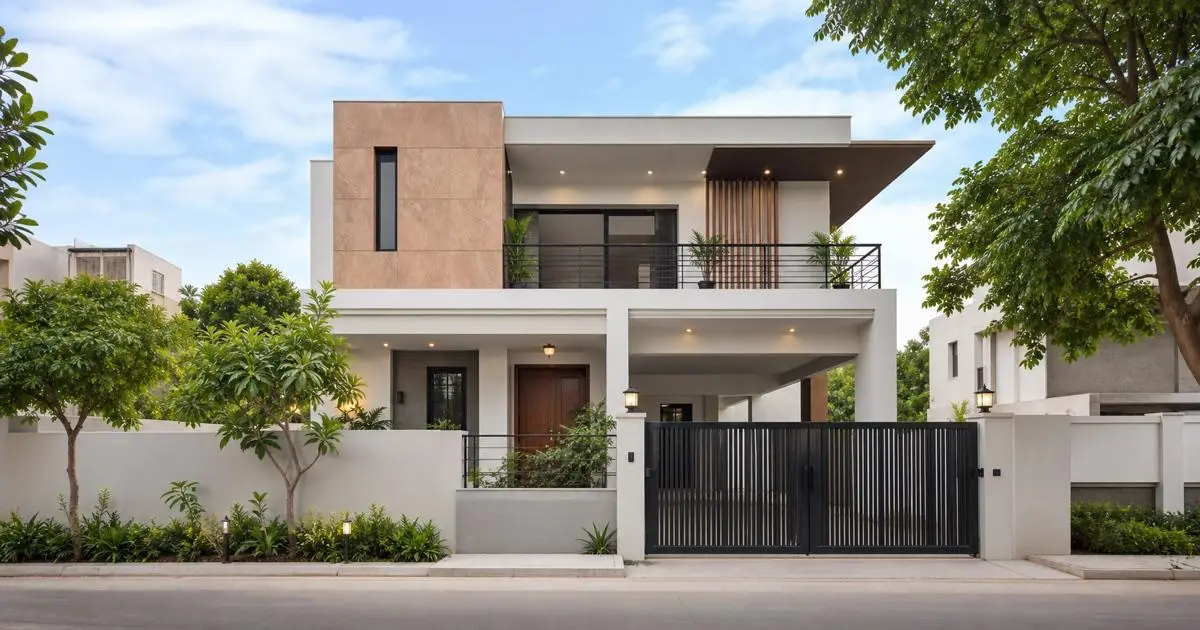
The exterior colour of a house creates its first impression.
Whether you own a compact residential property, an independent house or a modern duplex, the exterior paint colour can influence the overall appearance of the building.
Choosing exterior colours is not simply about selecting your favourite shade. The colours should complement the architectural design, surrounding environment, doors, windows, balcony railings and other exterior features.
Indian homes come in different architectural styles, from traditional houses to contemporary apartments and independent villas.
This makes exterior colour selection an important part of planning a painting project.
In this guide, we explore exterior colour combinations for Indian homes, practical shade-selection tips and common mistakes to avoid.
WHY IS EXTERIOR COLOUR SELECTION IMPORTANT?
Exterior paint colours influence the appearance of a property.
A suitable colour combination can:
- Complement the architecture.
- Highlight selected structural features.
- Coordinate walls and decorative elements.
- Create a visually balanced appearance.
- Refresh an older building.
- Improve the overall presentation of the property.
The colour palette should also be considered alongside the exterior surface and the selected paint product.
- WHITE AND BEIGE EXTERIOR COLOUR COMBINATION
White and beige are versatile colours for residential exteriors.
White can create a clean appearance, while beige introduces warmth.
This combination may work well for:
- Independent houses.
- Contemporary villas.
- Traditional residential buildings.
- Homes with decorative exterior features.
A practical approach is to use a lighter main wall colour and a slightly darker shade for selected architectural elements.
- GREY AND WHITE EXTERIOR COLOURS
Grey and white can create a contemporary exterior appearance.
Possible combinations include:
Light Grey and White
A subtle and balanced colour scheme.
Charcoal Grey and White
A stronger contrast for modern architecture.
Warm Grey and Cream
A softer alternative to cool grey shades.
Grey and Beige
A combination that can create a natural-looking exterior palette.
Consider the colour of the windows, entrance door and balcony railings before finalising the shades.
- CREAM AND BROWN EXTERIOR COLOUR COMBINATIONS
Cream and brown can create a warm exterior appearance.
Cream may be used as the primary wall colour.
Brown can be introduced through:
- Decorative exterior sections.
- Window surrounds.
- Entrance areas.
- Selected architectural features.
This palette can complement properties with wooden doors or natural-looking exterior materials.
- EARTHY EXTERIOR COLOUR COMBINATIONS
Earthy colours are another option for residential exteriors.
Consider:
Terracotta and Cream
Terracotta introduces a warm decorative element.
Olive Green and Beige
A natural-inspired colour palette.
Sand Beige and Brown
A coordinated warm combination.
Muted Yellow and White
A soft colour scheme for selected architectural styles.
Earthy colours can work with exterior landscaping and natural materials.
- MODERN EXTERIOR COLOUR COMBINATIONS FOR DUPLEX HOMES
Duplex houses may contain multiple architectural sections that can be highlighted using complementary colours.
Some ideas include:
White with Charcoal Grey
Use white as the main wall colour and charcoal on selected sections.
Beige with Dark Brown
A warm and coordinated palette.
Light Grey with Navy Blue
A contemporary colour combination.
Cream with Muted Green
A softer natural-inspired approach.
Avoid introducing too many contrasting shades.
A simple combination of two main colours and one accent shade may be sufficient.
- HOW TO CHOOSE EXTERIOR COLOURS FOR A SMALL HOUSE
Smaller residential properties may benefit from simpler colour combinations.
Consider:
- Light main wall colours.
- Limited contrasting shades.
- Coordinated entrance colours.
- Subtle decorative sections.
- Consistent window and door colours.
The purpose is to create a visually balanced exterior rather than overcrowding the facade with different colours.
- EXTERIOR COLOUR COMBINATIONS FOR APARTMENTS
Apartment buildings may have different colour-selection requirements.
Consider the following:
Balcony sections
Use a complementary colour that coordinates with the main exterior.
Window surrounds
A subtle contrasting shade may highlight architectural details.
Main facade
Choose a colour that works across the building.
Entrance areas
The entrance may have a distinct colour treatment.
For shared buildings, exterior colour decisions may require approval from the relevant property management or housing association.
- HOW TO MATCH EXTERIOR COLOURS WITH DOORS AND WINDOWS
Exterior colour selection should include the entire facade.
Wooden doors
Warm beige, cream and muted shades can complement wooden finishes.
Metal windows
Grey, black and white may coordinate with different wall colours.
Balcony railings
Consider their existing finish before selecting wall shades.
Roof or parapet details
Coordinate decorative sections with the main facade.
The overall colour scheme should remain consistent.
- HOW NATURAL LIGHT AFFECTS EXTERIOR COLOURS
Exterior paint shades may look different depending on sunlight and shadows.
A shade that appears subtle on a colour card may look brighter on a large exterior wall.
Consider:
- Direct sunlight.
- Shaded areas.
- Orientation of the building.
- Surrounding structures.
- Outdoor lighting.
- Existing exterior materials.
Test selected colours on the actual exterior surface before completing the project.
- HOW TO SELECT EXTERIOR PAINT
Choose exterior paint according to the surface and environmental exposure.
Consider:
Product suitability
Select paint intended for exterior walls.
Surface compatibility
The paint should be appropriate for the substrate.
Weather exposure
Consider the wall's exposure to sunlight and rainfall.
Finish
Choose a finish suitable for the exterior design and maintenance requirements.
Preparation
Inspect the wall before painting.
Follow the manufacturer's product specifications.
- COMMON EXTERIOR COLOUR SELECTION MISTAKES
Choosing too many colours
Excessive colour combinations can make the facade look cluttered.
Ignoring the architecture
Colours should complement the building's design.
Selecting colours only from photographs
Colours may appear different under actual lighting conditions.
Ignoring neighbouring structures
Consider the surrounding environment where appropriate.
Not testing samples
Evaluate the selected shades on the property.
Ignoring surface condition
Exterior walls should be inspected before repainting.
- EXTERIOR COLOUR SELECTION FOR HOMES IN PATNA
Homeowners in Patna planning exterior repainting can consider neutral and earthy combinations that coordinate with the property's architectural style.
Before selecting colours, evaluate the existing exterior materials, sunlight exposure, balcony sections and entrance features.
Test the chosen shades on the actual wall to understand their appearance under daylight.
PaintGen offers painting and home improvement solutions for residential properties.
Visit https://www.paintgen.in/ to explore available painting services and discuss exterior painting requirements.
FINAL THOUGHTS
Exterior colour selection plays an important role in the appearance of a residential property.
White, beige, grey, brown and earthy shades can be combined in different ways to create attractive exterior designs.
The best combination depends on the architecture, lighting, surrounding environment and existing exterior features.
Test the shades before painting the entire house and choose products suitable for exterior surfaces.
Questions people ask
Which colour combination is best for an Indian house exterior?
White and beige, grey and white, cream and brown, and earthy shades are popular options. The best combination depends on the house's architecture and surroundings.
How many colours should I use for a house exterior?
A simple combination of two main colours and one accent shade can create a balanced exterior. The number of colours should depend on the architectural design.
How can I choose the right exterior paint colour?
Consider the architecture, sunlight, surrounding structures, doors, windows and existing exterior materials. Test selected shades on the actual wall before painting.
Are light colours suitable for exterior walls?
Light colours can create a bright appearance and coordinate with many architectural styles. The selected product should be suitable for exterior exposure and the wall surface.
Last updated 19 November 2026.