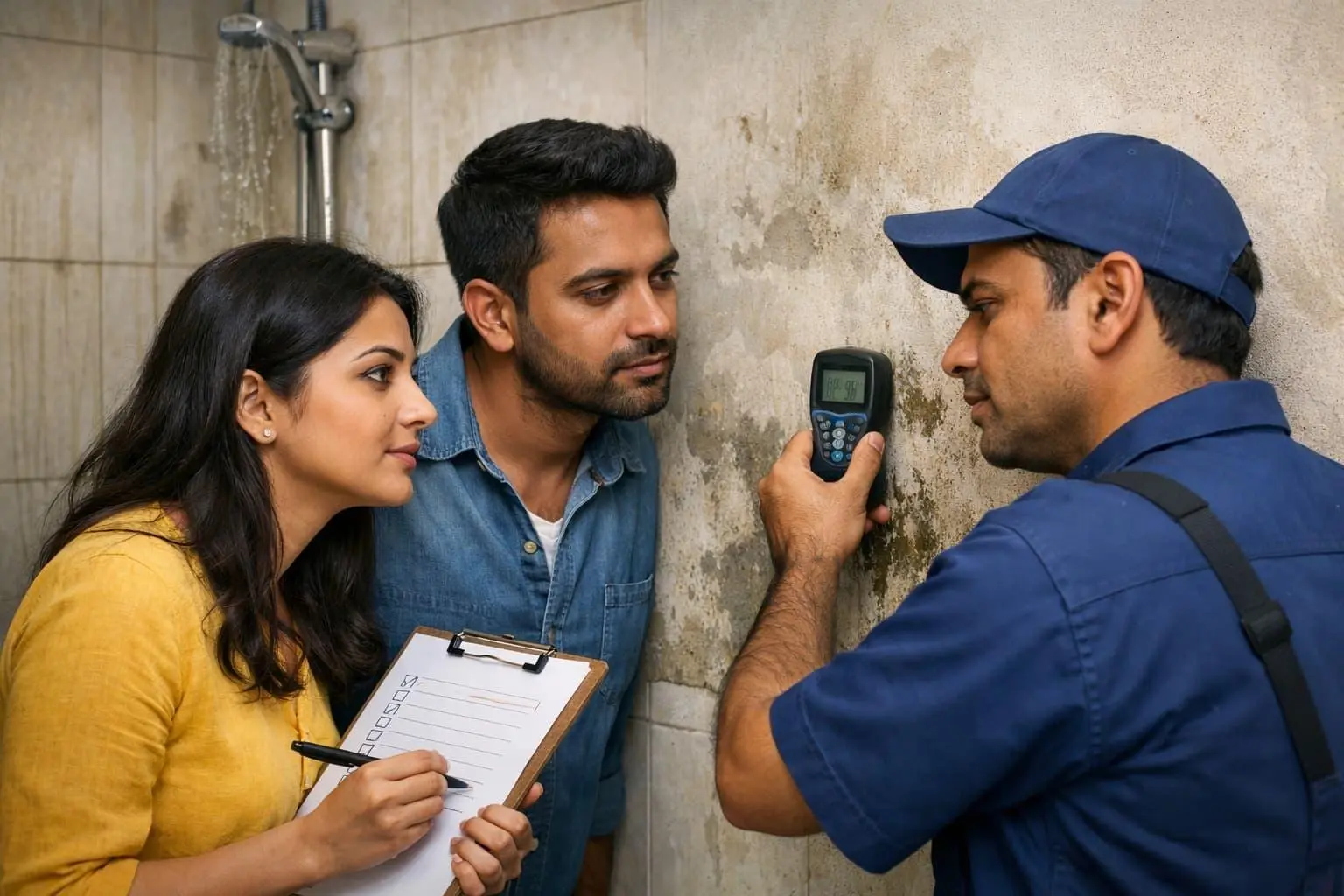
Have you recently repaired a damp wall, only to notice the same patch returning a few weeks later?
Repeated dampness can be frustrating for homeowners, especially when fresh paint starts peeling or develops stains shortly after renovation.
One possible reason is hidden plumbing leakage.
Water pipes installed inside walls, bathrooms, kitchens and floors may develop leaks that are not immediately visible. If the source is not identified, repainting the affected surface may provide only a temporary improvement.
Before planning interior painting in Patna, it is important to understand how hidden water leakage develops, what signs to look for and when professional plumbing inspection may be necessary.
What Is Hidden Plumbing Leakage?
Hidden plumbing leakage occurs when water escapes from a pipe, joint or connection that is concealed behind a wall, floor or other building surface.
Unlike a leaking tap, the problem may not be immediately visible.
Water can gradually spread through plaster, masonry and other materials before appearing as a damp patch.
Common locations include:
- Bathroom walls
- Kitchen walls
- Concealed water supply pipes
- Pipe joints
- Bathroom floors
- Areas near overhead water tanks
- Water supply connections
1. Damp Patches That Keep Returning
One of the most common warning signs is a damp patch that repeatedly appears in the same location.
You may notice that:
- The wall becomes wet again after repair.
- Paint starts peeling after a few weeks.
- The damp area gradually becomes larger.
- Moisture remains even during dry weather.
Recurring dampness may indicate an unresolved water source.
2. Peeling Paint Near Plumbing Areas
If paint repeatedly peels around bathrooms, kitchens or pipe routes, investigate the possibility of concealed water leakage.
Water entering the wall can weaken the paint system and affect the plaster underneath.
However, peeling paint may also result from other issues, including poor surface preparation or unsuitable paint application.
An inspection is necessary before deciding on repairs.
3. Unexpected Water Stains
Water stains may appear on walls or ceilings without an obvious external source.
Possible locations include:
- Below bathrooms
- Near kitchen plumbing
- Around concealed pipes
- Beneath overhead tanks
- Near water supply connections
The pattern and location can help a professional identify possible sources.
4. Unusual Water Meter Movement
If your property has a water meter, unexpected meter movement may help indicate a leak.
A basic observation can be made by:
- Turning off water-using appliances and taps.
- Ensuring that no water is being used.
- Observing the meter.
- Checking whether the meter continues to register water flow.
Automatic appliances, tank refilling systems and other connections can affect the result, so this is only an initial check.
A professional plumbing inspection may be necessary to confirm the cause.
5. Unexplained Increase in Water Consumption
If water usage increases without a clear reason, inspect the plumbing system.
Possible causes include:
- Leaking pipes
- Faulty flush systems
- Leaking taps
- Hidden connections
- Tank overflow
- Damaged valves
A sudden increase in water usage does not automatically prove that a concealed pipe is leaking.
6. Musty Smell Around Walls and Floors
Persistent moisture can contribute to unpleasant indoor smells.
If a room develops a musty odour, inspect nearby walls, floors, plumbing connections and ventilation.
Do not rely on fragrance products to cover the smell.
Identify and correct the moisture source.
Common Causes of Hidden Plumbing Leakage
Ageing pipes
Older plumbing systems may experience corrosion, deterioration or joint failure depending on their materials and installation.
Poor pipe connections
Incorrectly installed or damaged connections may allow water to escape.
Excessive water pressure
Unsuitable pressure conditions can increase stress on certain plumbing components.
Physical damage
Drilling, renovation and other activities can accidentally damage concealed pipes.
Faulty fittings
Valves, connectors and other plumbing components may deteriorate over time.
Hidden Pipe Leakage vs External Wall Dampness
Not every damp patch is caused by plumbing.
Water may also enter through:
- External wall cracks
- Roof leakage
- Terrace waterproofing defects
- Ground moisture
- Window joints
- Poor drainage
The source should be identified before choosing a treatment.
This distinction is particularly important because internal repainting cannot correct an external water entry problem.
How Professionals Identify Hidden Water Leaks
Depending on the property and suspected source, professionals may use different inspection techniques.
Visual inspection
The location and pattern of dampness are examined.
Plumbing pressure testing
A suitable test may help assess the condition of a water supply system.
Moisture measurement
Moisture meters may help assess moisture levels in selected materials.
Thermal inspection
Thermal imaging may sometimes help identify temperature patterns associated with moisture or leakage.
It does not independently prove the presence of a plumbing leak.
Controlled isolation
Sections of the plumbing system may be isolated to help narrow down the possible source.
The appropriate method depends on the plumbing layout and access.
What Should You Do When You Find a Hidden Leak?
Step 1: Stop unnecessary water use
If a leak is suspected, avoid unnecessary water use in the affected area.
Step 2: Identify the likely location
Observe where the dampness appears and whether it changes with water usage.
Step 3: Contact a plumber
A qualified plumber can inspect the plumbing system and recommend suitable repairs.
Step 4: Repair the source
Damaged pipes, joints or fittings should be repaired appropriately.
Step 5: Allow the affected area to dry
Wet plaster and masonry may need considerable drying time.
Step 6: Repair the wall
Damaged plaster and other surface defects should be addressed after the moisture problem has been corrected.
Step 7: Repaint the wall
Painting should begin only when the surface meets the moisture and preparation requirements of the selected paint system.
Why Repainting Before Fixing a Leak Is a Mistake
Fresh paint cannot stop water escaping from a concealed pipe.
If the leakage continues, the new paint may develop:
- Bubbles
- Peeling
- Discolouration
- Damp patches
- Surface deterioration
This can result in repeated repair expenses.
Always address the source of water before planning cosmetic improvements.
Plumbing and Painting Solutions in Patna
PaintGen provides plumbing repair, waterproofing and painting services in Patna.
When dampness appears near bathrooms, kitchens or concealed pipe routes, homeowners should investigate the source before repainting.
The correct sequence is simple: identify the leak, repair the plumbing, allow the surface to dry, restore damaged plaster and then apply a suitable paint system.
This approach can help prevent repeated wall repairs and protect the quality of your home painting project.
Questions people ask
How do I know if a wall has a hidden water pipe leak?
Recurring damp patches, unexplained water stains, peeling paint and unexpected water consumption may indicate a concealed leak. Professional inspection is needed to confirm the source.
Can I paint over a damp wall caused by a pipe leak?
No. The leak should be repaired first, and the affected wall should be allowed to dry before surface preparation and repainting.
Can a plumber detect leakage inside walls?
Yes. Depending on the plumbing layout, professionals may use pressure testing, moisture measurement, visual inspection and other suitable methods to investigate concealed leakage.
Why does dampness return after repainting?
Dampness may return when its original cause has not been corrected. Possible sources include plumbing leakage, roof seepage, external water entry and rising moisture.
Last updated 25 November 2026.