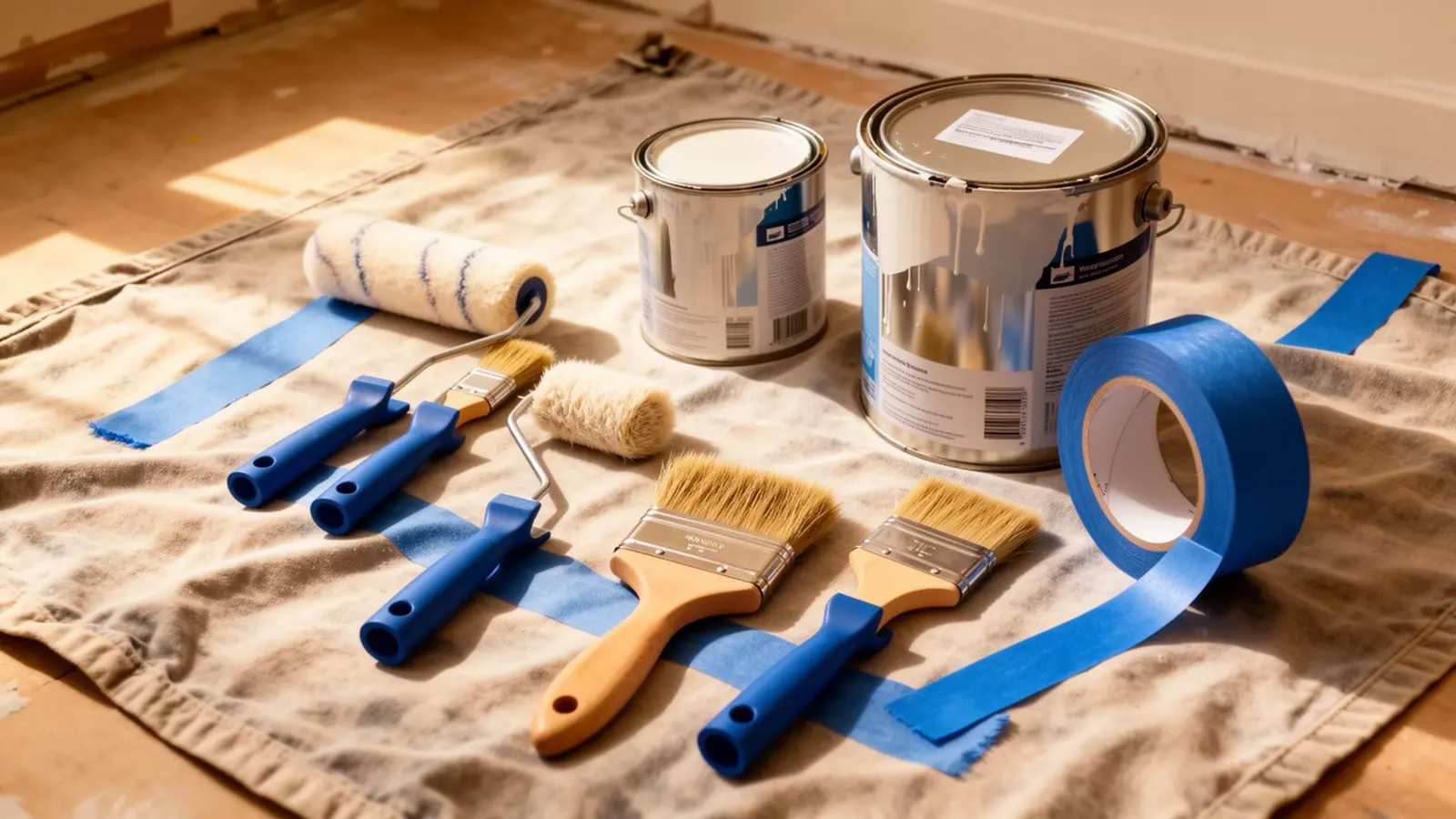
Paint brushes and rollers are essential tools in almost every home painting project. Whether you are refreshing a bedroom, repainting a living room or working on a small DIY project, using clean painting tools can make the application process easier.
However, many homeowners make the mistake of leaving brushes and rollers covered in paint after completing a job. When paint dries inside the bristles or roller fibres, the tools can become stiff, difficult to use and unsuitable for achieving a smooth finish.
Proper cleaning and storage can help maintain painting tools and reduce unnecessary replacement costs.
In this guide, we explain how to clean paint brushes and rollers, how to dry them properly and how to store them between painting projects.
Why Is Cleaning Painting Equipment Important?
Paint brushes and rollers collect paint during application.
If the paint is allowed to dry inside the tools, it may affect their flexibility and performance.
Regular cleaning can help:
- Maintain brush softness
- Preserve roller texture
- Reduce paint buildup
- Improve application quality
- Extend the useful life of suitable tools
- Reduce unnecessary waste
The correct cleaning method depends on the type of paint used.
1. Identify the Type of Paint First
Before cleaning a brush or roller, identify the paint formulation.
Different paint products require different cleaning methods.
Water-based paints
Many interior emulsions and acrylic paints are water-based.
These tools can generally be cleaned using water while the paint is still wet, following the manufacturer's cleaning instructions.
Oil-based paints
Some enamel and other solvent-based coatings require a compatible cleaning solvent.
Water alone will generally not remove these products effectively.
Always check the paint container for cleaning recommendations.
2. How to Clean a Paint Brush After Water-Based Paint
Follow these steps:
- Remove excess paint by gently wiping the brush against the paint container or a suitable disposable surface.
- Rinse the bristles using lukewarm or cool running water as appropriate.
- Use a small amount of mild soap if recommended for the brush and paint.
- Gently work the bristles until the remaining paint is removed.
- Rinse thoroughly.
- Remove excess water without pulling or damaging the bristles.
- Reshape the brush and allow it to dry.
Do not use excessive force because it can loosen bristles and damage the brush.
3. How to Clean Paint Rollers
Rollers can hold a considerable amount of paint, especially when they have been used on large walls.
Begin by removing excess paint using a suitable scraper or by gently rolling the sleeve on a disposable surface.
For water-based paint:
- Remove the roller sleeve if it is designed to be detachable.
- Rinse it using water.
- Gently work out remaining paint.
- Repeat until the water runs relatively clear.
- Remove excess water.
- Allow the sleeve to dry completely.
Avoid crushing or twisting the roller aggressively because this may damage its fibres.
4. How to Clean Brushes Used with Oil-Based Paint
Oil-based paint requires a compatible cleaning solvent.
The correct solvent should be specified by the paint manufacturer.
Basic precautions include:
- Work in a well-ventilated location.
- Wear suitable protective gloves.
- Keep solvents away from flames and heat.
- Use a suitable container.
- Follow the solvent's safety instructions.
- Dispose of waste responsibly.
Never pour solvent or paint residue into drains.
5. How to Clean a Paint Roller Tray
Paint trays also need attention after painting.
For water-based paint:
- Remove remaining liquid paint.
- Clean the tray according to the paint instructions.
- Rinse with water where appropriate.
- Dry thoroughly before storing.
If disposable tray liners are used, remove and dispose of them responsibly.
6. How to Dry Paint Brushes Properly
After cleaning, drying is equally important.
A wet brush should not be stored in a closed container because trapped moisture may affect its condition.
For better results:
- Remove excess water gently.
- Reshape the bristles.
- Hang the brush if its design allows.
- Keep it in a ventilated area.
- Avoid direct high heat.
- Store only after it is completely dry.
7. How to Store Paint Rollers
Roller sleeves should be clean and dry before long-term storage.
Store them in a clean, dry place away from dust, moisture and direct sunlight.
Avoid placing heavy objects on top of roller sleeves because this can distort their shape.
8. Common Mistakes to Avoid
Leaving paint on tools overnight
Dried paint becomes harder to remove and may damage the equipment.
Using the wrong cleaning liquid
Water will not properly clean every type of paint. Always follow the product instructions.
Using excessive force
Aggressive scrubbing can damage brush bristles and roller fibres.
Storing wet tools
Moisture trapped in storage can affect the condition of the equipment.
Ignoring safety instructions
Solvents and certain cleaning products require careful handling.
9. When Should You Replace a Paint Brush or Roller?
Cleaning cannot restore every damaged tool.
Replacement may be necessary when:
- Brush bristles have become permanently stiff.
- The brush has lost too many bristles.
- The roller sleeve is damaged.
- Paint has hardened deep inside the fibres.
- The tool no longer applies paint evenly.
- The roller has developed an irregular surface.
Using a damaged tool can affect the quality of the finished surface.
10. Professional Painting Tools and Equipment
Professional painting projects often require different brushes, rollers and application accessories.
The correct equipment depends on:
- Surface type
- Paint formulation
- Wall size
- Desired finish
- Application method
- Project requirements
Using suitable tools can help achieve more consistent application.
Painting Services in Patna with PaintGen
For larger painting projects, homeowners may prefer professional assistance rather than purchasing and maintaining all the necessary equipment.
PaintGen provides painting services in Patna for residential properties.
From interior painting to exterior painting and decorative finishes, homeowners can discuss the work requirements and suitable painting solutions before starting.
Whether you are handling a small DIY project or planning a complete home repaint, properly maintained painting tools can make a meaningful difference to the final result.
Questions people ask
Can paint brushes be reused after cleaning?
Yes. Suitable paint brushes can often be reused when they are cleaned correctly, dried completely and stored properly.
Can I wash oil-based paint brushes with water?
Water alone generally cannot remove oil-based paint effectively. Use the compatible cleaning product recommended by the paint manufacturer.
How should paint rollers be stored?
Clean roller sleeves thoroughly, allow them to dry completely and store them in a clean, dry place away from dust and direct sunlight.
When should I replace a paint roller?
Replace a roller when its fibres are damaged, paint has hardened inside it or it no longer applies paint evenly.
Last updated 24 November 2026.