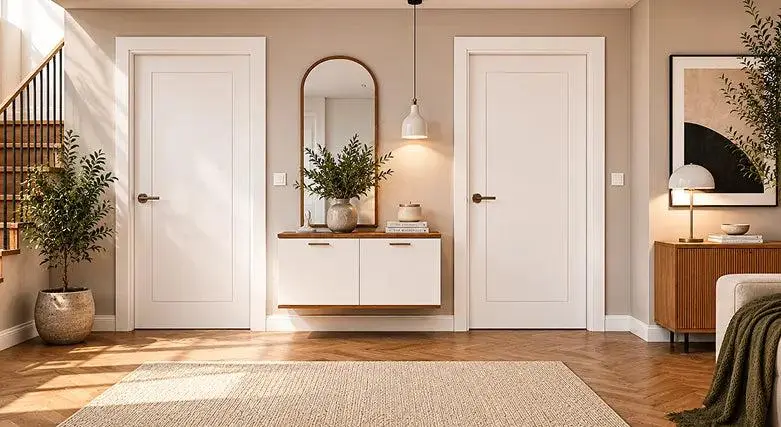
Interior doors are an important part of a home's overall appearance.
Although they may not receive as much attention as walls and furniture, doors can influence the visual character of a room.
A freshly painted door can help refresh an older interior, coordinate with the wall colours and create a more consistent design.
Whether you are repainting bedroom doors, bathroom doors, hallway doors or other interior doors, choosing the right colour and paint product is important.
The preparation process also depends on the door material and existing coating.
This guide explores interior door painting ideas, colour combinations, preparation methods and practical finishing tips for residential properties.
WHY SHOULD YOU PAINT INTERIOR DOORS?
Interior door painting can refresh the appearance of a home.
Some reasons homeowners consider repainting doors include:
Refreshing an older interior
Existing doors may have faded or become visually outdated.
Coordinating with wall colours
Doors can complement the room's overall colour scheme.
Updating the design
A different colour can change the appearance of a door.
Addressing visible marks
Repainting may help refresh surfaces with suitable existing coatings.
Creating a consistent interior
Matching door colours can create a coordinated appearance across different rooms.
- BEST COLOURS FOR INTERIOR DOORS
Door colour selection depends on the surrounding walls, flooring and furniture.
White
A versatile colour for many interiors.
Cream
A warm alternative to white.
Light Grey
A contemporary option.
Dark Grey
A bold colour for modern interiors.
Muted Green
A natural-looking decorative shade.
Navy Blue
A distinctive colour for selected interior styles.
Brown
A warm colour that may complement existing furniture.
Choose a colour that works with the entire room rather than considering the door in isolation.
- WHITE INTERIOR DOOR PAINTING IDEAS
White doors are popular because they can coordinate with many wall colours.
White doors may complement:
- Beige walls.
- Light grey walls.
- Pastel interiors.
- Contemporary furniture.
- Minimalist designs.
- Neutral colour schemes.
Different shades of white may create different visual effects.
Consider the existing wall colour and lighting before selecting a shade.
- DARK COLOUR INTERIOR DOOR IDEAS
Dark colours can create a distinctive appearance.
Charcoal Grey
A contemporary option.
Navy Blue
A decorative colour for selected interiors.
Dark Brown
A warm colour that may complement wooden furniture.
Black
A bold option for modern design styles.
Dark doors may create a strong contrast with lighter walls.
However, the colour should complement the room's overall design.
- TWO-COLOUR DOOR PAINTING IDEAS
Some interior doors may feature decorative colour combinations.
White and Grey
A contemporary combination.
Cream and Brown
A warm palette.
Muted Green and White
A subtle decorative design.
Navy and White
A contrasting colour scheme.
Two-tone designs
Selected door sections may feature different colours where suitable.
The design should complement the door's shape and existing architecture.
- HOW TO CHOOSE PAINT FOR INTERIOR DOORS
The paint should be suitable for the door material and existing surface.
Wooden doors
Choose a coating suitable for the wood surface and existing finish.
Previously painted doors
Check compatibility with the existing coating.
Metal doors
Use a suitable coating system for metal surfaces.
Door finish
Consider the intended appearance and maintenance requirements.
Surface condition
Inspect the door for defects.
Follow the manufacturer's product specifications.
- HOW TO PREPARE INTERIOR DOORS BEFORE PAINTING
Preparation is important for achieving a neat finish.
Step 1: Inspect the door
Check for scratches, peeling paint and other defects.
Step 2: Remove hardware where appropriate
Protect or remove suitable handles and fittings.
Step 3: Clean the surface
Remove dust and suitable contaminants.
Step 4: Prepare the existing coating
Address loose or unstable paint.
Step 5: Sand where appropriate
Follow the preparation requirements for the selected coating.
Step 6: Remove dust
Ensure the surface is clean.
Step 7: Complete repairs
Repair suitable surface defects.
Step 8: Apply compatible primer
Use primer according to the coating system.
Step 9: Apply finishing paint
Follow the manufacturer's instructions.
Step 10: Allow adequate drying
Observe product-specific drying requirements.
- HOW TO PAINT PANEL DOORS
Panel doors require careful attention to different sections.
Consider:
- Door edges.
- Panel sections.
- Raised details.
- Recessed areas.
- Flat surfaces.
- Hardware.
Apply paint according to the recommended application sequence.
Avoid excessive paint accumulation around decorative details.
- HOW TO PAINT FLAT INTERIOR DOORS
Flat doors may have a simpler surface.
Preparation remains important.
Inspect the door for:
- Scratches.
- Surface irregularities.
- Existing coating defects.
- Dust.
- Stains.
Use suitable preparation and application methods according to the selected paint.
- COMMON INTERIOR DOOR PAINTING MISTAKES
Skipping preparation
Surface defects may affect the final appearance.
Using unsuitable paint
Choose products compatible with the door material.
Applying excessive paint
Too much paint may affect the finish.
Ignoring door edges
Edges should be considered during preparation and application.
Not protecting hardware
Protect or remove suitable fittings.
Rushing drying time
Follow the manufacturer's recommended drying intervals.
- HOW TO COORDINATE DOOR COLOURS WITH WALLS
Door colour should complement the surrounding interior.
White doors
May coordinate with neutral walls.
Grey doors
May complement contemporary interiors.
Brown doors
May work with warm colour schemes.
Dark doors
May create contrast with light walls.
Matching doors
A consistent colour across multiple doors can create a coordinated appearance.
Consider the flooring and furniture when selecting a colour.
- INTERIOR DOOR PAINTING IN PATNA
Homeowners in Patna planning to refresh their interior doors can consider white, cream, light grey, brown and selected darker shades.
Before painting, inspect the door material and existing coating.
Choose a suitable paint system and prepare the surface according to the manufacturer's instructions.
PaintGen offers painting and home improvement solutions for residential properties.
Visit https://www.paintgen.in/ to explore available painting services and discuss interior door painting requirements.
FINAL THOUGHTS
Interior door painting can help refresh the appearance of a home.
White, grey, beige, brown and selected accent colours can complement different interior styles.
The best colour depends on the wall shades, furniture, flooring and door design.
Proper preparation, suitable paint selection and careful application are essential for achieving a neat finish.
Questions people ask
Which colour is best for interior doors?
White, cream, light grey, charcoal, navy blue and brown are popular options. The best colour depends on the wall colours, flooring and interior style.
Can I paint an already painted interior door?
Yes, an existing painted door may be repainted after inspecting the coating, cleaning the surface and completing suitable preparation. Select a compatible paint system.
Should interior doors match the walls?
Interior doors can match the walls, use a complementary colour or create contrast. The decision depends on the overall interior design.
How do I prepare a door before painting?
Inspect the door, clean the surface, address loose paint, prepare the existing coating, complete repairs and apply compatible primer where required.
Last updated 20 November 2026.