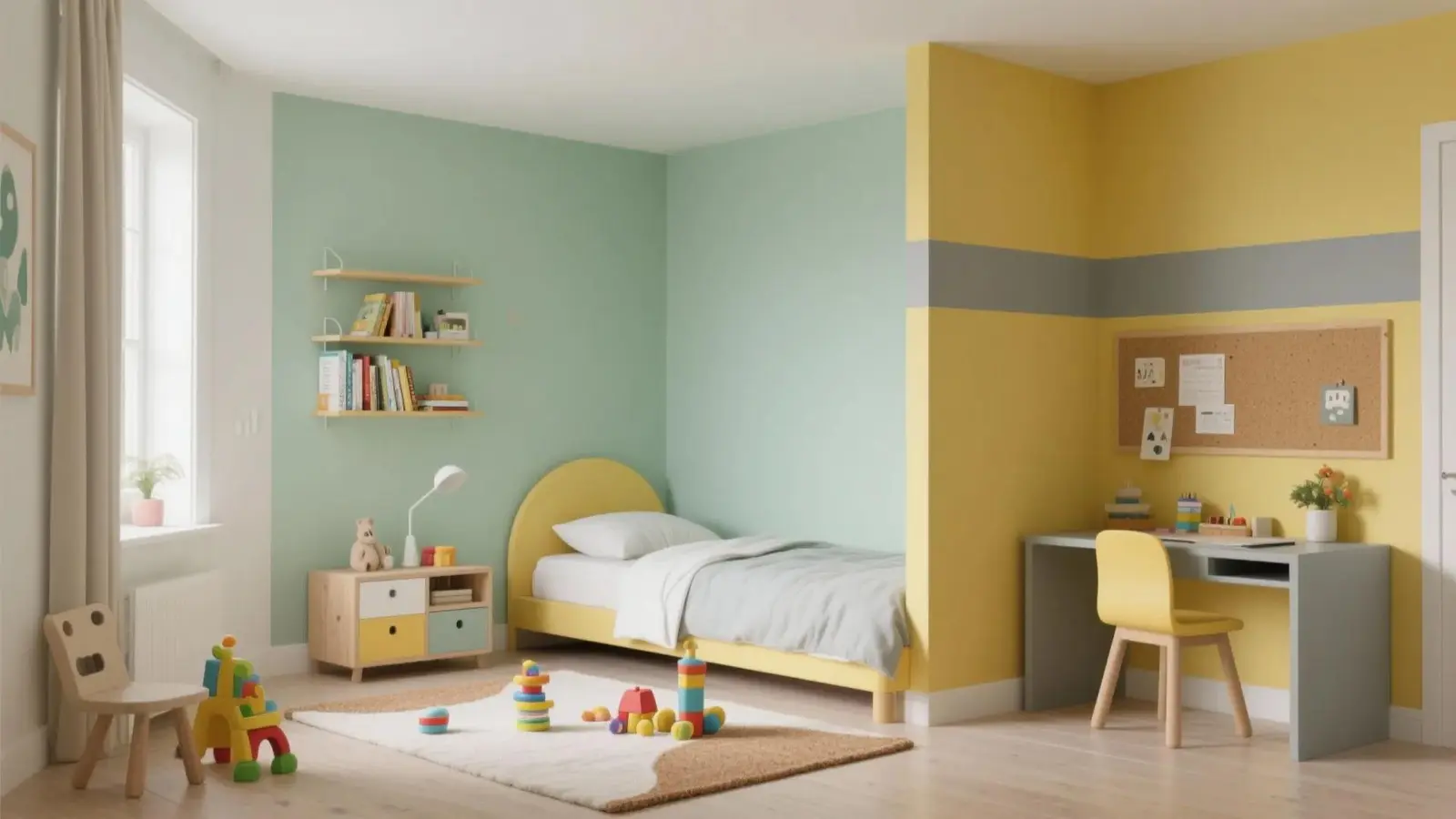
A child's bedroom is more than a place to sleep. It is a space where children play, read, learn, relax and develop their interests.
The colours and design of the room can help create an environment that feels welcoming, comfortable and enjoyable.
When planning a children's bedroom, wall painting deserves special attention. Instead of using the same colour throughout the house, parents can explore playful combinations, simple patterns and attractive accent walls.
However, designing a kids room requires a balance between creativity and practicality.
The selected colours should work with the room's lighting, furniture and size. The paint products should also be suitable for interior residential use and applied according to manufacturer instructions.
This guide explores kids room painting ideas, colour combinations, decorative wall designs and practical tips for creating an attractive children's bedroom.
WHY IS KIDS ROOM WALL PAINTING IMPORTANT?
Children spend a considerable amount of time in their bedrooms.
The room may be used for:
- Sleeping.
- Playing.
- Reading.
- Studying.
- Creative activities.
- Organising toys and personal belongings.
A thoughtfully designed interior can make the room feel more personalised and organised.
Kids room painting can also help:
- Introduce colour into the bedroom.
- Create a playful visual theme.
- Highlight selected walls.
- Coordinate the room with furniture.
- Refresh an older bedroom.
- Create separate visual zones for different activities.
The aim is to design a room that children enjoy while remaining practical for everyday family life.
- PASTEL COLOURS FOR A SOFT KIDS BEDROOM
Pastel colours are popular for children's bedrooms because they create a gentle visual appearance.
Mint Green
Mint green can introduce a fresh and natural feeling.
It works well with white furniture and light wooden finishes.
Baby Blue
Baby blue is a versatile option for children's bedrooms.
It can be combined with white, grey and light yellow.
Soft Pink
Soft pink can create a warm and playful appearance.
It can work with cream, white and muted lavender.
Lavender
Lavender offers a distinctive alternative to traditional pink and blue colour schemes.
It can be combined with white or pale grey.
Pale Yellow
Soft yellow can add brightness and warmth to a child's room.
Avoid selecting a shade that feels excessively intense across large wall areas.
- TWO-COLOUR COMBINATIONS FOR CHILDREN'S BEDROOMS
Using two complementary colours can create a more interesting bedroom design.
Some combinations include:
Mint Green and White
A fresh and simple combination.
Baby Blue and Light Grey
A soft contemporary palette.
Pastel Pink and Cream
A warm and gentle colour scheme.
Lavender and White
A playful but understated combination.
Soft Yellow and Beige
A cheerful palette with a neutral balance.
Choose colours according to the child's preferences and the room's existing furniture.
- ANIMAL-THEMED WALL PAINTING IDEAS
Animal-inspired wall designs can make a children's bedroom more playful.
Possible ideas include:
- Small painted animal silhouettes.
- Jungle-inspired decorative sections.
- Birds and cloud patterns.
- Underwater-themed designs.
- Simple forest illustrations.
- Animal-shaped geometric patterns.
These designs can be applied to a selected feature wall instead of covering every wall.
For detailed illustrations, professional decorative painting or suitable wall decals may be considered.
- SPACE-THEMED KIDS ROOM WALL DESIGNS
Children interested in astronomy and space may enjoy a space-themed bedroom.
Design ideas include:
- Painted stars.
- Moon illustrations.
- Planet patterns.
- Rocket designs.
- Dark blue accent walls.
- Simple galaxy-inspired decorative effects.
A dark blue feature wall can be balanced with lighter colours on the remaining walls.
For younger children, use simple patterns rather than making the entire room visually crowded.
- GEOMETRIC WALL PAINTING IDEAS
Geometric designs are useful for creating modern children's bedrooms.
Some ideas include:
- Large painted circles.
- Triangular patterns.
- Diagonal colour sections.
- Vertical stripes.
- Abstract shapes.
- Half-painted walls.
- Simple overlapping colour blocks.
Geometric patterns can be adapted to different room sizes.
For smaller bedrooms, a limited number of larger shapes may create a cleaner appearance than many small patterns.
- RAINBOW WALL PAINTING FOR CHILDREN
Rainbow designs are another creative option.
A simple rainbow can become the central decorative element of a child's bedroom.
Possible ideas include:
- Pastel rainbow arches.
- Rainbow patterns above the bed.
- Small rainbow accents.
- Cloud and rainbow combinations.
- A rainbow-themed reading corner.
Choose colours that coordinate with the remaining room palette.
Avoid using too many highly saturated colours if the room already has colourful furniture and accessories.
- MOUNTAIN AND NATURE-INSPIRED WALL DESIGNS
Nature-inspired designs can create an attractive children's bedroom.
Popular ideas include:
Mountain silhouettes
Painted mountain shapes can create a distinctive feature wall.
Cloud patterns
Soft clouds can be used with pastel blue backgrounds.
Tree illustrations
Simple tree shapes can create a playful forest-inspired design.
Sun and sky patterns
Yellow and blue combinations can create a cheerful appearance.
Nature-themed colours
Muted green, beige and soft blue can create a coordinated palette.
These designs can be created using suitable decorative painting techniques.
- HOW TO CHOOSE THE RIGHT COLOUR FOR YOUR CHILD'S ROOM
Before choosing paint, consider the following factors.
Child's age
A nursery, toddler's bedroom and teenager's room may require different design approaches.
Personal preference
Consider the child's favourite colours and interests.
Room dimensions
Light colours may be useful in smaller bedrooms.
Natural lighting
Evaluate how the colours appear under daylight and artificial lighting.
Furniture
Coordinate the wall colours with beds, cupboards, desks and curtains.
Future flexibility
Choose a design that can be updated without requiring a complete renovation.
- WHICH PAINT FINISH IS SUITABLE FOR CHILDREN'S ROOMS?
The paint finish should be selected according to the room's usage and maintenance requirements.
Matte finish
Provides a soft appearance and can work well on selected bedroom walls.
Washable interior paint
Can be useful where regular cleaning is expected.
Satin finish
Some satin products provide a balance between appearance and cleaning characteristics.
Ceiling paint
A suitable low-sheen product may be selected for the ceiling.
Do not assume that every washable or low-VOC paint has identical characteristics.
Read the product specifications and cleaning instructions.
- WHAT SHOULD PARENTS CHECK BEFORE BUYING KIDS ROOM PAINT?
Children's bedrooms require careful product selection.
Consider:
Product suitability
Choose paint specifically designed for interior residential use.
VOC information
Check the manufacturer's VOC specifications.
Odour information
Review product information regarding odour and ventilation.
Cleaning instructions
Understand how the finished surface should be maintained.
Drying requirements
Follow the manufacturer's drying and curing instructions.
Certifications
If a product claims a particular safety or environmental certification, verify the certification rather than relying on general marketing descriptions.
Parents should keep children away from the painting area during application and until the product's occupancy and ventilation requirements have been met.
- HOW TO PLAN A KIDS ROOM PAINTING PROJECT
A well-planned painting project can make the room easier to organise.
Step 1: Decide on a theme
Choose a simple theme based on the child's interests.
Step 2: Select the main wall colour
Choose a base colour that works with the room's lighting.
Step 3: Select an accent wall
Identify one wall for a decorative treatment if required.
Step 4: Finalise the colour combination
Test sample shades before purchasing the full quantity.
Step 5: Inspect the walls
Check for cracks, peeling paint and surface damage.
Step 6: Prepare the room
Move furniture and protect flooring.
Step 7: Complete surface preparation
Clean and repair the walls according to their condition.
Step 8: Apply suitable primer and paint
Follow the selected manufacturer's recommended system.
Step 9: Complete decorative work
Apply geometric patterns, illustrations or other approved designs.
Step 10: Inspect and ventilate
Check the finish and follow all product instructions before allowing children to use the room.
- COMMON KIDS ROOM PAINTING MISTAKES
Using too many colours
Too many contrasting shades can make the room feel visually crowded.
Ignoring furniture colours
Wall designs should coordinate with beds, cupboards and other furnishings.
Choosing a complicated theme
A design that is difficult to update may not remain suitable as the child grows.
Using unsuitable paint products
Select products appropriate for interior use.
Ignoring ventilation
Follow the product's ventilation and occupancy requirements.
Painting without testing samples
Evaluate the colours before completing the entire room.
Overdecorating every wall
A single feature wall may be enough to create the desired effect.
- KIDS ROOM PAINTING IDEAS FOR SMALL BEDROOMS
Small children's bedrooms require thoughtful colour selection.
Useful design approaches include:
- Light pastel wall colours.
- Simple geometric patterns.
- One decorative accent wall.
- Limited colour combinations.
- Coordinated ceiling colours.
- Minimal visual clutter.
Avoid overly complicated designs that compete with furniture and storage.
A simple colour palette can make a compact bedroom feel more organised.
- KIDS ROOM PAINTING IDEAS FOR HOMES IN PATNA
Families in Patna planning to refresh their children's bedrooms can explore different painting styles according to room size, lighting and furniture.
For example, a compact bedroom may benefit from pastel shades, while a larger bedroom may accommodate a decorative geometric feature wall.
Before beginning, involve the child in selecting the theme and evaluate the colour samples under the room's actual lighting.
PaintGen provides painting and home improvement solutions for residential properties.
Visit https://www.paintgen.in/ to explore available painting services and discuss your bedroom painting requirements.
FINAL THOUGHTS
A child's bedroom should reflect personality, creativity and everyday comfort.
Pastel colours, geometric patterns, animal illustrations, rainbow designs and nature-inspired themes are all options worth considering.
However, an attractive design should also be practical, easy to maintain and suitable for the room's dimensions.
Choose compatible paint products, prepare the walls properly and plan decorative elements carefully.
With thoughtful colour selection and a well-organised painting process, you can create a children's bedroom that feels welcoming and enjoyable.
Questions people ask
Which colour is best for a kids bedroom?
Mint green, baby blue, soft pink, lavender and pale yellow are popular options. Choose according to the child's preferences, room lighting and existing furniture.
Which paint is suitable for children's rooms?
Choose an interior paint product suitable for residential bedrooms. Check VOC specifications, cleaning characteristics, manufacturer instructions and ventilation requirements.
How can I decorate a kids room using wall paint?
You can use geometric patterns, rainbow designs, animal illustrations, mountain silhouettes or pastel accent walls. Choose a design that complements the furniture and room size.
How many colours should I use in a kids bedroom?
A practical approach is to use one main colour, one complementary colour and an optional accent shade. This creates visual interest without making the room feel overcrowded.
Last updated 16 November 2026.