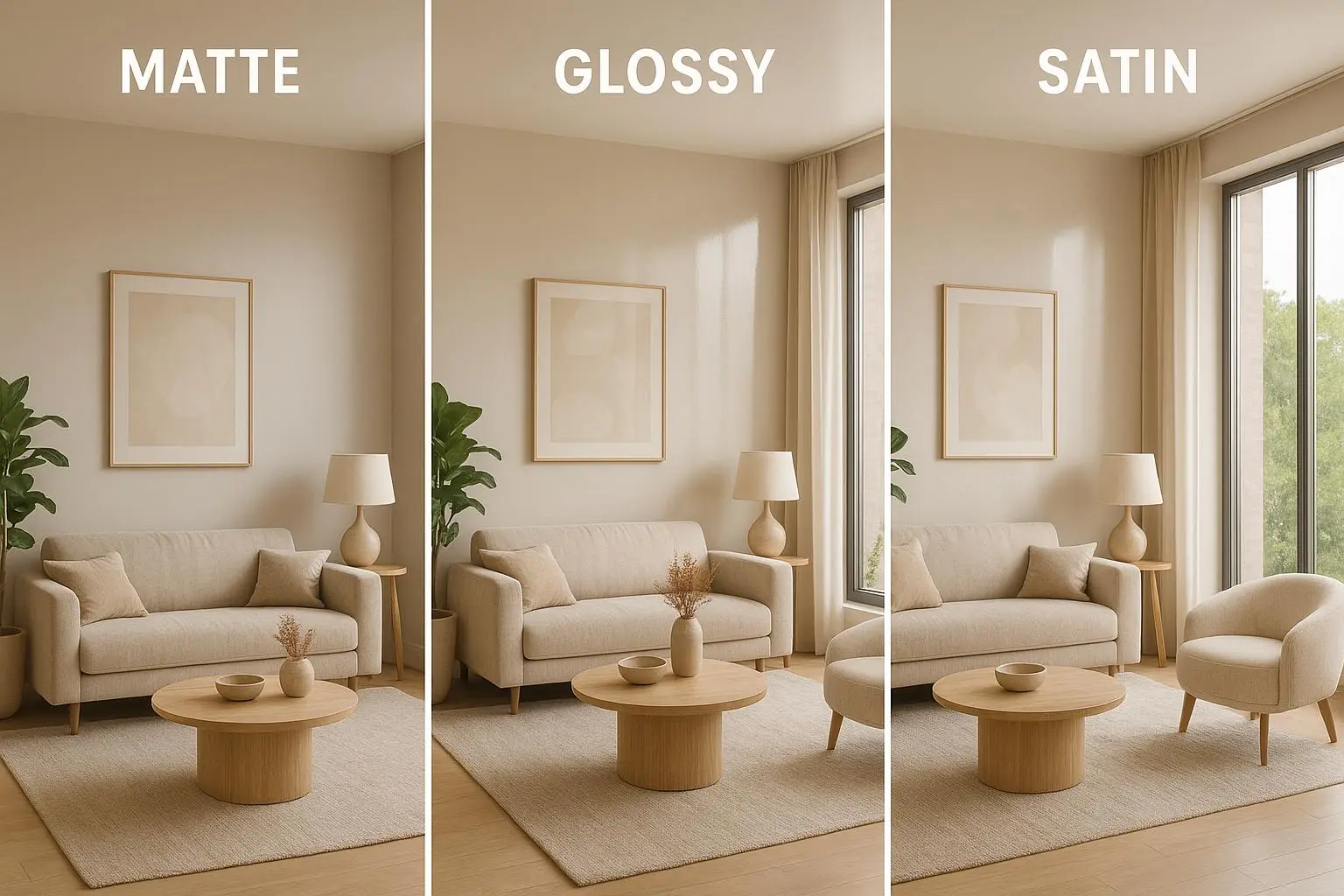
Selecting the right paint colour is only one part of planning a home painting project. Another important decision is choosing the appropriate paint finish.
Have you ever noticed that two walls painted in a similar shade can look completely different? One may appear soft and flat, while another reflects light and creates a noticeable shine.
This difference often comes from the paint finish.
Matte, satin and gloss are common finish categories used in residential painting. Each has different visual characteristics and practical considerations.
Choosing the right finish can influence the appearance of your walls, the way they reflect light and how easily the surface can be cleaned.
Whether you are repainting a living room, bedroom, kitchen or hallway, understanding these differences can help you make a more informed decision.
WHAT IS A PAINT FINISH?
A paint finish describes the appearance of a painted surface, particularly how much light it reflects.
Some finishes absorb more light and appear relatively flat. Others reflect more light and create a noticeable sheen.
The finish can influence:
- The overall appearance of a room.
- How visible minor surface imperfections appear.
- How easily certain marks can be cleaned.
- The visual character of the wall.
- The suitability of the coating for different applications.
Paint manufacturers use different finish names and product classifications. Therefore, always check the specific product's technical information instead of assuming every brand uses identical definitions.
- WHAT IS MATTE PAINT?
Matte paint has a low-sheen appearance and reflects relatively little light.
It creates a smooth, understated visual effect that works well in many modern interior designs.
Advantages of matte paint
Soft appearance
Matte finishes create a subtle appearance without noticeable shine.
Reduced reflection
Because matte surfaces reflect less light, they can help reduce the visibility of minor surface irregularities.
Modern interiors
Matte finishes can complement minimalist, contemporary and understated interior styles.
Suitable colour presentation
Many homeowners prefer the appearance of deep or neutral colours in matte finishes because of their soft visual character.
Limitations of matte paint
Some matte finishes may be more difficult to clean than washable alternatives.
Repeated rubbing can sometimes affect the appearance of the surface.
Therefore, check the cleaning instructions and scrub resistance of the particular product before selecting it.
Where can matte paint be used?
Matte finishes may be suitable for:
- Bedrooms.
- Living rooms.
- Ceilings.
- Low-traffic areas.
- Spaces where a soft visual appearance is preferred.
- WHAT IS SATIN PAINT?
Satin paint offers a subtle sheen between a low-sheen finish and a more reflective gloss finish.
It creates a balance between visual softness and practical maintenance.
Advantages of satin paint
Balanced appearance
Satin finishes provide some light reflection without appearing excessively shiny.
Cleaning convenience
Depending on the product, satin finishes may be easier to wipe than certain conventional matte paints.
Versatility
Satin can be suitable for several residential applications.
Practical maintenance
It may be a useful option in spaces that receive regular everyday use.
Limitations of satin paint
Satin finishes can make surface imperfections more noticeable than low-sheen matte finishes.
Proper wall preparation remains important.
Where can satin paint be used?
Depending on product recommendations, satin finishes may be considered for:
- Hallways.
- Children's rooms.
- Living spaces.
- Frequently used interior areas.
- Selected kitchen and utility areas.
- WHAT IS GLOSS PAINT?
Gloss paint produces a more reflective finish.
It creates a shiny surface that can make selected architectural features stand out.
Advantages of gloss paint
Reflective appearance
Gloss surfaces reflect more light and can create a bright, polished effect.
Easy maintenance
Many suitable gloss coatings can be cleaned relatively easily, depending on the product formulation.
Decorative highlights
Gloss finishes are frequently used to highlight selected surfaces and details.
Visual contrast
A gloss finish can create an interesting contrast when combined with matte walls.
Limitations of gloss paint
Gloss finishes can make wall imperfections more noticeable.
They also require careful surface preparation to achieve an even appearance.
Where can gloss paint be used?
Depending on the product and substrate, gloss finishes may be used for:
- Doors.
- Wooden trim.
- Metal railings.
- Selected furniture.
- Decorative architectural details.
Not every gloss product is suitable for every surface. Use a coating specifically designed for the material being painted.
- MATTE VS. SATIN VS. GLOSS: KEY DIFFERENCES
Matte
Appearance: Soft and low sheen.
Light reflection: Low.
Visual effect: Understated and subtle.
Common consideration: Check cleaning and stain-resistance specifications.
Satin
Appearance: Smooth with a gentle sheen.
Light reflection: Moderate.
Visual effect: Balanced and versatile.
Common consideration: Wall preparation is important for an even appearance.
Gloss
Appearance: Shiny and reflective.
Light reflection: High.
Visual effect: Polished and decorative.
Common consideration: Surface defects may be more noticeable.
There is no universally best finish. The appropriate option depends on the room, surface condition, desired appearance and manufacturer's recommendations.
- WHICH PAINT FINISH IS BEST FOR DIFFERENT ROOMS?
Living room
Living rooms usually receive regular use and contain furniture, decorative objects and different lighting sources.
Matte and satin finishes can both work, depending on the desired appearance and cleaning requirements.
Bedroom
A matte finish may suit homeowners who prefer a soft and relaxing visual effect.
A suitable washable satin product may also be considered where easier maintenance is important.
Kitchen
Kitchen walls can be exposed to grease, stains and regular cleaning.
Choose a paint specifically recommended for kitchen conditions, with suitable washability and surface performance.
Bathroom
Bathrooms experience higher moisture exposure.
Select a suitable moisture-resistant paint system and maintain proper ventilation. Painting alone cannot solve leakage or inadequate waterproofing.
Hallways
Hallways receive frequent contact and may develop marks from everyday movement.
A suitable washable satin or other durable low-sheen product may be worth considering.
Ceilings
Matte finishes are often selected for ceilings because they reduce reflections and create a uniform appearance.
- HOW PAINT FINISH AFFECTS THE APPEARANCE OF WALLS
Paint finish influences the way a colour is perceived.
A dark shade in a low-sheen finish may appear rich and understated.
The same colour in a highly reflective finish may appear brighter under certain lighting conditions.
Light reflection can also influence how surface defects appear.
Walls with minor irregularities may benefit visually from a lower-sheen finish, although the underlying defects should still be repaired where necessary.
For this reason, wall preparation should never be ignored simply because a matte finish has been selected.
- HOW TO CHOOSE THE RIGHT PAINT FINISH
Consider these factors before purchasing paint.
Wall condition
Inspect the wall for uneven plaster, scratches, repairs and surface imperfections.
Room usage
Consider how frequently the surface will be touched or cleaned.
Cleaning requirements
Check the product's washability and stain-resistance specifications.
Lighting
Observe how natural and artificial light affect the selected finish.
Interior design
Consider the appearance of furniture, flooring, curtains and decorative features.
Budget
Compare the total cost of the paint system and application rather than considering only the price per litre.
- COMMON MISTAKES WHEN SELECTING PAINT FINISHES
Choosing a finish without inspecting the wall
Highly reflective finishes can highlight imperfections.
Assuming every satin paint is washable
Cleaning performance depends on the product formulation.
Using the same finish everywhere
Different rooms may have different maintenance requirements.
Ignoring surface preparation
Poor preparation can affect the final appearance of any finish.
Selecting paint only from a digital image
Always compare physical samples under actual lighting conditions.
- WHY PAINT QUALITY AND APPLICATION MATTER
Even a suitable paint finish may produce disappointing results if the wall has not been prepared correctly.
The painting system should consider:
- Surface cleaning.
- Crack and defect repairs.
- Suitable putty, where required.
- Proper sanding.
- Compatible primer.
- Recommended paint application.
- Correct drying intervals.
Follow the manufacturer's instructions regarding coverage, application tools and the recommended number of coats.
Professional painters can help homeowners evaluate the wall condition and select a finish that suits the project.
- SELECTING THE RIGHT FINISH FOR YOUR PATNA HOME
When planning a home painting project in Patna, consider the function of each room and the level of maintenance it requires.
For example:
A living room may benefit from a soft low-sheen finish.
A hallway may need a more practical washable coating.
A bedroom may suit a subtle finish that complements its colour scheme.
Wooden doors and selected furniture may require a suitable wood coating rather than ordinary wall emulsion.
PaintGen provides home painting services in Patna and helps homeowners explore different paint options and finishes.
You can use the PaintGen website's colour tools and price calculator to begin planning your painting requirements.
FINAL THOUGHTS
Matte, satin and gloss paint finishes each have their own visual characteristics and practical considerations.
Matte offers a soft appearance, satin provides a balanced sheen, and gloss creates a more reflective surface.
The right selection depends on your room, wall condition, cleaning requirements and preferred interior style.
Before making a final decision, compare physical samples and check the technical information provided by the manufacturer.
Planning to repaint your home?
Visit https://www.paintgen.in/ to explore PaintGen's painting services in Patna and discuss suitable options for your walls.
Questions people ask
Is matte or satin paint better for interior walls?
Matte is suitable when you prefer a soft, low-sheen appearance. Satin may be more practical where easier cleaning is important. Compare the specific product's washability and surface performance before choosing.
Which paint finish is easiest to clean?
Many satin and gloss products offer easier cleaning than conventional matte paints. However, actual performance depends on the paint formulation and its washability specifications.
Is gloss paint suitable for bedroom walls?
Gloss paint can be used in suitable applications, but its reflective appearance may be too strong for some bedrooms. Matte or satin finishes are often considered for a softer interior appearance.
Does paint finish affect how wall colours look?
Yes. Different finishes reflect different amounts of light, which can influence how a colour appears. Test the selected colour and finish together under your room's lighting conditions.
Last updated 6 November 2026.