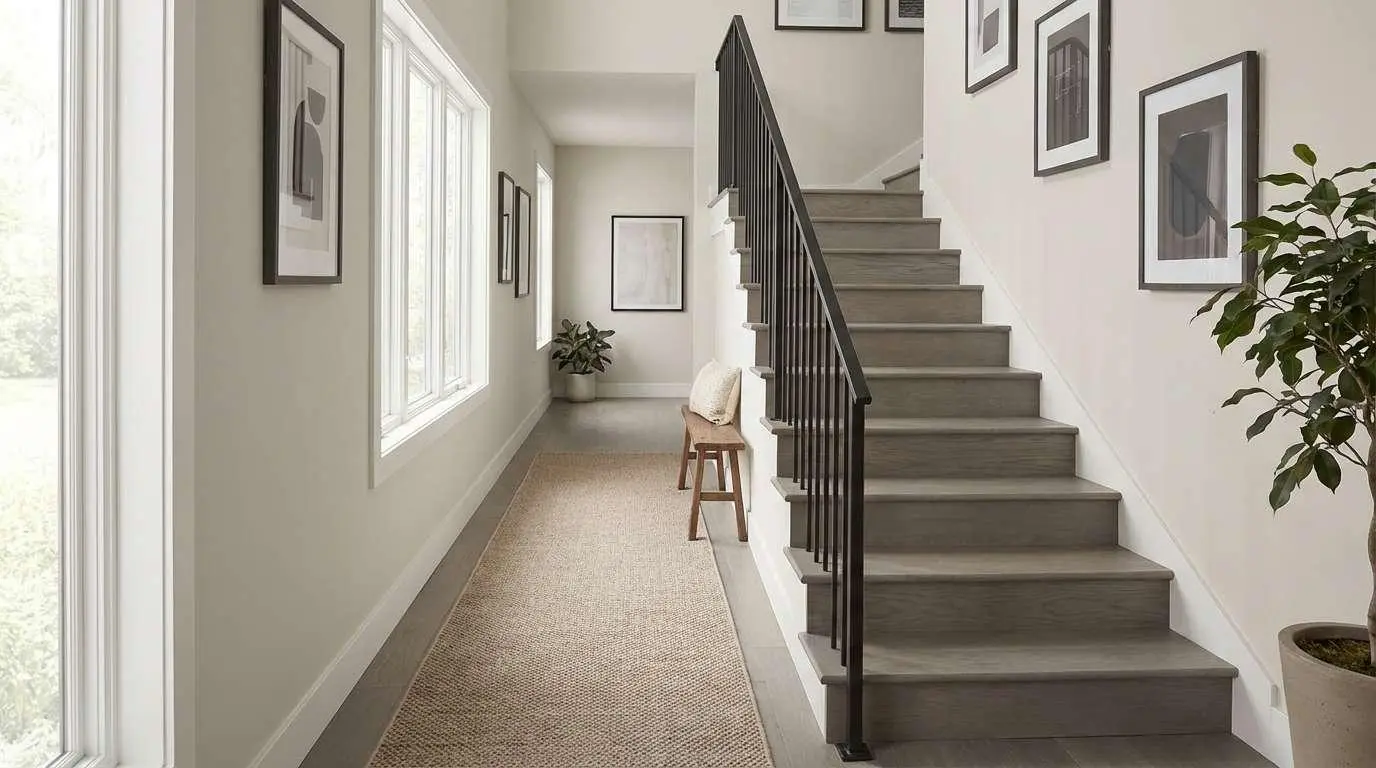
Some walls in a home experience more daily activity than others.
Hallways, entrance areas, corridors and spaces near doors are frequently touched, bumped or exposed to dust and everyday marks.
These areas may develop scuffs, fingerprints and visible stains more quickly than bedrooms or less frequently used rooms.
Choosing suitable paint for high-traffic areas can help homeowners maintain the appearance of these surfaces.
However, paint selection should not be based only on colour. Cleaning characteristics, finish, surface preparation and product suitability are also important.
This guide explains how to choose paint for hallways, entryways, corridors and other frequently used areas of your home.
WHAT ARE HIGH-TRAFFIC AREAS IN A HOME?
High-traffic areas are spaces that experience frequent movement and everyday use.
Common examples include:
- Entrance hallways.
- Main corridors.
- Staircase landing walls.
- Areas near bedroom doors.
- Living room entrances.
- Passageways between rooms.
- Walls near frequently used furniture.
These areas may be exposed to fingerprints, footwear marks, bags, furniture contact and other everyday activities.
Their paint should be selected with maintenance and durability in mind.
- WHAT SHOULD YOU LOOK FOR IN PAINT FOR HIGH-TRAFFIC AREAS?
When selecting paint, consider several factors.
Cleaning characteristics
Check whether the product can be cleaned using the manufacturer's recommended method.
Durability
Review the product specifications for its intended use.
Finish
Select a finish appropriate for the wall condition and desired appearance.
Surface compatibility
The paint should be suitable for the existing wall material and coating.
Colour
Consider how the colour may affect the visibility of marks.
Maintenance
Understand the cleaning requirements before purchasing.
No paint should be assumed to be completely resistant to every stain or impact.
- WHICH PAINT FINISH IS SUITABLE FOR HALLWAYS?
Different paint finishes may be suitable depending on the product and wall condition.
Matte finish
Matte finishes provide a soft appearance.
They may be useful where homeowners prefer a low-sheen interior.
Satin finish
Some satin products offer a balance between appearance and cleaning characteristics.
Semi-gloss finish
Semi-gloss finishes may be suitable for selected surfaces where a more reflective appearance is desired.
However, they may highlight surface imperfections.
The appropriate finish depends on the product specifications and condition of the wall.
- BEST COLOURS FOR HIGH-TRAFFIC WALLS
Colour selection can influence how everyday marks appear.
Warm Beige
A neutral colour that can complement many interiors.
Greige
A combination of grey and beige that works with contemporary interiors.
Light Grey
A versatile colour for hallways.
Cream
A warm option for entrance areas.
Muted Olive
Can create a natural-looking interior.
Medium Grey
May provide a more practical-looking appearance in selected areas.
The best colour depends on the lighting, flooring and furniture.
- HOW TO CHOOSE PAINT FOR ENTRYWAYS
Entryways are often the first interior area visitors see.
Consider:
Wall colour
Choose a shade that coordinates with the main interior.
Furniture
Consider the entrance cabinet, shoe storage and seating.
Lighting
Check how the paint looks under natural and artificial light.
Cleaning
Choose a suitable product according to the expected maintenance requirements.
Surface condition
Inspect the wall for scratches, marks and previous repairs.
A coordinated entryway can create a welcoming appearance.
- HOW TO MAINTAIN PAINTED HALLWAY WALLS
High-traffic walls may require regular maintenance.
Useful practices include:
- Clean marks using suitable methods.
- Avoid abrasive cleaning materials.
- Follow the paint manufacturer's cleaning instructions.
- Address scratches promptly.
- Avoid repeated contact with furniture.
- Inspect wall corners periodically.
- Keep the area organised.
Regular cleaning may help maintain the appearance of painted surfaces.
- HOW TO PREPARE HIGH-TRAFFIC WALLS BEFORE REPAINTING
Preparation is important because these walls may contain multiple visible defects.
Step 1: Inspect the surface
Identify scuffs, scratches, stains and peeling paint.
Step 2: Clean the wall
Remove dust and suitable surface contaminants.
Step 3: Repair minor defects
Use compatible repair materials.
Step 4: Prepare the existing coating
Address loose or unstable paint.
Step 5: Smooth repaired areas
Sand where appropriate.
Step 6: Remove dust
Clean the surface before applying primer.
Step 7: Apply compatible primer
Use a primer suitable for the wall and selected paint.
Step 8: Apply finishing coats
Follow the manufacturer's application instructions.
- HOW TO PROTECT WALLS FROM EVERYDAY MARKS
Paint is only one part of wall maintenance.
Consider:
Furniture placement
Avoid unnecessary contact between furniture and walls.
Protective wall features
Some homeowners may use suitable wall protection in areas with frequent impact.
Cleaning
Remove marks using compatible methods.
Entrance organisation
Keep bags, shoes and other objects from repeatedly contacting the walls.
Regular inspection
Address visible damage before it becomes more extensive.
- PAINTING HIGH-TRAFFIC AREAS IN HOMES WITH CHILDREN
Families may experience more frequent wall marks in hallways and entrance areas.
Consider:
- Paint products with suitable cleaning characteristics.
- Practical colour choices.
- Simple wall designs.
- Regular maintenance.
- Protection around furniture.
- Appropriate cleaning methods.
Read the paint manufacturer's product information before selecting paint for family living spaces.
- COMMON MISTAKES WHEN PAINTING HIGH-TRAFFIC WALLS
Choosing paint only by colour
Maintenance and product characteristics also matter.
Ignoring wall condition
Existing scratches and marks should be addressed.
Using unsuitable cleaning methods
Abrasive materials may damage the finish.
Skipping primer
Some surfaces require primer before repainting.
Applying paint over stains
The cause and treatment of the stain should be assessed.
Selecting an unsuitable finish
The finish should work with the wall condition and intended use.
- PAINTING HIGH-TRAFFIC AREAS IN PATNA HOMES
Homeowners in Patna planning to repaint hallways, entryways or frequently used corridors can consider neutral colours and suitable paint products with appropriate cleaning characteristics.
Before selecting paint, inspect the wall for marks, scratches and damaged coatings.
Consider the home's lighting and furniture when choosing a colour.
PaintGen offers painting and home improvement solutions for residential properties.
Visit https://www.paintgen.in/ to explore available services and discuss your interior painting requirements.
FINAL THOUGHTS
Hallways, entryways and corridors experience regular daily use.
Choosing suitable paint and preparing the wall properly can help maintain their appearance.
Consider cleaning characteristics, finish, colour and surface condition before selecting a product.
Regular maintenance and practical wall protection can also help keep high-traffic areas looking attractive.
Questions people ask
Which paint is best for hallways?
Choose an interior paint suitable for frequently used areas with cleaning characteristics that meet your maintenance requirements. Check the product specifications and cleaning instructions.
Which colour is best for a hallway?
Beige, greige, cream, light grey and muted olive are popular choices. Select a colour that complements the hallway lighting, flooring and surrounding rooms.
Can hallway walls be cleaned regularly?
The cleaning method depends on the selected paint. Follow the manufacturer's instructions and avoid abrasive cleaning materials unless they are specifically recommended.
How often should hallways be repainted?
There is no fixed repainting schedule. The timing depends on wall condition, daily use, cleaning, paint quality and the homeowner's desired appearance.
Last updated 19 November 2026.