Painting newly plastered walls requires a different approach from repainting an existing painted surface.
Fresh plaster contains moisture that needs to dry adequately before the finishing paint is applied.
If painting begins too early, the moisture within the plaster may affect the coating and contribute to problems such as uneven appearance, poor adhesion or other finish-related defects.
The preparation process is equally important.
Newly plastered walls may contain surface irregularities, dust and small imperfections that should be inspected before applying primer and paint.
Whether you are building a new house, renovating an apartment or completing a room extension, understanding the correct sequence can help you plan the painting process.
This guide explains how to prepare newly plastered walls, assess drying requirements, select suitable products and apply paint.
WHY IS PAINTING NEW PLASTER DIFFERENT?
New plaster is not the same as an already painted wall.
Its surface characteristics may include:
- Moisture from the plastering process.
- Different levels of porosity.
- Uneven surface texture.
- Fine dust.
- Small surface imperfections.
- Variations in absorption.
These characteristics can affect how primer and paint behave.
A suitable preparation process helps establish the correct conditions for the finishing system.
- HOW LONG SHOULD NEW PLASTER DRY BEFORE PAINTING?
There is no single drying time that applies to every plaster surface.
Drying depends on several factors:
Plaster thickness
Thicker plaster may require more time to dry.
Environmental conditions
Temperature and humidity influence drying.
Ventilation
Air circulation can affect drying conditions.
Substrate
The underlying wall material can influence moisture behaviour.
Plaster composition
Different plaster materials may have different drying requirements.
The manufacturer's instructions for the selected primer and paint should be followed.
Do not rely only on the number of days since plastering.
The wall should meet the moisture requirements of the selected coating system.
- HOW TO CHECK WHETHER NEW PLASTER IS READY FOR PAINTING
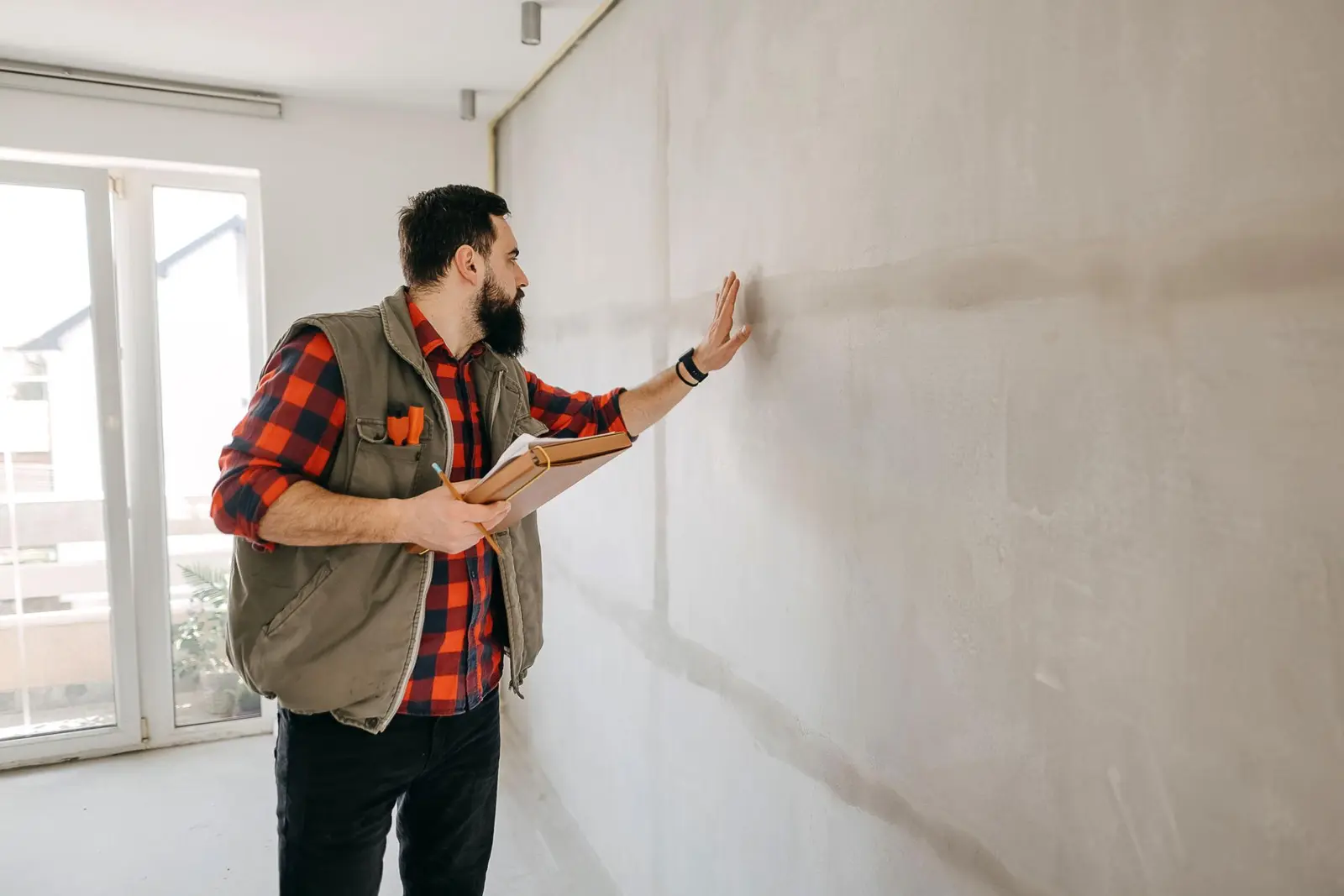
Before painting, inspect the surface carefully.
Look for:
Visible moisture
Check for damp patches or areas that appear darker than the surrounding plaster.
Uneven colour
Variations may indicate differences in drying.
Surface condition
Check for loose material and defects.
Moisture measurement
Where appropriate, use a suitable moisture measurement method.
Product requirements
Confirm that the substrate meets the selected paint manufacturer's conditions.
If the plaster remains damp, allow additional drying time.
- HOW TO PREPARE NEWLY PLASTERED WALLS
Preparation should begin only when the plaster is suitable for the next stage.
Step 1: Inspect the plaster
Check the entire wall for defects.
Step 2: Remove loose material
Clean dust and loose particles.
Step 3: Check surface uniformity
Identify uneven areas that require attention.
Step 4: Repair suitable defects
Use compatible repair materials.
Step 5: Smooth the surface
Prepare the wall according to the selected coating system.
Step 6: Remove dust
Ensure the surface is clean.
Step 7: Confirm drying
Check that the wall meets product requirements.
Step 8: Apply compatible primer
Use primer suitable for new plaster.
- WHY PRIMER IS IMPORTANT FOR NEW PLASTER
New plaster may have a different absorption rate from previously painted surfaces.
A compatible primer can help prepare the substrate for the finishing paint.
The selected primer should be suitable for:
- The plaster material.
- The wall's condition.
- The selected paint.
- The intended finish.
Primer selection should be based on the manufacturer's recommendations.
Do not assume that the same primer is suitable for every plaster surface.
- SHOULD WALL PUTTY BE APPLIED TO NEW PLASTER?
Wall putty may be used when a smoother finishing surface is required.
However, its suitability depends on:
- Plaster condition.
- Surface unevenness.
- Selected paint system.
- Product instructions.
- Desired finish.
Putty should not be used to hide significant plaster defects.
Major unevenness should be corrected through suitable repair and surface preparation.
- HOW TO PAINT NEWLY PLASTERED WALLS STEP BY STEP
Once the surface is ready, painting can begin.
First, protect the flooring, windows and other surfaces.
Apply compatible primer according to the manufacturer's instructions.
Allow the primer to dry.
Inspect the wall and complete any required preparation.
Apply the first finishing coat using a suitable brush, roller or other recommended method.
Allow adequate drying time.
Apply additional coats as recommended.
Inspect the wall under suitable lighting.
The number of coats depends on the selected product and desired coverage.
- WHICH PAINT IS SUITABLE FOR NEW PLASTER?
Paint selection should depend on the room and surface.
Interior wall paint
Suitable for residential interior walls.
Exterior wall paint
Designed for exterior exposure.
Primer
Compatible with new plaster and the selected finishing paint.
Decorative finishes
May require a specific preparation system.
Read the manufacturer's specifications before selecting products.
- COMMON PROBLEMS WHEN PAINTING NEW PLASTER
Peeling paint
May be associated with substrate conditions or coating adhesion problems.
Uneven appearance
Different absorption rates may affect the final appearance.
Visible patches
Surface irregularities or inconsistent preparation may remain visible.
Powdery surfaces
Loose or weak surface material may interfere with coating performance.
Cracking
Some cracks may be associated with plaster shrinkage or other movement.
These problems should be assessed before applying additional paint.
- COMMON MISTAKES WHEN PAINTING NEW PLASTER
Painting before the plaster is ready
Moisture requirements should be satisfied.
Skipping primer
The selected coating system may require primer.
Ignoring dust
Dust can affect the preparation and coating process.
Applying excessive putty
Unnecessary layers may create additional surface problems.
Rushing between coats
Follow the recommended drying and recoating intervals.
Ignoring surface defects
Complete suitable repairs before painting.
- NEW PLASTER PAINTING FOR HOMES IN PATNA
Homeowners in Patna constructing new homes or renovating properties should plan painting after the plastering work is complete and the walls have dried adequately.
The drying period depends on the plaster material, thickness and environmental conditions.
Before painting, inspect the walls and confirm that the selected primer and paint are suitable for the surface.
PaintGen offers painting and home improvement solutions for residential properties.
Visit https://www.paintgen.in/ to explore available services and discuss your new home painting requirements.
FINAL THOUGHTS
Painting newly plastered walls requires patience and proper preparation.
The plaster should be dry enough for the selected coating system, and the surface should be clean and suitable for application.
Choose compatible primer and paint products and follow the recommended application sequence.
A well-prepared surface provides a better foundation for the final painted appearance.
Questions people ask
How long should new plaster dry before painting?
The drying time depends on plaster thickness, material, temperature, humidity and ventilation. Confirm that the plaster meets the selected primer and paint manufacturer's moisture requirements before painting.
Do newly plastered walls need primer?
A compatible primer is commonly used to prepare new plaster for the finishing paint. Select the primer according to the plaster material and coating system.
Can I apply paint directly to new plaster?
New plaster should be properly dried, cleaned and prepared. The selected paint system may require primer or other preparation before the finishing coat.
Should wall putty be applied to new plaster?
Putty may be used when a smoother finish is required and the product is suitable for the substrate. It is not a substitute for correcting significant plaster defects.
Last updated 19 November 2026.