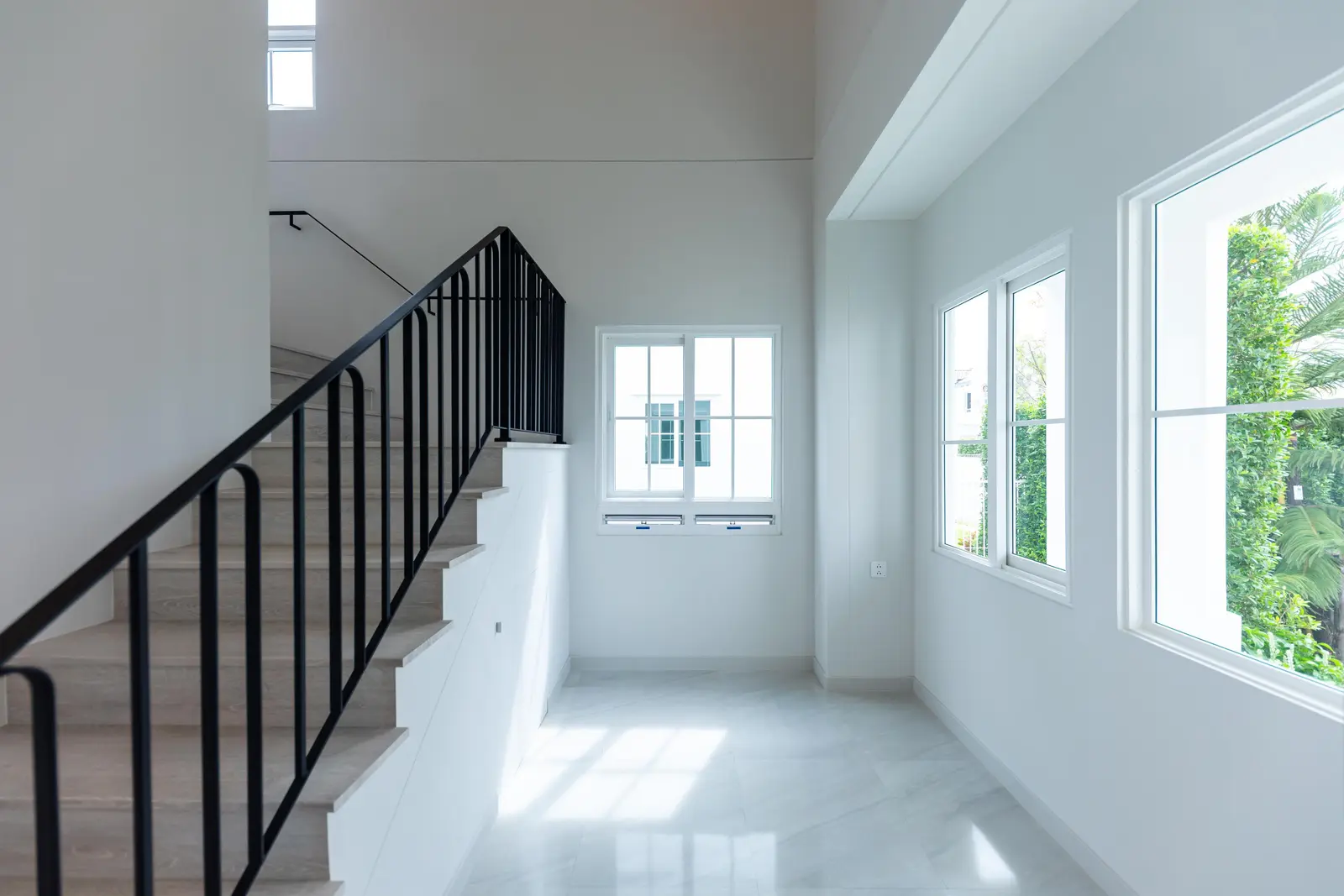
A staircase is more than a connection between different floors of a house. In a duplex or multi-storey home, it can become one of the most noticeable architectural features of the interior.
However, staircase design is often overlooked when homeowners plan their painting projects. Most attention goes towards living rooms, bedrooms and ceilings, leaving staircase walls and railings with little consideration.
The right staircase paint colours can make a narrow stairway feel brighter, create visual continuity between floors and complement the overall interior design.
Whether you have a compact staircase, a traditional wooden staircase or a modern floating staircase, choosing suitable colours and finishes can improve its appearance.
This guide explores staircase painting ideas, wall colour combinations, railing finishes, decorative techniques and practical considerations for residential properties.
WHY IS STAIRCASE PAINTING IMPORTANT?
A staircase connects different parts of a home, so its appearance influences the overall interior environment.
A well-planned staircase painting project can:
- Improve the appearance of the stairway.
- Create visual continuity between floors.
- Complement the living room and upper-floor interiors.
- Make darker staircases appear brighter.
- Highlight architectural features.
- Refresh older staircase walls.
- Coordinate walls, railings and surrounding surfaces.
The objective is to create a staircase that feels connected to the rest of the home rather than looking like a separate design element.
- WHITE STAIRCASE WALLS FOR A CLEAN AND BRIGHT LOOK
White is one of the most versatile colours for staircase walls.
It reflects light and can make narrow or enclosed stairways feel more open.
Suitable combinations include:
- White walls with black railings.
- Warm white walls with wooden handrails.
- White walls with grey staircase steps.
- Cream walls with neutral flooring.
White is especially useful when the staircase receives limited natural light.
However, frequently touched areas may require more regular cleaning depending on the paint finish.
- LIGHT GREY FOR MODERN STAIRCASES
Light grey provides a contemporary appearance without creating a strong visual contrast.
It can work well with:
- White ceilings.
- Dark metal railings.
- Wooden stair treads.
- Neutral floor tiles.
- Minimalist lighting.
Light grey is suitable for homeowners who prefer understated interior colours.
- BEIGE AND CREAM FOR WARM INTERIORS
Beige and cream are useful choices for traditional and contemporary homes.
These shades create a softer appearance and can complement warm flooring and wooden furniture.
Consider combinations such as:
- Beige walls with dark brown railings.
- Cream walls with natural wooden steps.
- Warm ivory with bronze metal details.
- ACCENT WALLS FOR STAIRCASE DESIGN
A staircase accent wall can introduce colour without overwhelming the entire space.
Possible approaches include:
- A darker shade on one selected wall.
- A contrasting colour behind the staircase.
- A geometric painted design.
- A subtle two-colour combination.
- A decorative texture finish.
Before choosing an accent wall, consider the staircase width, lighting and surrounding architectural details.
- TWO-COLOUR STAIRCASE WALL COMBINATIONS
Using two colours can add visual interest to a staircase.
Some combinations include:
White and charcoal grey
A clean combination for modern interiors.
Cream and olive green
A softer palette for warm residential spaces.
Light grey and navy blue
A contemporary combination for selected feature walls.
Beige and brown
A natural-looking option that coordinates with wooden elements.
White and muted terracotta
A warmer option for homes with earthy interior themes.
Use colour samples before finalising the combination because lighting can affect how shades appear.
- STAIRCASE WALL TEXTURE AND DECORATIVE FINISHES
Decorative wall finishes can make staircase areas more distinctive.
Depending on the wall and product, options may include:
Subtle textured paint
Creates a decorative surface with additional visual depth.
Concrete-effect finish
Can complement industrial and contemporary interiors.
Metallic decorative finish
Can be used as an accent on selected architectural surfaces.
Wallpaper
Suitable wallpaper can create a feature wall along a staircase.
Geometric painting
Simple painted patterns can introduce visual interest.
Decorative treatments should be selected carefully because heavily patterned surfaces may make narrow stairways feel crowded.
- STAIRCASE RAILING PAINT COLOUR IDEAS
The railing is another important element in staircase design.
Its colour should coordinate with the wall paint, flooring and other metal or wooden features.
Black
A versatile option for modern metal railings.
White
Creates a light and understated appearance.
Charcoal Grey
Works well with neutral and contemporary colour palettes.
Dark Brown
Can coordinate with wooden flooring and warm interiors.
Bronze
An option for selected decorative metal railings.
The railing material and existing coating should be checked before selecting the appropriate paint system.
- HOW TO PAINT A STAIRCASE WALL
Painting a staircase requires careful planning because access may be more difficult than in a regular room.
A typical process includes:
Step 1: Inspect the surface
Check for cracks, peeling paint, uneven patches and moisture.
Step 2: Protect the staircase
Cover suitable floor and stair surfaces to prevent paint splashes.
Step 3: Prepare the walls
Remove loose material, clean the surface and repair defects.
Step 4: Prepare difficult-to-reach areas
Plan suitable access equipment and safe working arrangements.
Step 5: Apply primer where required
Use a compatible primer according to the paint system.
Step 6: Apply the selected paint
Follow the manufacturer's instructions for coverage, dilution and recoating.
Step 7: Complete edges and corners
Inspect the edges near railings, steps and ceilings.
Step 8: Check the final finish
Look for missed sections, uneven coverage and paint splashes.
For high or difficult-to-access staircases, professional painting equipment and suitable safety arrangements may be necessary.
- HOW TO MAKE A NARROW STAIRCASE LOOK BIGGER
A narrow staircase can feel more open through thoughtful colour selection.
Useful design choices include:
- Light neutral wall colours.
- Consistent colours between floors.
- Limited decorative patterns.
- Good lighting.
- Visually simple railing designs.
- Reduced colour contrast between adjoining surfaces.
Avoid introducing too many dark colours into a small, poorly lit stairway.
- STAIRCASE PAINTING MISTAKES TO AVOID
Choosing colours without considering lighting
A shade may look different in a staircase than in a well-lit living room.
Ignoring railing colours
Walls and railings should be planned together.
Using unsuitable paint finishes
Select a product suitable for the intended surface and expected maintenance.
Neglecting surface preparation
Cracks and peeling areas should be addressed before repainting.
Ignoring safety
High staircase walls require appropriate access equipment and safe work practices.
Using too many decorative colours
An overcrowded design can reduce visual harmony.
- STAIRCASE PAINTING FOR DUPLEX HOMES IN PATNA
Many independent houses and duplex properties in Patna have staircases that connect multiple floors.
These areas can benefit from a coordinated painting plan that considers natural lighting, wall dimensions, railing materials and adjoining room colours.
For example, a neutral staircase wall can connect a ground-floor living area with the upper-floor bedrooms without creating a visual break.
Before beginning the project, inspect the wall surface and decide whether decorative painting, standard interior paint or railing refinishing is required.
PaintGen offers painting and home improvement solutions for residential properties.
Visit https://www.paintgen.in/ to explore available painting services and discuss your home painting requirements.
FINAL THOUGHTS
A staircase can become an attractive part of your home when its wall colours, railings and decorative details are planned together.
Light neutrals, subtle accent walls and coordinated railing colours are useful options for different staircase designs.
Before painting, consider the staircase size, lighting, surface condition and overall interior theme.
A thoughtful staircase painting plan can help create a more connected and visually appealing home.
Questions people ask
Which colour is best for staircase walls?
White, cream, beige and light grey are versatile staircase wall colours. The best choice depends on natural lighting, staircase dimensions, flooring and surrounding interior colours.
How can I make a narrow staircase look bigger?
Use light wall colours, maintain visual consistency between floors, improve lighting and avoid excessive decorative patterns or strong dark contrasts.
Can I use textured paint on staircase walls?
Yes. Suitable decorative texture finishes can be used on selected staircase walls. Consider the staircase dimensions, lighting and surrounding interior design before choosing a texture.
Can staircase railings be painted?
Yes. Suitable metal or wood coatings can be used depending on the railing material. Proper cleaning, surface preparation and compatible primer are important.
Last updated 14 November 2026.