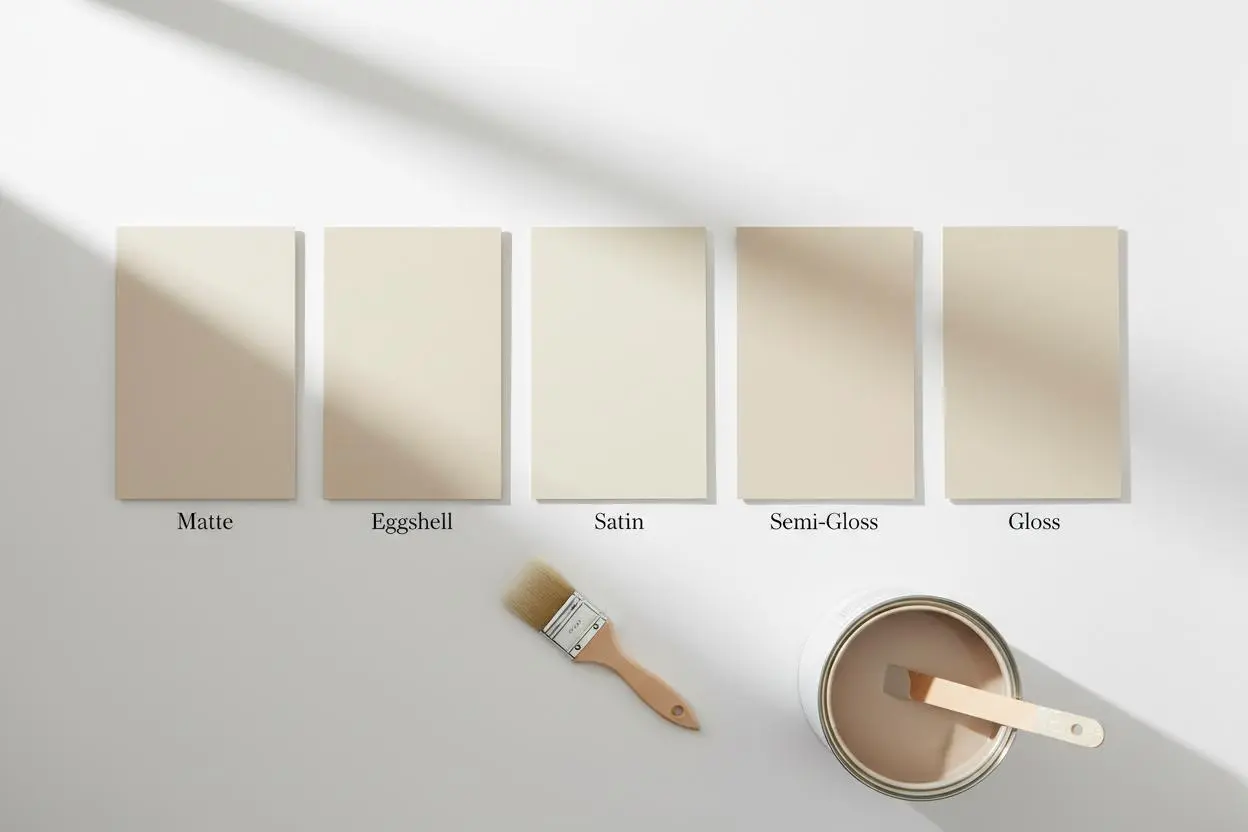
Choosing the right wall colour is only one part of planning a home painting project. The finish of the paint is equally important because it influences how a surface looks, reflects light and responds to everyday cleaning.
Two rooms painted in exactly the same colour can appear noticeably different when different finishes are used.
For example, matte paint creates a soft, low-reflection appearance, while gloss paint produces a much more reflective surface.
This is why understanding the different types of paint finishes is important before purchasing interior paint.
Whether you are painting a bedroom, living room, kitchen or hallway, selecting the right finish can help you achieve the appearance and maintenance characteristics you want.
In this guide, we explain matte, satin, silk, semi-gloss and gloss paint finishes, compare their characteristics and discuss where each option may be suitable.
WHAT IS A PAINT FINISH?
A paint finish describes the appearance of a coating after it dries.
It is commonly associated with the amount of light reflected by the painted surface.
Paint finishes range from very low-reflection matte surfaces to highly reflective gloss surfaces.
The finish can influence:
- How the wall reflects light.
- How surface imperfections appear.
- The visual depth of the colour.
- The cleaning characteristics of the coating.
- The overall interior design.
- The maintenance requirements of the surface.
However, finish names and performance can vary between manufacturers.
Always check the product information before comparing two paints with similar labels.
- MATTE PAINT FINISH
Matte paint is known for its soft appearance and low light reflection.
It is a popular choice for homeowners who prefer understated interior walls.
KEY CHARACTERISTICS
- Very low sheen.
- Soft visual appearance.
- Reduced light reflection.
- Suitable for selected living spaces.
- Can help make minor surface imperfections less noticeable.
WHERE CAN MATTE PAINT BE USED?
Living rooms
Matte paint can create a calm and elegant background for furniture and decorative elements.
Bedrooms
Its understated appearance can work well with relaxing interior colour palettes.
Ceilings
Selected matte products are commonly used on ceilings because they reduce visible reflections.
Feature walls
Matte finishes can create a subtle decorative effect without excessive shine.
ADVANTAGES OF MATTE PAINT
Matte paint provides a sophisticated appearance and works well with many interior design styles.
It can also help reduce the visibility of minor surface imperfections compared with more reflective finishes.
POSSIBLE LIMITATIONS
Some matte products are less resistant to scrubbing than specialised washable finishes.
Their cleaning performance depends on the formulation.
For high-contact areas, check the manufacturer's washability specifications.
- SATIN PAINT FINISH
Satin paint has a soft sheen that reflects more light than matte paint.
It provides a balance between a subtle appearance and a slightly reflective surface.
KEY CHARACTERISTICS
- Moderate sheen.
- Smooth appearance.
- More light reflection than matte.
- Available in different interior paint categories.
- Cleaning performance varies by formulation.
WHERE CAN SATIN PAINT BE USED?
Hallways
Satin finishes may be suitable for corridors where walls experience regular contact.
Living areas
They can work well in modern interiors.
Selected bedrooms
Satin can be used when a slightly reflective finish is preferred.
High-use wall sections
A suitable washable satin product may be considered where regular cleaning is expected.
ADVANTAGES OF SATIN PAINT
It provides more sheen than matte while avoiding the stronger reflection of gloss finishes.
Some satin formulations also offer good cleaning characteristics.
POSSIBLE LIMITATIONS
The sheen can make uneven surface preparation more noticeable than matte paint.
Careful wall preparation is therefore important.
- SILK PAINT FINISH
Silk is a finish term used by some paint manufacturers for a smooth, soft-sheen appearance.
It generally falls within the low-to-medium sheen range, although the exact appearance varies between products.
KEY CHARACTERISTICS
- Smooth appearance.
- Subtle light reflection.
- More sheen than many matte products.
- Available in selected interior paint ranges.
WHERE CAN SILK FINISH BE USED?
Silk finishes may be suitable for:
- Living rooms.
- Dining areas.
- Selected bedrooms.
- Corridors.
- Other interior walls where a soft sheen is preferred.
ADVANTAGES OF SILK PAINT
Silk finishes can provide a polished appearance without the stronger reflectivity of high-gloss coatings.
Depending on the product, they may also offer practical cleaning characteristics.
POSSIBLE LIMITATIONS
The term silk is not used identically across every brand.
Check the actual sheen level and product specifications rather than assuming that every silk paint has the same appearance.
- SEMI-GLOSS PAINT FINISH
Semi-gloss paint creates a more noticeable reflective surface.
It is often considered for selected areas where cleaning and surface durability are important.
KEY CHARACTERISTICS
- Noticeable sheen.
- Greater light reflection.
- More reflective than satin.
- Can highlight surface imperfections.
WHERE CAN SEMI-GLOSS PAINT BE USED?
Depending on the product, semi-gloss may be suitable for:
- Selected doors.
- Window frames.
- Skirting boards.
- Decorative trim.
- Certain high-contact surfaces.
- Suitable kitchen or utility areas.
ADVANTAGES OF SEMI-GLOSS PAINT
Some semi-gloss products offer good resistance to cleaning and everyday wear.
Their reflective appearance can also highlight architectural details.
POSSIBLE LIMITATIONS
Uneven surfaces, scratches and preparation defects may be more noticeable.
It is important to use a product specifically designed for the intended surface.
- GLOSS PAINT FINISH
Gloss paint produces a highly reflective appearance.
It is commonly used for selected decorative and trim applications rather than every interior wall.
KEY CHARACTERISTICS
- High light reflection.
- Shiny appearance.
- Smooth visual effect.
- Can highlight surface imperfections.
WHERE CAN GLOSS PAINT BE USED?
Gloss coatings may be considered for:
- Suitable wooden doors.
- Selected furniture.
- Decorative trims.
- Metal surfaces.
- Other compatible architectural details.
ADVANTAGES OF GLOSS PAINT
Gloss finishes can create a distinctive decorative appearance.
Certain formulations also provide practical cleaning characteristics.
POSSIBLE LIMITATIONS
Surface preparation must be thorough because imperfections may become more visible under reflected light.
- MATTE VS SATIN VS SILK VS GLOSS: COMPARISON
MATTE
Appearance: Very low reflection.
Best considered for: Living rooms, bedrooms and ceilings.
Important consideration: Check cleaning performance.
SATIN
Appearance: Soft sheen.
Best considered for: Selected living areas and corridors.
Important consideration: Surface preparation affects the final appearance.
SILK
Appearance: Smooth, subtle sheen.
Best considered for: Interior walls where a polished appearance is preferred.
Important consideration: Sheen varies by manufacturer.
SEMI-GLOSS
Appearance: Noticeably reflective.
Best considered for: Selected trims and suitable high-contact surfaces.
Important consideration: Surface defects may be more visible.
GLOSS
Appearance: Highly reflective.
Best considered for: Suitable doors, furniture and decorative details.
Important consideration: Requires careful surface preparation.
- WHICH PAINT FINISH IS BEST FOR EACH ROOM?
Living Room
Matte, satin or selected silk finishes may be suitable.
Choose according to the room's lighting, wall condition and cleaning requirements.
Bedroom
Matte is a common choice for a soft and understated appearance.
Satin can be considered when a little more sheen is preferred.
Kitchen
Consider a washable finish designed for kitchen conditions.
Product cleaning specifications are more important than the finish name alone.
Bathroom
Select a product designed for humid conditions.
Also ensure that ventilation and moisture management are appropriate.
Children's Room
Consider a paint with suitable washability and stain-cleaning characteristics.
Hallway
A suitable washable satin or other durable interior finish may be useful where regular contact occurs.
Ceiling
Low-sheen or matte ceiling products are common options.
- HOW DOES LIGHTING AFFECT PAINT FINISHES?
Lighting can significantly change how a paint finish looks.
Natural daylight
Daylight can make colours appear different throughout the day.
Warm artificial lighting
Warm bulbs can make some neutral colours appear warmer.
Cool artificial lighting
Cool lighting can change the visual appearance of certain paint shades.
Directional lighting
Wall lights and spotlights can highlight surface texture and imperfections.
Before choosing a finish, evaluate samples in the actual room under different lighting conditions.
- DOES A HIGHER SHEEN MEAN BETTER PAINT QUALITY?
Not necessarily.
Sheen and paint quality are different characteristics.
A high-gloss product is not automatically better than a matte product.
The right choice depends on:
- Intended application.
- Paint formulation.
- Washability.
- Durability.
- Surface condition.
- Appearance.
- Manufacturer specifications.
A premium matte product may be more suitable for a particular living room than a highly reflective gloss coating.
- HOW TO CHOOSE THE RIGHT PAINT FINISH
Before purchasing paint, consider these questions:
What is the room used for?
Frequently used areas may require more practical cleaning characteristics.
How smooth are the walls?
Highly reflective finishes can make surface imperfections more noticeable.
How much natural light enters the room?
The finish can influence how light is reflected.
What appearance do you prefer?
Choose between soft, subtle and highly reflective surfaces.
How often will the walls be cleaned?
Check the actual product washability and cleaning instructions.
What does the manufacturer recommend?
Use a coating designed for the intended substrate.
- COMMON MISTAKES WHEN SELECTING PAINT FINISHES
Choosing only by appearance
A beautiful finish may not suit a high-contact room.
Ignoring wall condition
Glossy surfaces can highlight imperfections.
Assuming all satin paints are identical
Product formulations vary.
Using wall paint on unsuitable surfaces
Different substrates require compatible coatings.
Not testing samples
Always evaluate the actual finish before committing to a large purchase.
- SELECTING PAINT FINISHES FOR HOMES IN PATNA
Homeowners in Patna planning interior painting can choose different finishes according to room usage and design preferences.
For example, a living room may look attractive with a soft matte finish, while a hallway may benefit from a suitable washable product.
Bedrooms, kitchens and ceilings can also have different finish requirements.
Rather than selecting one finish for the entire property without consideration, create a room-wise paint selection plan.
PaintGen offers painting and home improvement solutions for residential properties.
Visit https://www.paintgen.in/ to explore painting services and discuss suitable paint options for your home.
FINAL THOUGHTS
Matte, satin, silk, semi-gloss and gloss finishes each create a different visual appearance.
The right finish depends on your preferred interior design, surface condition, lighting and maintenance requirements.
Before purchasing paint, compare actual product specifications and test samples in the intended room.
A suitable combination of colours and finishes can help create a more coordinated and practical home interior.
Questions people ask
Which paint finish is best for interior walls?
Matte, satin and silk finishes are common interior wall options. The best choice depends on room usage, surface condition, lighting and the product's cleaning characteristics.
What is the difference between matte and satin paint?
Matte paint has very low light reflection and a softer appearance. Satin paint has a noticeable but relatively subtle sheen. Their cleaning and durability characteristics depend on the formulation.
Is gloss paint suitable for all walls?
Gloss paint is not necessarily suitable for every wall. Its reflective appearance can highlight surface imperfections, so it is often considered for selected decorative details and compatible surfaces.
Which paint finish is easiest to clean?
Some satin, semi-gloss and gloss products offer good washability, but performance varies by formulation. Check the manufacturer's cleaning and scrub-resistance specifications.
Last updated 14 November 2026.