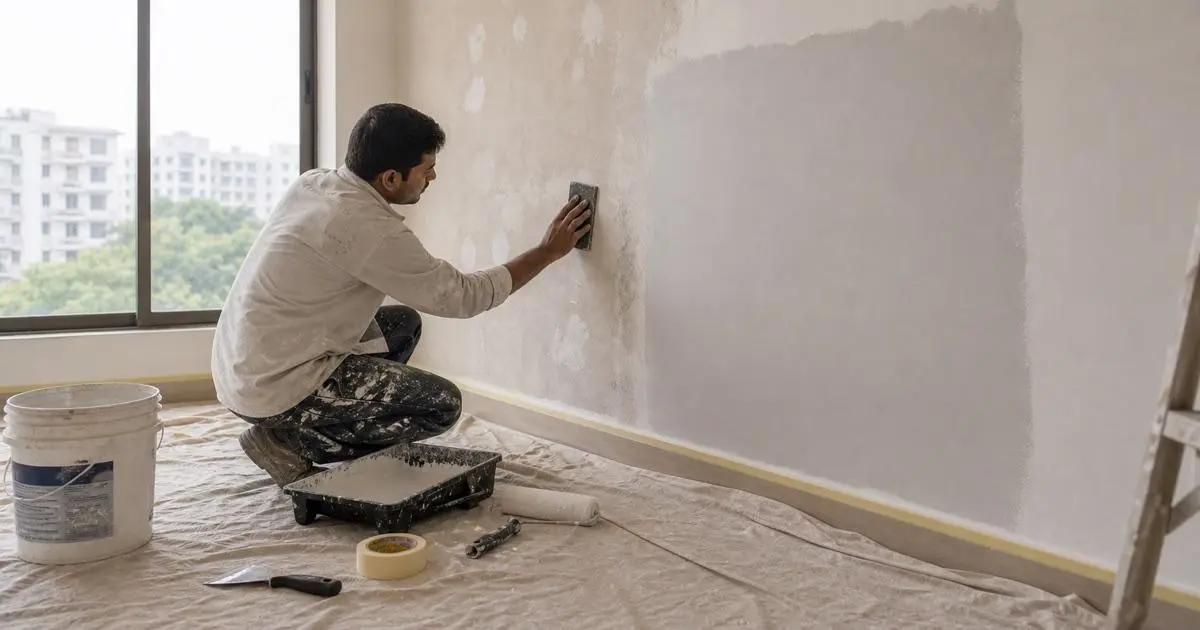
A beautiful paint finish begins long before the first coat of colour reaches the wall. Proper wall preparation is one of the most important steps in achieving an attractive and consistent painting result.
Two materials commonly used during this process are wall putty and primer. Although both are associated with wall preparation, they perform different functions.
Wall putty is primarily used to improve the surface and fill minor imperfections, while primer is a preparatory coating that helps create a suitable base for the selected paint system.
Many homeowners confuse these materials or assume that one can replace the other. However, understanding the difference between wall putty and primer can help you make better decisions when planning interior or exterior painting.
In this guide, we explain their purposes, benefits, application methods, differences and the factors to consider before selecting products for your home.
WHAT IS WALL PUTTY?
Wall putty is a surface-preparation material applied to suitable walls to improve their smoothness and appearance.
It is commonly used to fill small surface irregularities and create a more uniform base before painting.
Wall putty may be suitable for:
- Interior plastered walls.
- Suitable concrete surfaces.
- Repaired wall sections.
- Certain exterior surfaces when using a compatible exterior-grade product.
- Renovation projects requiring surface levelling.
The exact application depends on the manufacturer's instructions and the condition of the substrate.
BENEFITS OF WALL PUTTY
- Creates a smoother surface
Wall putty helps reduce minor surface irregularities and creates a more uniform appearance.
- Fills small imperfections
Suitable putty products can fill minor surface defects before painting.
- Improves the appearance of painted walls
A properly prepared surface can contribute to a more consistent final paint finish.
- Supports renovation work
Wall putty can help prepare selected older surfaces after loose coatings and damaged material have been addressed.
- Helps create an even base
Consistent preparation makes it easier to achieve a visually uniform paint application.
WHAT IS WALL PRIMER?
Primer is a preparatory coating applied before the finishing paint.
It is designed to create a suitable base for the selected paint system.
Depending on the product, primer can help with:
- Improving paint adhesion.
- Regulating surface absorption.
- Supporting uniform topcoat application.
- Improving coating compatibility.
- Providing a suitable base for specific substrates.
Different surfaces require different primers. A masonry primer, metal primer and wood primer are not interchangeable.
BENEFITS OF WALL PRIMER
- Supports paint adhesion
A compatible primer can help the finishing coat adhere properly to the prepared surface.
- Helps manage surface absorption
Porous surfaces may absorb paint unevenly. Suitable primers help prepare these surfaces.
- Supports a uniform finish
Primer can provide a more consistent base for the topcoat.
- Helps improve coating performance
Using the correct primer as part of a compatible paint system can support the intended performance of the coating.
- Prepares different substrates
Different primer formulations are available for plaster, concrete, metal and wood.
WALL PUTTY VS PRIMER: KEY DIFFERENCES
Although both products are used before painting, their main purposes are different.
Purpose:
Wall putty: Improves surface smoothness and fills minor imperfections.
Primer: Prepares the substrate for the finishing paint.
Main function:
Wall putty: Surface levelling and preparation.
Primer: Adhesion and coating preparation.
Application:
Wall putty: Applied to suitable surfaces that require levelling.
Primer: Applied according to the selected paint system and product instructions.
Surface condition:
Wall putty: Useful where minor surface irregularities need correction.
Primer: Useful for preparing a suitable substrate before applying paint.
Can one replace the other?
No. Wall putty and primer perform different functions and should not be treated as direct substitutes.
WHICH SHOULD BE APPLIED FIRST: PUTTY OR PRIMER?
The correct sequence depends on the wall condition, substrate and manufacturer's recommended paint system.
A commonly used preparation sequence for suitable new plastered walls is:
- Allow the plaster to cure and dry appropriately.
- Inspect the wall for cracks and defects.
- Clean the surface.
- Apply a suitable primer or preparatory coating if required by the selected system.
- Apply wall putty where necessary.
- Allow the putty to dry.
- Sand the surface appropriately.
- Remove sanding dust.
- Apply primer if required by the product system.
- Apply the finishing paint.
Some manufacturers specify a different sequence, including primer before putty or a specific primer between preparation layers.
Therefore, do not assume that every wall should follow exactly the same process. Follow the technical instructions for the selected products.
HOW MANY COATS OF WALL PUTTY ARE REQUIRED?
The number of putty coats depends on the wall condition, product and desired surface quality.
Some walls may need only limited filling, while uneven surfaces may require more preparation.
The objective is not to apply unnecessary layers. It is to achieve the required surface quality without exceeding product recommendations.
HOW MANY COATS OF PRIMER ARE REQUIRED?
Primer requirements vary according to the substrate and product specifications.
Some systems may require one coat, while particular surfaces or specialised applications may need additional treatment.
Always follow the manufacturer's application instructions.
CAN YOU PAINT WITHOUT WALL PUTTY?
Yes. Wall putty is not compulsory for every painting project.
If the wall is already sufficiently smooth and in suitable condition, extensive putty application may not be necessary.
A properly prepared surface may only require cleaning, minor repairs and a compatible primer before painting.
The decision should be based on the actual wall condition.
CAN YOU PAINT WITHOUT PRIMER?
Whether primer can be skipped depends on the paint product and substrate.
Some specialised paint systems are designed for particular direct-application situations.
However, many conventional wall-painting systems require a suitable primer for proper preparation.
Skipping a required primer may affect adhesion, absorption and final appearance.
Always check the paint manufacturer's instructions.
COMMON WALL PREPARATION MISTAKES
Applying putty over damp walls
Moisture problems should be identified and resolved before applying finishing materials.
Skipping surface cleaning
Dust, grease and loose material can affect coating performance.
Using the wrong primer
The primer should be compatible with the substrate and topcoat.
Applying material too thickly
Excessive application can lead to drying and surface-quality problems.
Ignoring sanding
Suitable sanding helps improve the uniformity of the prepared surface.
Painting before proper drying
Allow every layer to dry according to the manufacturer's instructions.
Choosing products only by price
Compatibility and suitability are more important than simply selecting the cheapest product.
HOW TO SELECT THE RIGHT WALL PUTTY AND PRIMER
Before purchasing materials, consider these factors:
Wall type
Identify whether the surface is plaster, concrete, an existing painted wall or another material.
Interior or exterior use
Products should be selected for the intended environment.
Existing coating
Old paint must be inspected for adhesion, damage and compatibility.
Moisture condition
Do not cover active leakage or dampness with putty and primer.
Paint system
Choose products that are designed to work together.
Manufacturer instructions
Check coverage, preparation, drying time and application requirements.
WALL PUTTY AND PRIMER FOR HOMES IN PATNA
Homeowners in Patna planning a new painting project should pay attention to wall preparation before choosing the final colours.
New plastered surfaces, previously painted apartments and renovated independent houses can have different preparation requirements.
The correct process depends on the wall condition rather than simply the size or age of the property.
PaintGen provides painting-related solutions for homeowners planning interior and exterior painting projects.
Before starting work, discuss the surface condition, preparation materials and proposed paint system.
Visit https://www.paintgen.in/ to explore painting services and plan your home painting requirements.
FINAL THOUGHTS
Wall putty and primer are two important but different materials used in painting preparation.
Putty helps improve surface smoothness, while primer prepares the substrate for the finishing paint.
Selecting the correct materials and following the recommended application process can contribute to a better-looking and more consistent finish.
Before painting your home, inspect the walls, address existing damage and choose a compatible preparation system.
For professional painting solutions, explore PaintGen.in.
Questions people ask
What is the main difference between wall putty and primer?
Wall putty is primarily used to fill minor surface imperfections and improve smoothness. Primer is a preparatory coating that helps create a suitable base for the finishing paint.
Can primer be applied without wall putty?
Yes. If the wall is already sufficiently smooth and does not require levelling, a suitable primer may be applied according to the selected paint system.
Is wall putty necessary before painting?
Not always. Wall putty is useful when a surface requires smoothing or minor filling. Smooth walls in suitable condition may not require extensive putty application.
Can I apply paint directly over wall putty?
The prepared putty surface generally requires the appropriate primer or preparatory coating before the finishing paint, depending on the manufacturer's recommended system.
Last updated 10 November 2026.