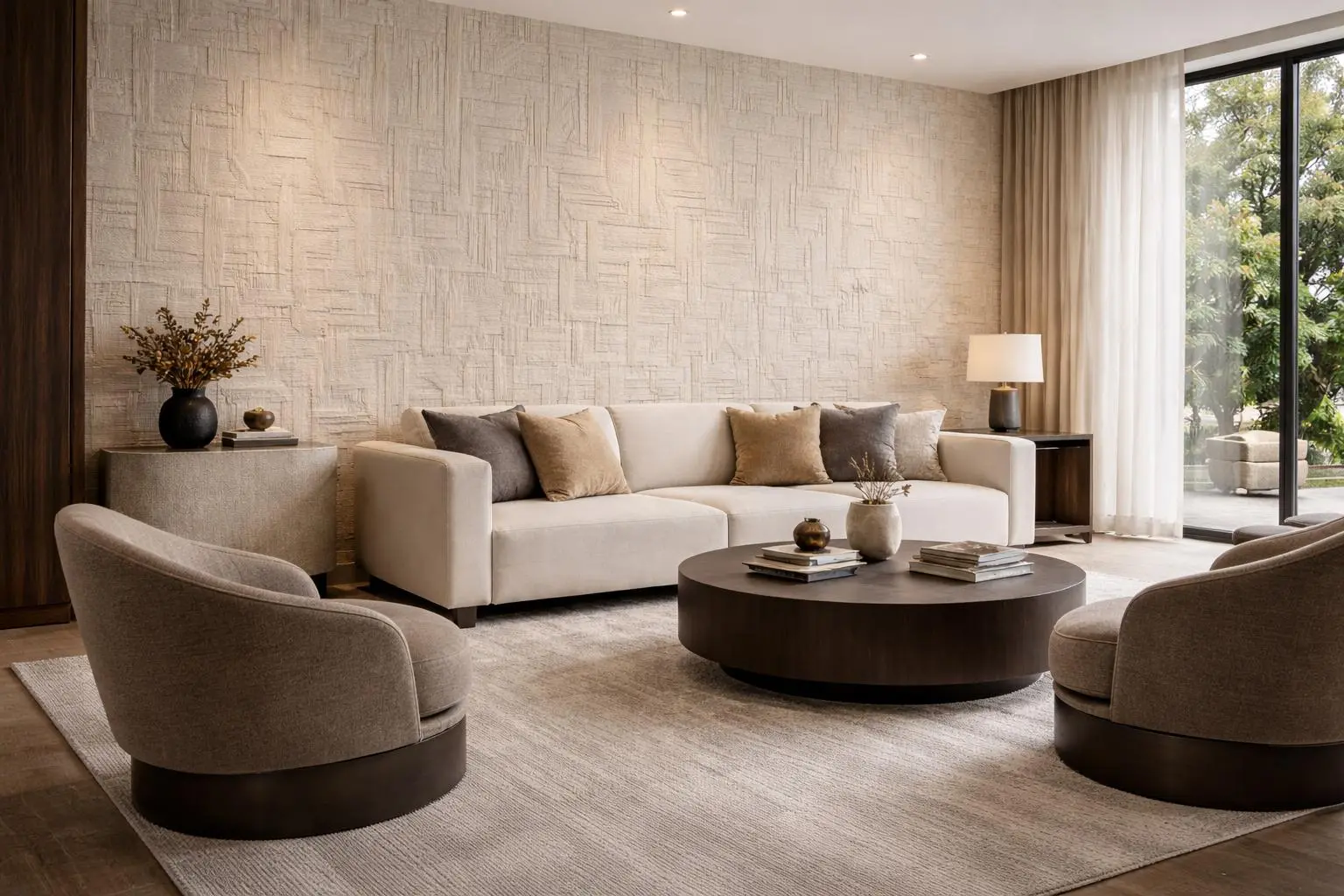
Plain painted walls can create a beautiful interior, but sometimes homeowners want something more distinctive. Decorative wall textures and wallpapers offer an opportunity to introduce patterns, depth, visual interest and personality into a living space.
From subtle plaster-inspired finishes to bold geometric wallpaper, decorative wall treatments can change the character of a room without requiring a complete interior renovation.
However, selecting the right wall texture or wallpaper involves more than choosing an attractive design. You need to consider the room size, lighting, furniture, wall condition, maintenance requirements and overall interior style.
Whether you are renovating an apartment, decorating a new house or refreshing a living room, this guide will help you understand different decorative wall options and how to select the right one.
WHAT ARE DECORATIVE WALL TEXTURES?
Wall texture refers to a decorative finish that creates a visible or tactile pattern on a surface.
Unlike ordinary flat paint, textured finishes can introduce depth, movement and visual variation.
They may be created using specialised coatings, application tools, decorative materials or techniques.
Some finishes create a subtle texture, while others produce more pronounced patterns.
Decorative wall textures can be used to:
- Create feature walls.
- Add visual interest to simple interiors.
- Highlight architectural elements.
- Complement furniture and lighting.
- Introduce colour and surface variation.
- Create a distinctive interior design theme.
WHAT IS WALLPAPER?
Wallpaper is a decorative wall covering available in different patterns, colours, textures and materials.
It is generally supplied in rolls or panels and installed using the manufacturer's recommended adhesive and preparation method.
Wallpaper can create a consistent pattern across a wall or serve as a decorative focal point.
Popular wallpaper styles include:
- Floral patterns.
- Geometric designs.
- Nature-inspired prints.
- Abstract patterns.
- Minimalist designs.
- Stone and marble effects.
- Wood-inspired finishes.
- Textured wallpaper.
The appropriate wallpaper depends on the wall condition, room environment and product specifications.
- POPULAR WALL TEXTURE DESIGNS FOR MODERN HOMES
There are several decorative wall texture styles that can complement contemporary interiors.
Subtle plaster texture
This finish creates a soft, natural-looking surface with gentle variations.
It can complement neutral interiors and minimalist furniture.
Concrete-inspired texture
Concrete-inspired finishes create an industrial or contemporary appearance.
They may work well in modern living rooms, offices and selected commercial interiors.
Metallic texture
Metallic decorative finishes introduce reflective elements and can create a more dramatic appearance.
They are often used selectively rather than across every wall.
Marble-inspired texture
Marble-effect decorative finishes can reproduce the appearance of natural stone using specialised materials and techniques.
They may be suitable for feature walls and selected decorative areas.
Sand texture
Sand-inspired finishes create a granular appearance.
The final effect depends on the material, application technique and selected colour.
Geometric texture
Geometric patterns introduce structured visual elements.
They can complement contemporary furniture and carefully planned lighting.
- WALLPAPER IDEAS FOR DIFFERENT ROOMS
Wallpaper provides an extensive range of design possibilities.
Living room wallpaper
The living room is often the most visible shared area of a home.
Consider:
- Subtle geometric patterns.
- Textured neutral wallpaper.
- Botanical designs.
- Stone-inspired prints.
- Minimalist abstract patterns.
A single feature wall can provide visual interest without making the entire room feel crowded.
Bedroom wallpaper
Bedrooms generally benefit from designs that complement a comfortable and relaxing environment.
Consider:
- Soft floral patterns.
- Nature-inspired prints.
- Muted geometric designs.
- Textured fabric-inspired wallpaper.
- Gentle neutral shades.
Wallpaper behind the bed can create a focal point.
Dining area wallpaper
Dining spaces can accommodate more expressive decorative styles.
Consider:
- Botanical wallpaper.
- Contemporary abstract patterns.
- Warm geometric designs.
- Subtle textured finishes.
Study room wallpaper
For a study room, choose designs that complement the room's purpose without becoming visually distracting.
Simple patterns, neutral colours and subtle textures can be suitable options.
- WALL TEXTURE VS. WALLPAPER: WHAT IS THE DIFFERENCE?
Both options can enhance an interior, but they have different characteristics.
Wall texture
- Creates a decorative surface finish.
- Can offer tactile depth.
- Requires a suitable application technique.
- May be customised through colour and pattern.
- Can be integrated with certain paint systems.
Wallpaper
- Provides printed or manufactured decorative patterns.
- Is available in different materials and designs.
- Can be installed relatively quickly on suitable surfaces.
- Offers consistent repeat patterns.
- May require careful joint alignment and maintenance.
Neither option is automatically better.
The right choice depends on your preferred appearance, budget, wall condition and maintenance expectations.
- HOW TO CHOOSE THE RIGHT TEXTURE FOR YOUR LIVING ROOM
Start by examining the existing interior.
Room size
A compact living room may benefit from subtle textures and lighter shades.
Large rooms provide more flexibility for stronger decorative patterns.
Furniture
Your sofa, television unit, curtains and flooring should complement the selected wall finish.
Lighting
Wall textures can look different under direct and indirect lighting.
Side lighting may emphasise surface variations, while softer lighting can create a more understated effect.
Colour scheme
Neutral textures can complement a wide range of furniture styles.
Stronger colours should be selected carefully to maintain visual balance.
Wall condition
Uneven, damp or damaged walls may require repair before decorative application.
- HOW TO SELECT WALLPAPER FOR SMALL ROOMS
Wallpaper can enhance a small room when the pattern and colour are selected carefully.
Consider the following suggestions:
Choose lighter patterns when you want a brighter appearance.
Avoid overly busy designs across every wall.
Use a selected feature wall rather than covering every surface with a strong print.
Consider vertical patterns if you want to emphasise the visual height of a room.
Coordinate wallpaper colours with curtains, furniture and flooring.
Always obtain a sample before purchasing wallpaper for an entire room.
- HOW WALL LIGHTING CHANGES DECORATIVE FINISHES
Lighting is an important consideration when selecting textured walls.
A textured surface may create shadows that change throughout the day.
Wall-mounted lights can highlight certain decorative patterns.
Indirect lighting can produce a softer appearance.
Spotlights may create stronger highlights on metallic or reflective finishes.
Before finalising a decorative treatment, consider where the light sources will be positioned.
- WALL PREPARATION BEFORE TEXTURE PAINTING OR WALLPAPER INSTALLATION
Decorative wall treatments require suitable surface preparation.
The exact process depends on the product and installation method.
A typical preparation process may involve:
Step 1: Inspect the wall
Check for cracks, peeling paint, uneven plaster and moisture damage.
Step 2: Remove loose material
Loose coatings and unsound surface material should be removed.
Step 3: Repair defects
Fill suitable surface imperfections with compatible repair materials.
Step 4: Smooth the surface
Sand and prepare the wall according to the selected finish requirements.
Step 5: Apply a suitable primer
Use the primer recommended by the decorative coating or wallpaper manufacturer.
Step 6: Apply the decorative finish
Follow the manufacturer's instructions for material preparation, application and drying.
Wallpaper installation may also require checking wall flatness, adhesive compatibility and panel alignment.
Never install decorative finishes over active dampness without resolving the moisture source.
- COMMON WALL TEXTURE AND WALLPAPER MISTAKES
Choosing a design without considering room size
A pattern that looks beautiful in a large showroom may feel overwhelming in a compact bedroom.
Ignoring furniture coordination
Decorative walls should complement the overall interior.
Skipping wall preparation
Poor surface preparation can affect texture application and wallpaper adhesion.
Selecting unsuitable materials for moisture-prone areas
Bathrooms and other wet areas require products specifically suitable for their conditions.
Ignoring wallpaper pattern alignment
Incorrect alignment can make visible joints and repeated patterns look uneven.
Using decorative finishes everywhere
Sometimes one carefully designed feature wall creates a better visual result than covering every wall.
- HOW TO MAINTAIN TEXTURED WALLS AND WALLPAPER
Maintenance depends on the material and finish.
For textured walls:
- Follow the manufacturer's cleaning instructions.
- Avoid aggressive scrubbing.
- Remove dust using a suitable soft cleaning method.
- Repair local damage with compatible materials.
- Inspect areas exposed to moisture.
For wallpaper:
- Follow the product's cleaning classification.
- Avoid excess water on products that are not washable.
- Clean stains using approved methods.
- Address loose edges promptly.
- Avoid harsh chemicals unless specifically permitted.
Always check the manufacturer's maintenance guidance before cleaning decorative surfaces.
- PROFESSIONAL WALL TEXTURE AND WALLPAPER SERVICES IN PATNA
Choosing a decorative wall finish is only the first part of the process.
Correct material selection, surface preparation and skilled application are important for achieving the intended appearance.
For homeowners in Patna, professional assistance can help with:
- Comparing decorative finishes.
- Selecting suitable wallpaper patterns.
- Coordinating colours with existing interiors.
- Assessing wall condition.
- Preparing the surface.
- Planning feature-wall designs.
- Understanding project requirements and quotations.
PaintGen provides wallpaper, texture and stencil-art solutions as part of its painting and home improvement services in Patna.
Its website also features a portfolio of decorative wall work that homeowners can explore for design inspiration.
Before selecting a finish, discuss the wall condition, material requirements and maintenance expectations with the service provider.
- HOW MUCH DOES WALL TEXTURE OR WALLPAPER COST?
The cost of a decorative wall project depends on several factors.
These may include:
- Total wall area.
- Selected design.
- Material type and quality.
- Surface preparation requirements.
- Pattern complexity.
- Application technique.
- Labour and installation requirements.
- Additional repair work.
Wallpaper prices can also vary depending on the material, pattern, brand and installation method.
A simple decorative finish and a specialised multi-layer texture should not be expected to have identical costs.
Request a project-specific quotation after the wall area and design requirements have been assessed.
FINAL THOUGHTS
Wall textures and wallpapers offer creative ways to personalise your home.
Whether you prefer subtle plaster-inspired finishes, modern geometric designs, metallic textures or elegant wallpaper, the right decorative treatment can introduce character into an ordinary interior.
The most important considerations are selecting a suitable design, coordinating it with your furniture and lighting, and preparing the wall properly before installation.
If you are planning decorative wall painting or wallpaper installation in Patna, explore the options available through PaintGen.
Visit https://www.paintgen.in/ to view its services and decorative wall-work portfolio and discuss your home improvement requirements.
Questions people ask
Which wall texture is best for a living room?
Subtle plaster textures, concrete-inspired finishes, metallic accents and marble-inspired designs are popular living room options. Choose a texture that complements the room size, furniture, lighting and overall interior style.
Is wallpaper better than texture paint?
Both have different advantages. Wallpaper offers a wide range of printed patterns, while texture paint creates decorative surface effects. The right option depends on design preference, wall condition, maintenance and budget.
Can wallpaper be installed on uneven walls?
Wallpaper generally requires a suitably smooth and prepared surface. Significant unevenness, loose paint and cracks should be corrected before installation according to the wallpaper manufacturer's instructions.
Can textured walls be cleaned?
Cleaning depends on the texture material and coating. Follow the manufacturer's maintenance instructions and avoid aggressive scrubbing or unapproved cleaning chemicals.
Last updated 6 November 2026.