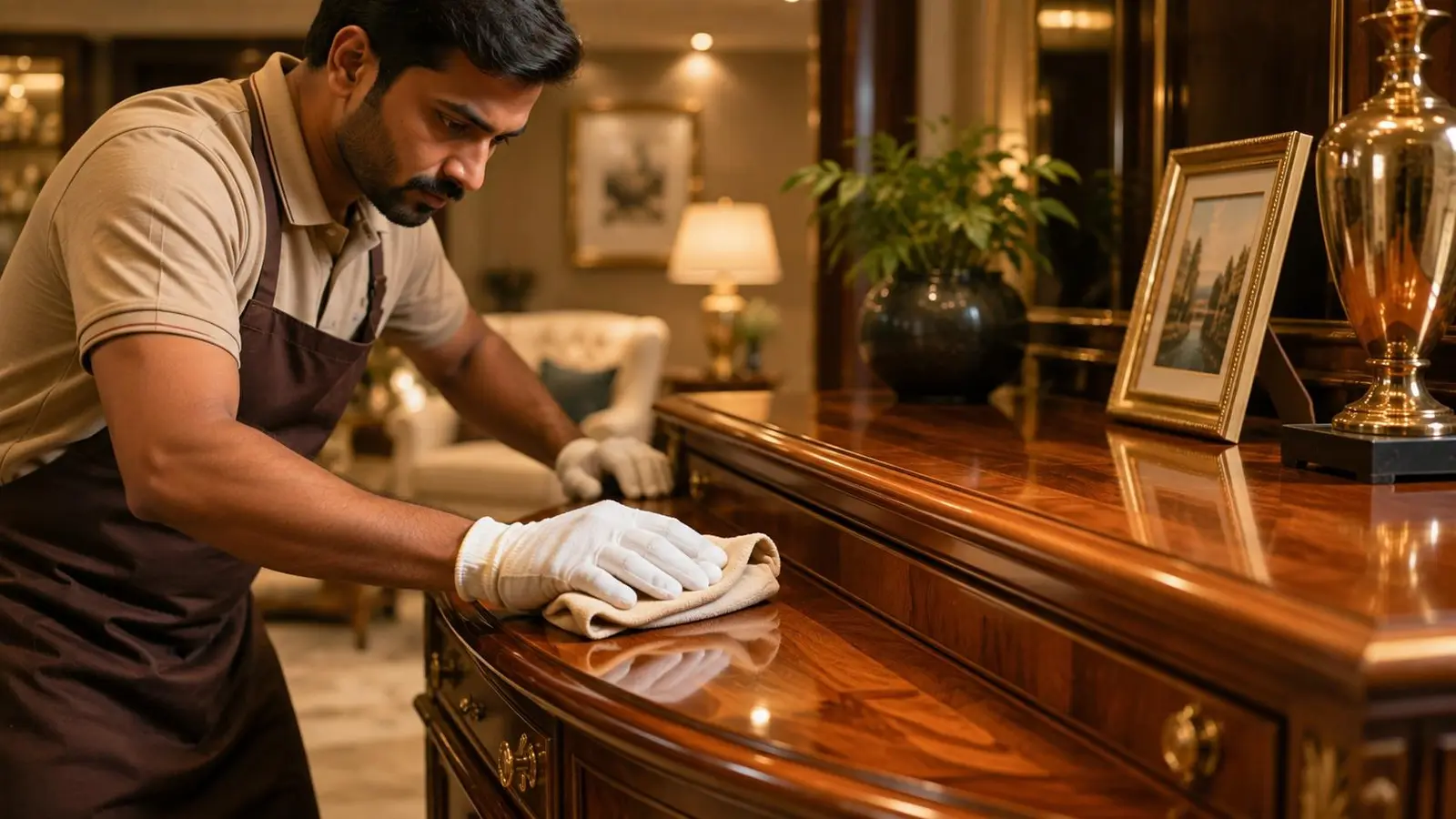
Wooden furniture and wooden doors add warmth, elegance and character to a home. From traditional wooden cabinets to modern wardrobes, dining tables, decorative panels and main entrance doors, wood remains an important part of residential interior design.
However, wooden surfaces can gradually lose their original appearance due to dust, sunlight, regular handling, moisture and everyday wear. A previously attractive wooden door may begin to look dull, while furniture may develop scratches, faded patches or an uneven finish.
Wood polishing is one way to refresh suitable wooden surfaces and improve their appearance. The right polishing method can enhance the natural grain, create a more uniform finish and provide a protective coating appropriate for the intended use.
But wood polishing is not a single universal process. Different wood types, existing coatings and furniture conditions require different preparation methods and finishing materials.
This guide explains the types of wood polishing, the benefits, the application process, maintenance requirements and factors that influence wood polishing costs.
WHAT IS WOOD POLISHING?
Wood polishing is the process of preparing and finishing a wooden surface using suitable polishing materials or protective coatings.
Depending on the selected system, the process may enhance the natural colour and grain of the wood, provide a decorative appearance and offer protection against everyday surface wear.
Wood polishing is commonly considered for:
- Main wooden entrance doors.
- Bedroom doors.
- Wooden wardrobes.
- Dining tables.
- Wooden cabinets.
- Chairs and other furniture.
- Wooden window frames.
- Decorative wooden panels.
- Interior wooden fittings.
The appropriate finish depends on the wood species, existing coating, desired appearance and intended application.
WHY IS WOOD POLISHING IMPORTANT?
Wooden surfaces experience regular use. Doors are touched frequently, tables receive daily contact and cabinets may be exposed to cleaning products and minor scratches.
A suitable wood finishing system can provide several benefits.
- Improves the appearance of wood
Polishing can refresh the appearance of wooden surfaces and bring out their natural grain.
- Creates a more uniform finish
Proper preparation and application can help reduce the appearance of uneven surface colour and old coating marks.
- Provides a protective surface
Depending on the coating, polishing may help protect wood against routine surface contact, minor scratches and everyday wear.
- Supports furniture maintenance
Restoring an existing wooden surface may be an alternative to replacing furniture that is otherwise structurally sound.
- Offers different design options
Wood finishes are available in natural, transparent, tinted, matte, satin and glossy appearances, depending on the product.
- Enhances interior appearance
A well-maintained wooden door or cabinet can complement the overall interior colour scheme.
DIFFERENT TYPES OF WOOD POLISHING
Selecting the right wood polish is important because different products create different appearances and levels of protection.
- Melamine Polish
Melamine finishes are used in certain interior wood finishing applications.
They can create a smooth surface with a selected level of sheen.
The final result depends on the wood preparation, application system and product specifications.
Melamine finishes may be considered for suitable furniture, cabinets and interior wooden surfaces.
- PU Wood Polish
Polyurethane, commonly known as PU, is used as a wood coating system.
PU coatings are available in different formulations and finishes.
Depending on the product, they can provide a durable surface suitable for furniture and interior woodwork.
They are often selected where homeowners want a refined finish with defined maintenance characteristics.
- French Polish
French polishing is a traditional wood finishing technique commonly associated with shellac-based materials.
It can produce a rich, smooth and highly polished appearance.
This method requires careful preparation and skilled application.
It may be suitable for selected furniture and traditional wooden surfaces.
- Natural Wood Oil Finishes
Wood oils penetrate or interact with the surface depending on their formulation.
They are often used to enhance the natural appearance and texture of suitable wood.
The maintenance requirements depend on the oil product and how frequently the surface is used.
- Varnish and Clear Wood Coatings
Varnish and other clear wood coatings can help protect and enhance wooden surfaces.
They are available in different sheen levels.
The correct product should be selected according to the wood species, indoor or outdoor exposure and manufacturer recommendations.
HOW TO CHOOSE THE RIGHT WOOD POLISH FOR YOUR HOME
Before selecting a polishing material, consider the following factors.
Wood type
Different wood species have different grain patterns, densities and natural colours.
Teak, sheesham, oak and other hardwoods may require different preparation and finishing considerations.
Existing coating
If the furniture already has a coating, the new finishing system must be compatible with the existing surface or the old coating may need to be removed.
Desired appearance
Decide whether you prefer a natural, matte, satin or glossy appearance.
Usage
A dining table, wardrobe and decorative panel do not necessarily require the same finish.
Maintenance
Consider how frequently the surface will be cleaned and whether periodic refinishing will be necessary.
Indoor or outdoor use
Wood exposed to sunlight, rain and temperature changes requires a suitable exterior-rated coating system.
STEP-BY-STEP WOOD POLISHING PROCESS
Professional wood polishing involves several preparation and finishing stages.
Step 1: Inspect the wooden surface
The surface is examined for scratches, cracks, stains, loose coatings and other visible defects.
The wood type and existing finish are also considered.
Step 2: Remove the old coating where required
Some surfaces may need old paint, varnish or damaged polish removed.
The removal method depends on the material and condition of the wood.
Step 3: Sand the surface
Suitable sanding methods are used to prepare the surface and create a more uniform base.
The sanding grade and technique depend on the wood and selected finishing system.
Step 4: Repair visible defects
Small surface defects may be repaired using compatible wood fillers or repair materials.
Damaged structural components require appropriate carpentry work.
Step 5: Clean the surface
Dust and sanding residue must be removed before applying the new coating.
Step 6: Apply the selected polish
The selected product is applied according to its technical instructions.
Different systems may require specific application tools, coats and drying intervals.
Step 7: Allow suitable drying and curing
The surface must be allowed to dry and cure according to the manufacturer's instructions.
Step 8: Inspect the final finish
Check the surface for uniform appearance, missed areas, visible marks and coating defects.
WOOD POLISHING FOR DIFFERENT AREAS OF YOUR HOME
Wooden Main Doors
The entrance door contributes significantly to the appearance of a property.
A suitable wood finish can refresh its natural grain and coordinate with the home's exterior and entrance design.
Bedroom Doors
Bedroom doors can benefit from a clean and uniform finish that complements the interior.
Wooden Wardrobes
Wardrobes should be finished using materials suitable for their construction and expected everyday use.
Dining Tables
Dining tables receive frequent contact, spills and cleaning. Select a finish appropriate for the table's intended use and maintenance requirements.
Wooden Cabinets
Kitchen and storage cabinets may need finishes suited to their exposure to heat, moisture and regular cleaning.
COMMON WOOD POLISHING PROBLEMS
Uneven colour
This may occur due to inconsistent preparation, different wood absorption rates or unsuitable application.
Visible scratches
Insufficient sanding or damage to the underlying wood can affect the final result.
Peeling coating
Poor surface preparation, incompatibility or moisture can contribute to coating failure.
Dust particles
Dust settling on a wet coating can affect the surface appearance.
Sticky finish
Incorrect product application, environmental conditions or insufficient drying can cause finishing problems.
Proper product selection and preparation help reduce these risks.
HOW MUCH DOES WOOD POLISHING COST?
Wood polishing costs depend on several project-specific factors.
These include:
- Total surface area.
- Type of wood.
- Existing coating condition.
- Selected polishing material.
- Number of coats.
- Preparation and sanding requirements.
- Repair work.
- Furniture design and detailing.
- Labour and application technique.
For example, polishing a simple flat wooden door may involve different work from restoring an intricately carved entrance door.
Similarly, furniture that needs old coating removal and repair may require more preparation than a relatively new wooden surface.
Before accepting a quotation, ask the service provider to explain the proposed material, preparation process, number of coats and included repairs.
Do not compare quotations using price alone. Compare the complete scope of work.
WOOD POLISHING MAINTENANCE TIPS
After polishing, follow these maintenance practices:
- Clean wooden surfaces using a soft cloth.
- Avoid excessive water.
- Use cleaning products recommended for the selected finish.
- Protect furniture from prolonged direct sunlight where possible.
- Use suitable coasters and protective pads.
- Address spills promptly.
- Avoid abrasive cleaning materials.
- Inspect surfaces periodically for scratches or coating damage.
Do not apply household oils or strong chemicals without checking compatibility with the existing finish.
WOOD POLISHING SERVICES IN PATNA
Homeowners in Patna may have different wood finishing requirements depending on the age, design and condition of their furniture.
Some properties need fresh polishing for wooden doors, while others require restoration of older cabinets, wardrobes or decorative wooden fittings.
Before starting a project, inspect the existing surface and identify whether it needs light preparation, complete coating removal, repair or a new finishing system.
PaintGen offers wood polishing as part of its painting and home improvement services.
Whether you are refreshing wooden doors or improving the appearance of your furniture, choosing the correct finishing process can make a meaningful difference.
Visit PaintGen.in to explore its services and discuss your wood polishing requirements.
FINAL THOUGHTS
Wood polishing is an effective way to refresh suitable wooden surfaces and maintain their appearance.
The right finishing system depends on the wood type, existing coating, desired appearance and intended use.
From melamine and PU finishes to French polishing and clear wood coatings, every option has different characteristics and maintenance requirements.
A successful result begins with proper inspection, suitable sanding, compatible materials and careful application.
If your wooden doors or furniture look dull or worn, consider a professional assessment before replacing them.
Explore wood polishing and home improvement services at https://www.paintgen.in/.
Questions people ask
Which wood polish is best for home furniture?
The best wood polish depends on the furniture material, existing coating and desired appearance. PU, melamine, French polish and suitable clear wood coatings are different options. Choose a product according to its application and maintenance specifications.
How often should wooden furniture be polished?
There is no fixed polishing schedule for every wooden surface. The requirement depends on usage, sunlight exposure, cleaning habits, coating condition and the type of finish.
Can old wooden doors be polished again?
Yes, many old wooden doors can be refinished if their underlying wood is in suitable condition. The process may involve removing the old coating, sanding, repairing defects and applying a compatible new finish.
What factors affect wood polishing costs?
Wood polishing costs depend on the surface area, wood type, existing coating, preparation work, selected polish, number of coats, repairs and labour requirements.
Last updated 9 November 2026.